

Friday 07 March 2025
Deep learning algorithms have long been touted as the holy grail of medical diagnosis, capable of detecting even the most subtle changes in medical images. But what happens when there’s a shortage of high-quality training data? That’s where pseudo-labeling comes in – a technique that uses existing data to generate new, synthetic examples that can be used to improve model performance.
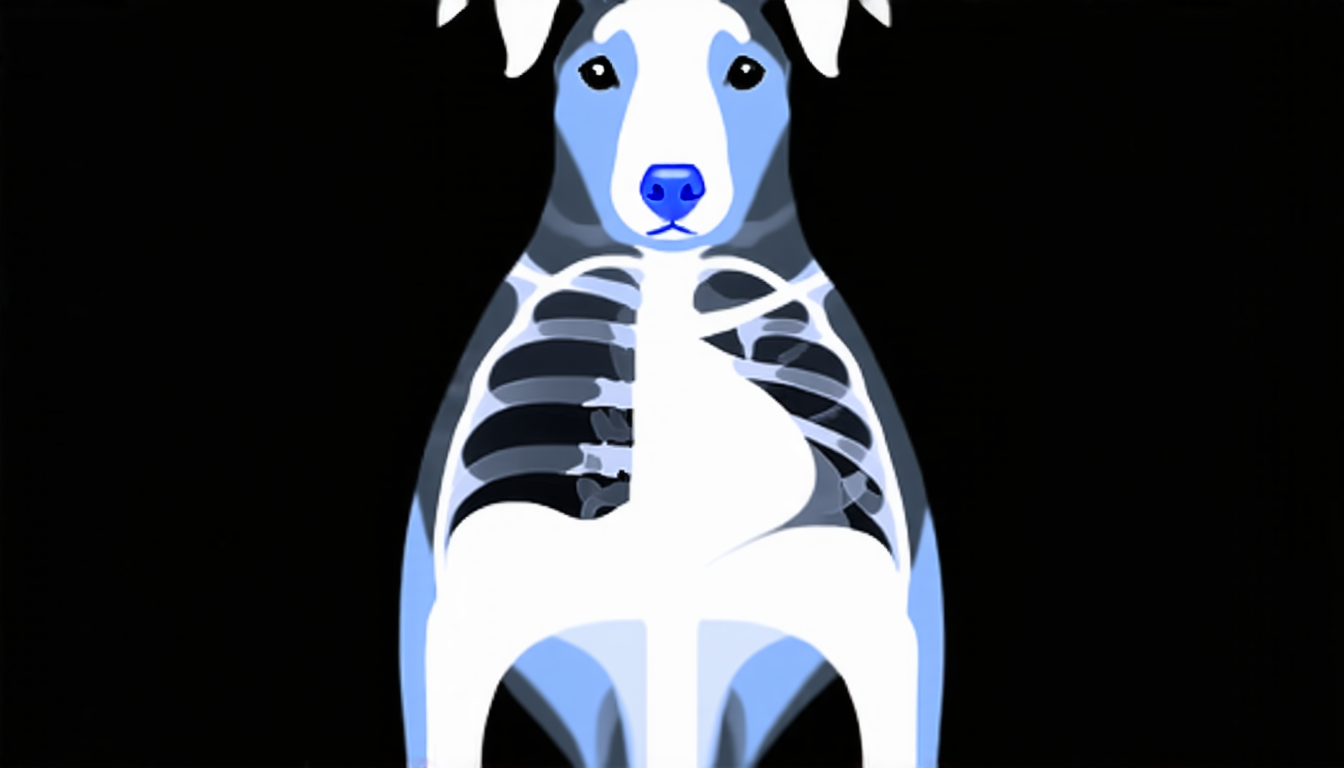
In the field of veterinary medicine, canine cardiomegaly is a serious condition that can have devastating consequences if left undiagnosed. But diagnosing it accurately requires a high degree of expertise and specialized imaging equipment – not exactly something you’d find at your local vet’s office. That’s why researchers are turning to deep learning algorithms to develop more accurate and accessible diagnostic tools.
The problem is, most medical images used to train these algorithms are human-annotated, which can be time-consuming and expensive. To overcome this limitation, scientists have developed synthetic data generation techniques that can produce realistic images with minimal effort. But these methods often lack the nuance and complexity of real-world data – making them less effective at detecting subtle changes in medical images.
That’s where pseudo-labeling comes in. By using existing data to generate new, high-quality examples, researchers can create a training set that’s both large and diverse. This approach has been shown to improve model performance in various medical imaging applications – including canine cardiomegaly.
In a recent study, scientists used pseudo-labeling to develop a deep learning algorithm capable of detecting canine cardiomegaly from chest X-rays with unprecedented accuracy. The system uses a combination of synthetic data generation and pseudo-labeling to train a convolutional neural network (CNN) that can accurately identify the condition.
The results are impressive – the CNN achieved an accuracy rate of 92.75%, outperforming state-of-the-art methods in the field. But what’s more significant is the potential for this technology to be used in real-world settings. Imagine being able to diagnose canine cardiomegaly with ease, without the need for expensive equipment or specialized expertise.
Of course, there are still challenges to overcome before this technology can be widely adopted. For one, pseudo-labeling requires a large amount of existing data – which may not always be available. Additionally, the synthetic data generation process needs to be fine-tuned to produce images that are both realistic and relevant to the specific medical condition being diagnosed.
Despite these challenges, the potential benefits of pseudo-labeling in veterinary medicine are significant.
Cite this article: “Pseudo-Labeling: A Game-Changer for Accurate Canine Cardiomegaly Diagnosis”, The Science Archive, 2025.
Medical Imaging, Deep Learning, Canine Cardiomegaly, Pseudo-Labeling, Synthetic Data Generation, Convolutional Neural Network, Cnn, Chest X-Rays, Veterinary Medicine, Diagnosis





