

Friday 07 March 2025
The humble knit fabric has long been a staple of our daily lives, from cozy sweaters to durable socks. But beneath its seemingly simple surface lies a complex web of mechanics and physics that have only recently begun to be fully understood.
Researchers have made significant strides in recent years in developing a comprehensive framework for understanding the behavior of knitted fabrics. By combining experimental data with advanced computational models, scientists have been able to tease out the intricate relationships between fabric structure, material properties, and mechanical response.
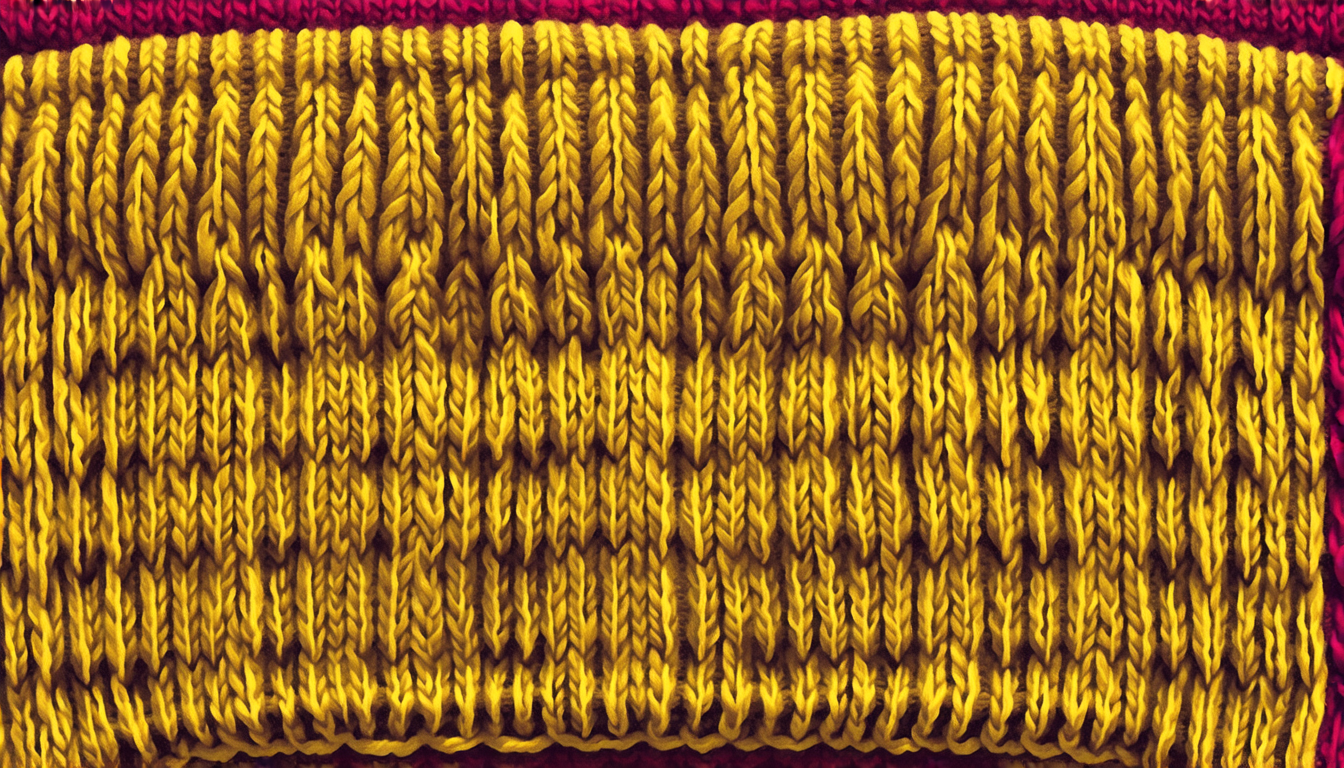
At its core, knitted fabric is an entangled mess of yarns that are woven together to create a complex network of fibers. This web-like structure gives rise to unique mechanical properties, such as stretchiness and durability, that make it so versatile for clothing and textiles.
But despite its widespread use, the mechanics of knitted fabrics have long been shrouded in mystery. Until recently, designers and manufacturers have had to rely on empirical rules of thumb and trial-and-error approaches to develop new products.
That’s all changed with the advent of advanced computational models that can simulate the behavior of knitted fabrics at a microscopic level. These simulations allow researchers to test different yarn materials, stitch patterns, and fabric structures in a virtual environment before ever setting needle to yarn.
One of the key breakthroughs has been the development of a strain energy-based model that captures the intricate details of how yarns interact with each other as they stretch and compress. This model has allowed scientists to predict the mechanical behavior of knitted fabrics under different loads, from gentle stretching to heavy compression.
The implications are far-reaching. For one, designers can now create custom fabrics tailored to specific applications, such as medical devices or sports equipment. And manufacturers can optimize their production processes to minimize waste and improve quality.
But perhaps most excitingly, this new understanding of knitted fabric mechanics opens up new possibilities for the development of smart textiles that can adapt to changing conditions. Imagine a sweater that adjusts its warmth based on your body temperature, or a sock that provides support and stability as you move.
Of course, there’s still much work to be done before these concepts become reality. But with the fundamental mechanics of knitted fabrics finally beginning to come into focus, the possibilities are endless – and it’s an exciting time for textile researchers and manufacturers alike.
Cite this article: “Unlocking the Secrets of Knitted Fabrics”, The Science Archive, 2025.
Knitted Fabrics, Mechanics, Physics, Fabric Structure, Material Properties, Computational Models, Yarns, Fibers, Strain Energy, Smart Textiles





