

Friday 07 March 2025
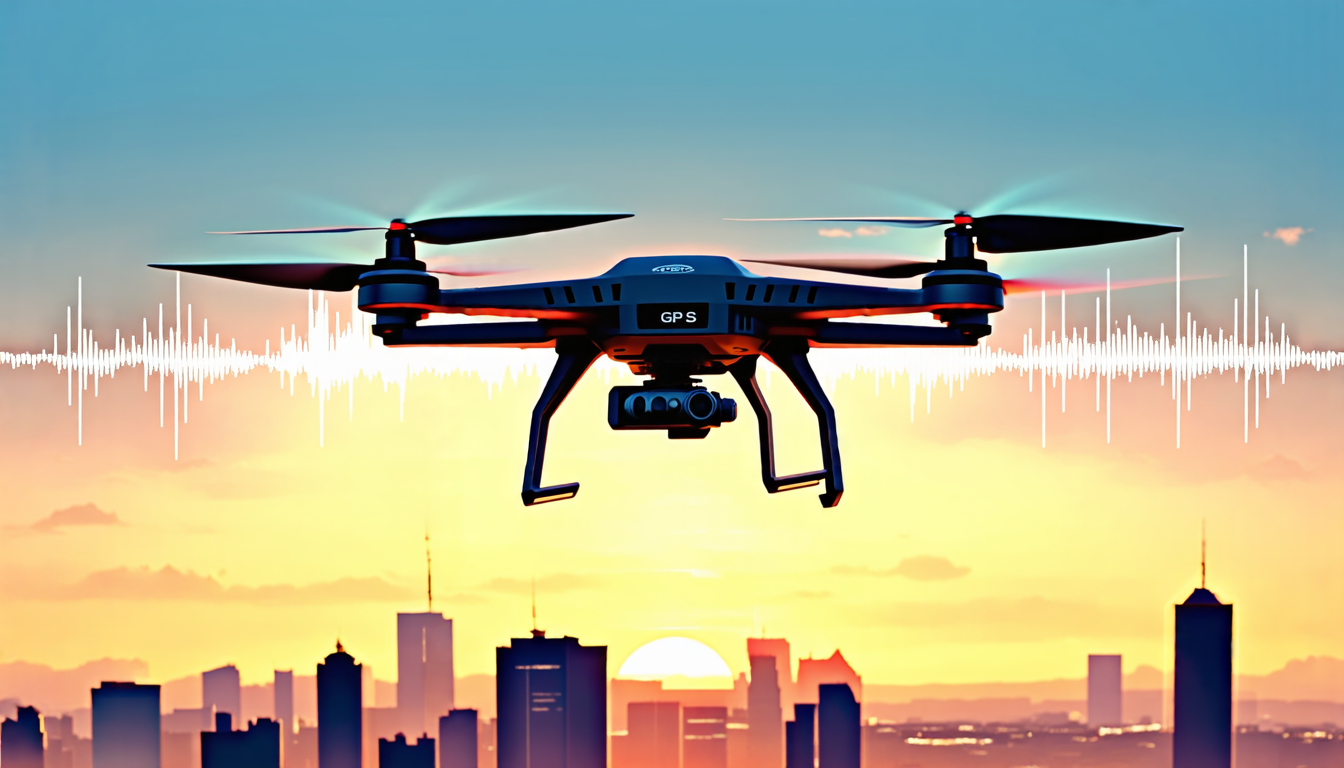
As drones become increasingly prevalent in our daily lives, concerns about their security have grown. Specifically, GPS spoofing attacks, where an attacker sends fake GPS signals to manipulate a drone’s navigation, have raised alarms among researchers and security experts. A new paper proposes a novel approach to detect such attacks, leveraging the unique properties of quadrotor unmanned aerial vehicles (UAVs) and machine learning algorithms.
The problem with detecting GPS spoofing is that it’s often difficult to distinguish legitimate signals from fake ones. Traditional methods rely on statistical analysis or machine learning models trained on datasets that might not accurately represent real-world scenarios. However, the researchers behind this paper took a different approach. They designed a system specifically tailored for quadrotor UAVs, which are particularly vulnerable to GPS spoofing due to their reliance on GPS signals for navigation.
The proposed framework, called QUADFormer, consists of three key components: a residue generator, an attack detector, and a resilient state estimation module. The residue generator produces sequences of residues that capture the nonlinear dynamics of quadrotor UAVs and non-Gaussian noise. These residues are then fed into the attack detector, which utilizes a transformer-based architecture to identify anomalies and classify them as attacks or false positives.
The resilient state estimation module plays a crucial role in mitigating the impact of compromised sensors. When an attack is detected, the system temporarily disables the affected sensor and relies on more secure sources for pose estimation. This ensures that the UAV remains operational even under attack.
Experimental results demonstrate the effectiveness of QUADFormer. In simulations, the framework outperformed traditional methods and learning-based approaches in detecting GPS spoofing attacks. The researchers also conducted real-world experiments using a quadrotor UAV system, which further validated their findings.
The implications of this research are significant. As drones become more widespread, ensuring their security is essential for preventing malicious attacks that could have disastrous consequences. QUADFormer’s approach provides a powerful tool for detecting GPS spoofing attacks and mitigating their impact. The researchers plan to extend their framework to address other types of cyber attacks on UAVs.
This work highlights the importance of developing tailored solutions for specific types of systems, rather than relying on general-purpose approaches. By leveraging the unique properties of quadrotor UAVs, QUADFormer demonstrates a promising direction for improving the security of these devices and ensuring they remain safe to operate in the skies.
Cite this article: “Detecting GPS Spoofing Attacks on Quadrotor UAVs with QUADFormer”, The Science Archive, 2025.
Quadrotor Uavs, Gps Spoofing, Machine Learning, Cyber Attacks, Drone Security, Navigation, Transformer-Based Architecture, State Estimation, Resilient Systems, Anomaly Detection.





