

Friday 07 March 2025
Scientists have made a significant breakthrough in understanding how living cells interact with artificial materials, potentially leading to new ways of creating advanced biomaterials.
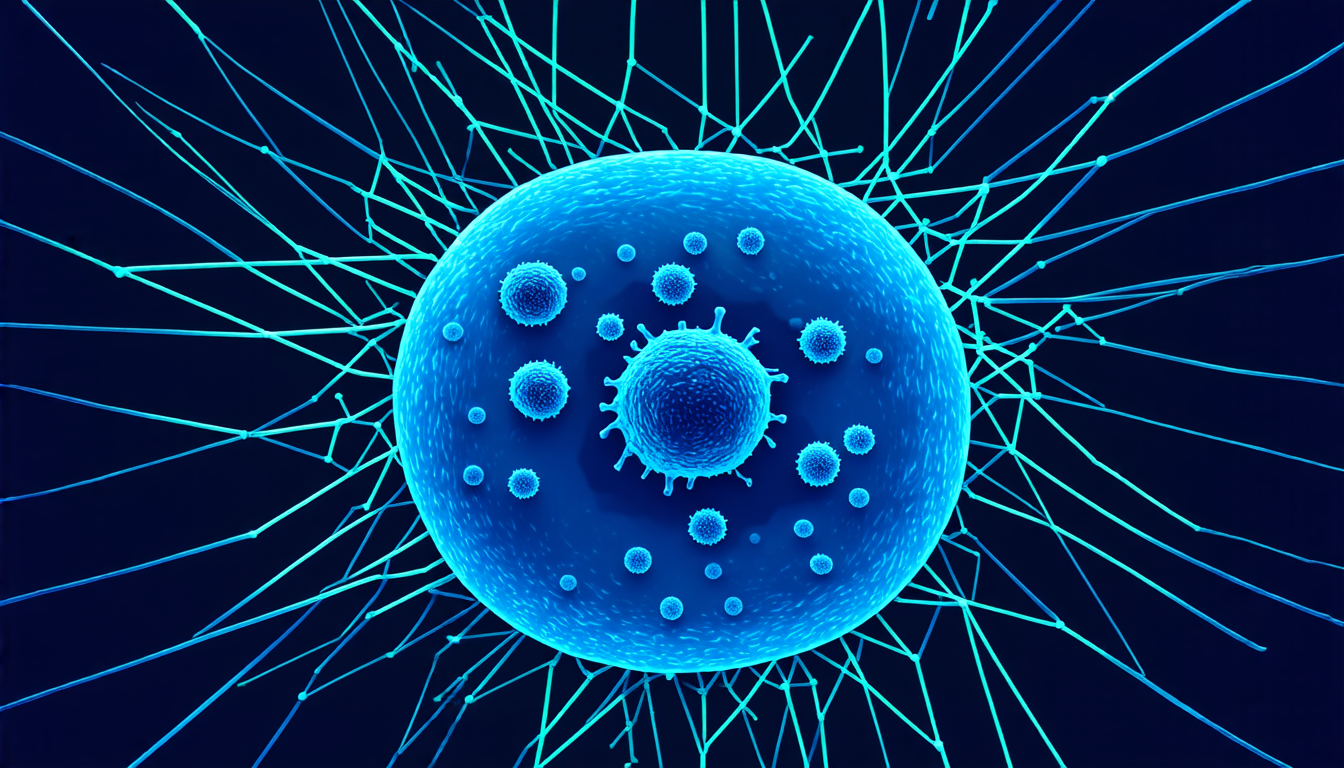
Researchers have been studying the behavior of bacteria embedded in networks of actin and microtubules, which are key components of the cytoskeleton. The cytoskeleton provides structural support and helps regulate cellular processes, but it’s also dynamic and can change shape in response to external stimuli.
The team used a combination of microscopy techniques to visualize the cells and their interactions with the networks at high magnification. They found that as the concentration of bacteria increased, the mesh size of the actin network decreased, while the microtubule network remained relatively unchanged. This suggests that the bacteria are influencing the structure of the actin network, potentially by altering its dynamics or cross-linking properties.
The researchers also discovered that the cells can induce changes in the mechanical properties of the composite material. Specifically, they found that as the cell volume fraction increased, the stiffness of the material decreased. This could have important implications for the development of biomaterials with specific properties, such as those used in tissue engineering or regenerative medicine.
To further explore these interactions, the team created networks with different levels of cross-linking between the actin and microtubule filaments. They found that passively cross-linked networks exhibited more ordered structures than actively cross-linked networks, which were more disordered. This suggests that the dynamics of the cytoskeleton can influence its structure and properties.
The study provides valuable insights into the complex interactions between living cells and artificial materials. By better understanding these interactions, scientists may be able to design biomaterials with specific properties or functions, potentially leading to breakthroughs in fields such as regenerative medicine, tissue engineering, and biotechnology.
In a related finding, the researchers used low-magnification microscopy to visualize the networks at a larger scale. They found that the cell volume fraction had a significant impact on the structure of the composite material, with higher concentrations of cells leading to more disordered structures. This could have important implications for the development of biomaterials with specific properties or functions.
Overall, this study highlights the complex and dynamic interactions between living cells and artificial materials. By continuing to explore these interactions, scientists may be able to develop new biomaterials with unique properties or functions, potentially leading to breakthroughs in a range of fields.
Cite this article: “Unraveling the Interactions Between Living Cells and Artificial Materials”, The Science Archive, 2025.
Biology, Biomaterials, Cell Biology, Cytoskeleton, Materials Science, Microscopy, Nanotechnology, Regenerative Medicine, Tissue Engineering, Biotechnology





