
Friday 07 March 2025
Researchers have made a significant breakthrough in understanding how to identify patterns and trends in complex data sets, such as those found in social networks or disease outbreaks. By developing new algorithms that can efficiently sample from the integrated posterior distributions of Bayesian mixture models, scientists are now better equipped to uncover hidden structures and make predictions about future behavior.
The team behind this innovation has been working on refining a type of statistical analysis called latent class analysis, which is used to identify groups within a population based on certain characteristics. This technique is commonly employed in fields such as sociology, psychology, and epidemiology, where researchers seek to understand the behaviors and attitudes of individuals or populations.
Traditionally, latent class analysis has been limited by its computational requirements, making it difficult to apply to large data sets. However, the new algorithms developed by this team overcome these limitations by using a combination of Monte Carlo methods and collapsed Gibbs sampling techniques.
One of the key advantages of these new algorithms is their ability to efficiently sample from the integrated posterior distributions of Bayesian mixture models. This allows researchers to directly sample not only the assignment of observations to components but also the number of components, making it possible to fit the model and perform model selection in a single computation.
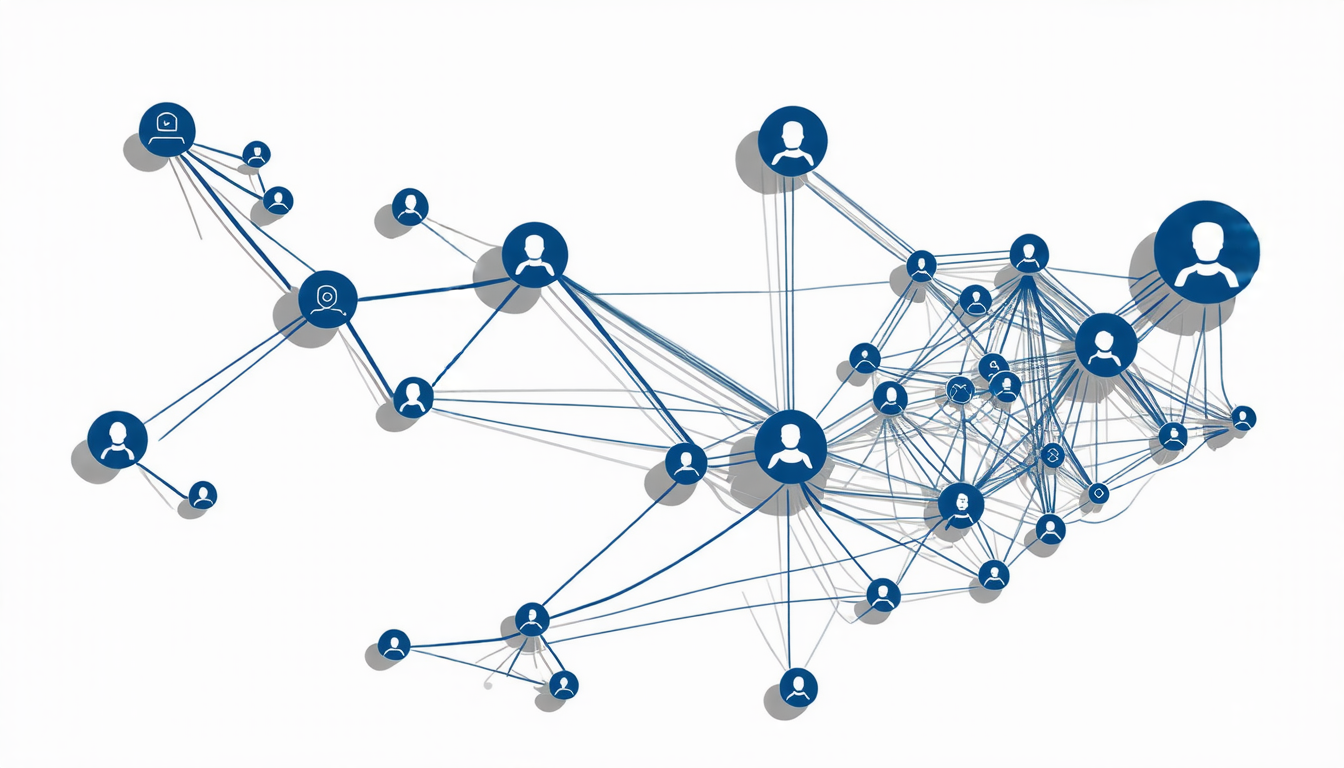
The team has successfully applied this approach to a range of data sets, including social networks, disease outbreaks, and online dating profiles. In each case, they were able to uncover complex patterns and trends that would have been difficult or impossible to identify using traditional methods.
For example, in analyzing the online dating profiles of 59,946 individuals, the researchers were able to identify distinct groups based on their interests, preferences, and behaviors. This information could be used to develop more effective matching algorithms or to better understand the dynamics of online relationships.
Similarly, by applying this approach to data sets related to disease outbreaks, researchers may be able to identify early warning signs of an epidemic or predict the spread of a particular pathogen. This could ultimately lead to more targeted and effective public health interventions.
The potential applications of these new algorithms are vast and varied, from social media analysis to epidemiology, sociology, and beyond. By providing a powerful tool for uncovering hidden patterns and trends in complex data sets, this breakthrough has the potential to revolutionize our understanding of many different fields.
Cite this article: “Unveiling Hidden Patterns: Breakthrough in Complex Data Analysis”, The Science Archive, 2025.
Data Analysis, Bayesian Mixture Models, Latent Class Analysis, Monte Carlo Methods, Collapsed Gibbs Sampling, Statistical Modeling, Pattern Recognition, Trend Identification, Machine Learning, Data Mining
Reference: M. E. J. Newman, “Fast sampling and model selection for Bayesian mixture models” (2025).