

Friday 07 March 2025
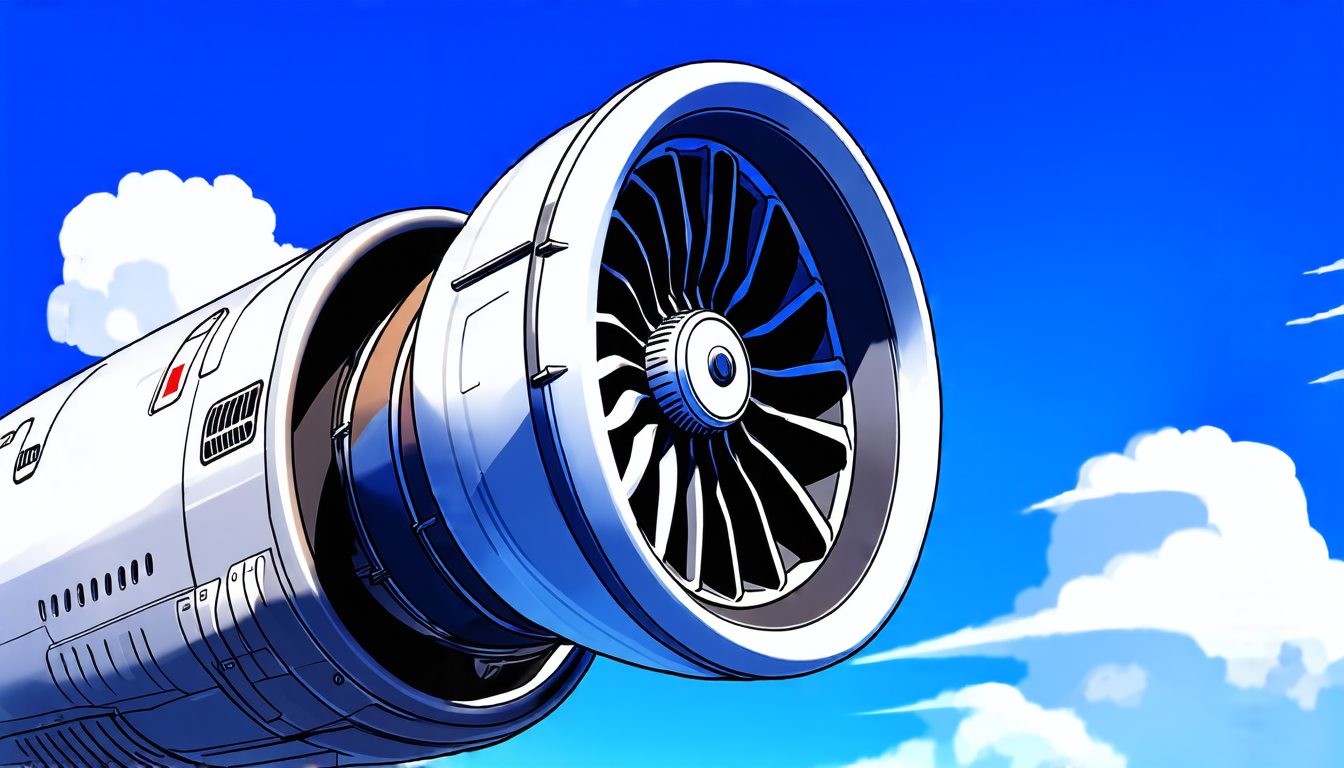
A team of researchers has made a significant breakthrough in developing a high-accuracy surrogate model for simulating the behavior of turbofan jet engines. The new model, built using JuliaSim, a modeling and simulation framework, is capable of replicating the dynamics of the engine with an unprecedented level of precision.
Turbofan jet engines are complex systems that rely on intricate interactions between various components to generate thrust. To optimize their design and performance, engineers need to simulate these interactions accurately, which can be challenging due to the sheer complexity of the problem. Traditional methods involve running expensive numerical simulations, which can take weeks or even months to complete.
The new surrogate model, developed by researchers at JuliaHub Inc., uses a combination of machine learning algorithms and physical modeling techniques to generate an accurate representation of the engine’s behavior. The model is trained on a large dataset of simulations, using a technique called active learning, which allows it to learn from its mistakes and adapt to the complex dynamics of the engine.
The result is a model that can predict the performance of the engine with remarkable accuracy, even in situations where traditional methods struggle. For example, the model can accurately simulate the behavior of the engine at high altitudes, where the air pressure is low and the engine’s performance is affected by changes in temperature and humidity.
One of the key benefits of this new model is its ability to reduce the computational cost of simulating the engine’s behavior. By using a surrogate model, engineers can run simulations much faster than with traditional methods, which allows them to explore more design options and optimize their designs more effectively.
The implications of this breakthrough are significant for the aerospace industry. With the ability to accurately simulate the behavior of turbofan jet engines, engineers will be able to design more efficient and powerful engines that meet strict environmental regulations. This could lead to significant reductions in fuel consumption and emissions, which would have a positive impact on the environment.
The researchers plan to continue refining their model and exploring its applications in other areas of aerospace engineering. For example, they are already working on adapting the model for use with other types of engines, such as those used in electric and hybrid-electric propulsion systems.
Overall, this breakthrough has the potential to revolutionize the way engineers design and optimize turbofan jet engines, enabling them to create more efficient and sustainable aircraft that can meet the demands of a rapidly changing world.
Cite this article: “Surrogate Modeling Breakthrough Revolutionizes Turbofan Jet Engine Design”, The Science Archive, 2025.
Turbofan, Jet Engines, Surrogate Model, Machine Learning, Physical Modeling, Active Learning, Aerospace Engineering, Fuel Consumption, Emissions, Simulation.





