

Friday 07 March 2025
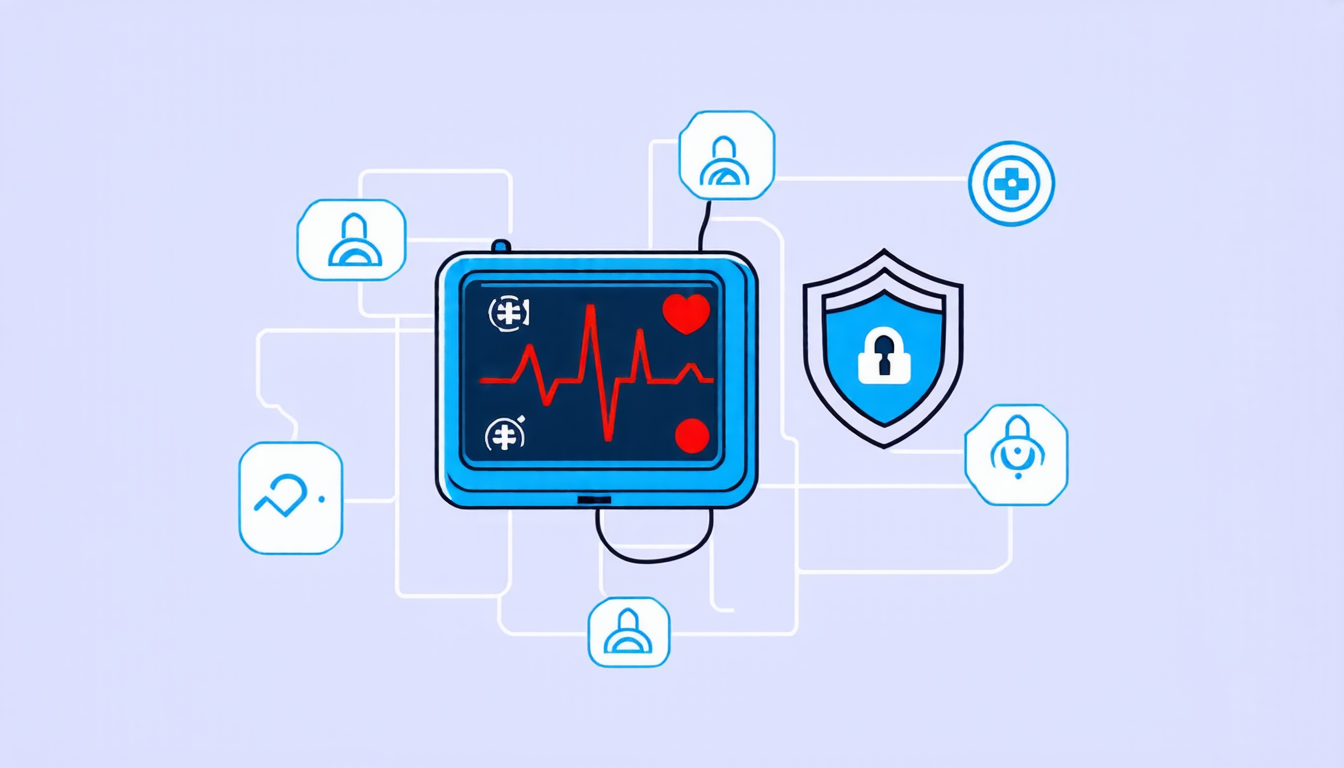
The Internet of Medical Things (IoMT) is a rapidly growing field that has revolutionized healthcare by connecting medical devices and sensors to provide real-time monitoring and treatment outcomes for patients. However, this increased connectivity has also introduced significant security vulnerabilities, making it an attractive target for cybercriminals.
As IoMT devices become more prevalent in hospitals and clinics, the risk of malware attacks and Distributed Denial of Service (DDoS) attacks increases exponentially. Weak encryption protocols, outdated authentication methods, and irregular firmware updates are just a few of the factors that make these devices vulnerable to attack.
Researchers have identified several promising strategies for mitigating these risks, including machine learning algorithms, blockchain technology, and edge computing. Machine learning approaches can detect anomalies in device behavior and respond quickly to potential threats, while blockchain technology provides a decentralized and tamper-proof framework for securing IoMT data.
Edge computing, on the other hand, reduces latency and improves data processing efficiency by analyzing and processing data closer to where it’s generated. This approach is particularly effective in resource-constrained environments where traditional cloud-based solutions may not be feasible.
Despite these promising strategies, several challenges remain. Computational overhead, scalability issues, and the lack of industry-standard protocols for interoperability are just a few of the hurdles that need to be overcome.
To effectively address these challenges, researchers and device manufacturers must collaborate more closely than ever before. This requires developing lightweight security measures that balance robustness with resource efficiency, as well as establishing standardized protocols to improve interoperability and resilience.
The stakes are high in IoMT security, as attacks can have devastating consequences for patient care and hospital operations. It’s essential that stakeholders prioritize the development of secure and reliable solutions to ensure the integrity of healthcare services.
In addition to these technical challenges, there is also a pressing need for greater awareness and education among healthcare professionals about the risks and best practices for IoMT security. This includes training on how to identify and respond to potential threats, as well as implementing robust incident response plans.
Ultimately, securing the IoMT requires a multifaceted approach that addresses both technical and human factors. By working together, researchers, manufacturers, and healthcare professionals can develop solutions that balance innovation with security, ultimately improving patient outcomes and ensuring the integrity of healthcare services.
Cite this article: “Securing the Internet of Medical Things: Challenges and Opportunities in Healthcare Cybersecurity”, The Science Archive, 2025.
Iomt, Cybersecurity, Machine Learning, Blockchain, Edge Computing, Malware, Ddos, Encryption, Authentication, Healthcare





