

Friday 07 March 2025
The intersection of magnetism and electricity has long been a fascinating area of research, with scientists seeking ways to control magnetic behavior using electric fields. A recent study published in Physical Review Letters has made significant strides in this field, demonstrating the ability to induce an exchange bias effect in altermagnetic materials.
For those unfamiliar, exchange bias refers to the phenomenon where the magnetization of two adjacent magnetic layers can be controlled by applying a small external magnetic field. This effect is typically observed in systems consisting of a ferromagnetic layer and an antiferromagnetic layer, but researchers have been exploring ways to replicate this behavior in other types of materials.
Altermagnets, specifically, are a class of magnetic materials that exhibit unique properties due to the presence of spin-split bands. These materials have been shown to possess interesting magnetic behaviors, including the ability to sustain magnetization without an external field. By exploiting these properties, scientists hope to develop new devices with improved performance and efficiency.
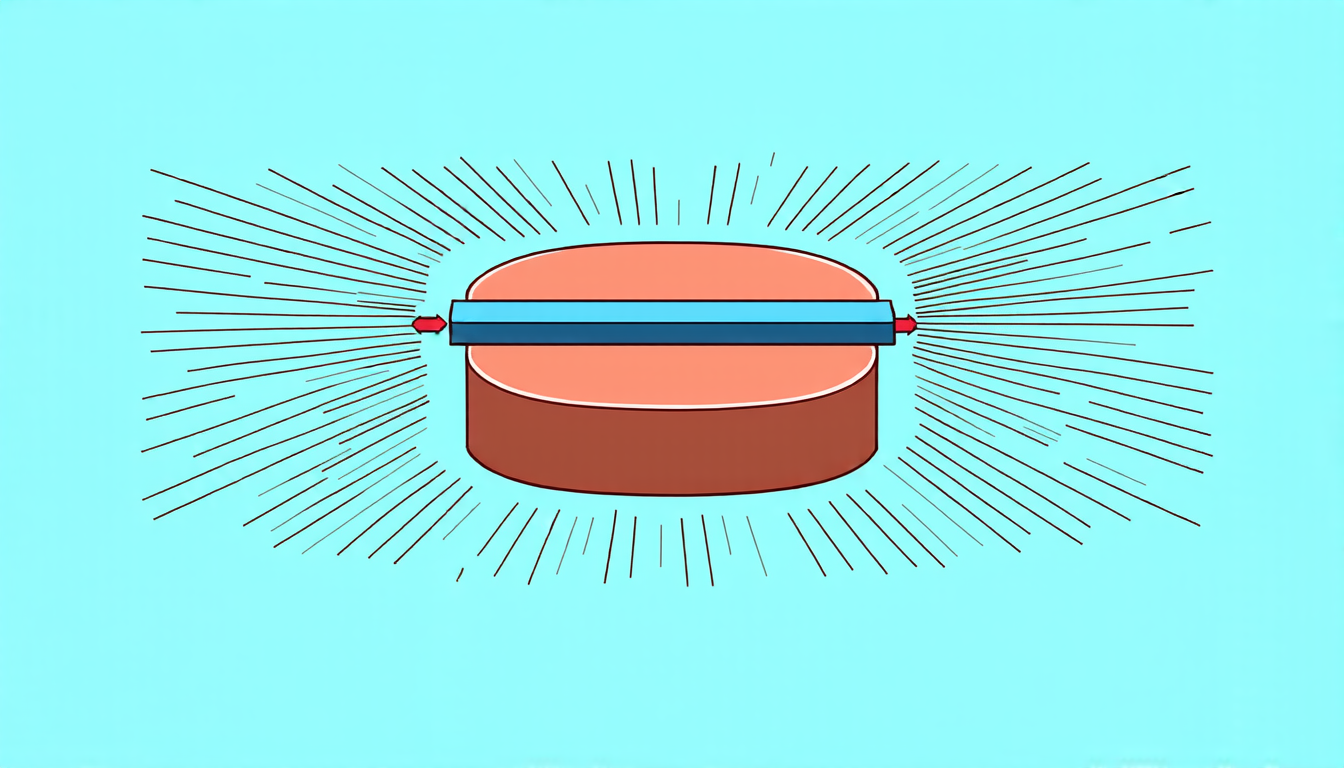
The study in question used a combination of theoretical modeling and experimental verification to demonstrate the induction of exchange bias in altermagnetic materials. The researchers employed a novel approach, involving the application of an electric field to modify the magnetic behavior of the material. This was achieved by introducing two layers of altermagnetic material, separated by a thin insulating layer.
The team used advanced computational simulations to predict the behavior of their system and identify the optimal conditions for inducing exchange bias. They then fabricated samples using epitaxial growth techniques and measured their magnetic properties using various experimental methods.
The results were striking: the application of an electric field was found to induce a significant exchange bias effect in the altermagnetic material, allowing for precise control over its magnetization. This phenomenon was observed across a range of temperatures and magnetic fields, demonstrating the robustness of the effect.
These findings have significant implications for the development of novel spin-based devices, including spintronics and magneto-electric memory devices. By harnessing the unique properties of altermagnets, researchers may be able to create devices that are faster, more efficient, and more reliable than those currently available.
The study’s authors acknowledge that further work is needed to fully understand the underlying physics driving this phenomenon and to explore its potential applications. However, their results represent a significant step forward in the field of magnetoelectric research and offer exciting possibilities for future advancements.
Cite this article: “Inducing Exchange Bias in Altermagnetic Materials using Electric Fields”, The Science Archive, 2025.
Magnetism, Electricity, Exchange Bias, Altermagnetic Materials, Spin-Split Bands, Magnetic Behavior, Electric Field, Magnetization, Spintronics, Magneto-Electric Memory Devices.





