

Friday 07 March 2025
The University of Parma has long been a hub of activity, with thousands of students and staff members flocking to its campuses every day. But despite being in the midst of this bustling metropolis, the university’s pedestrian traffic patterns have remained largely unexplored – until now.
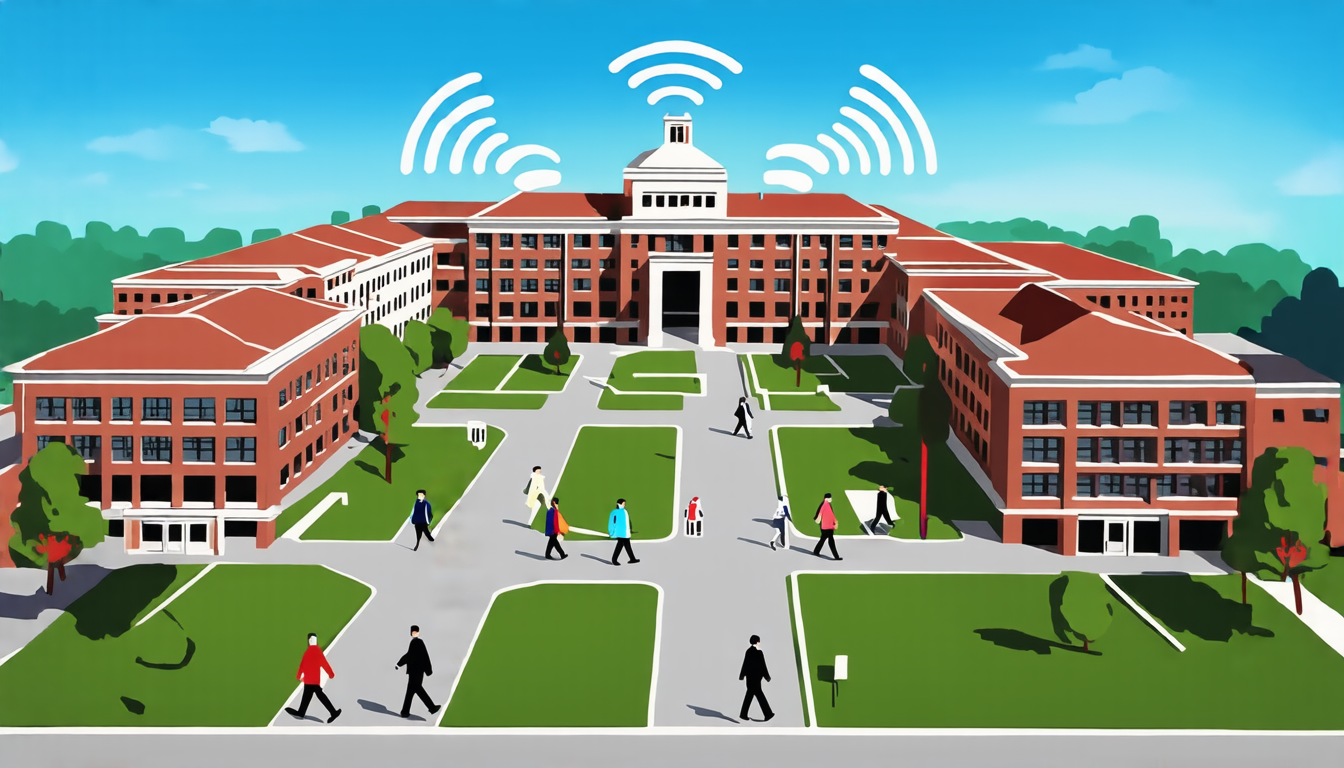
Researchers from the University of Parma have developed an innovative method for analyzing pedestrian traffic on campus using Wi-Fi data. By collecting and analyzing anonymized Wi-Fi connection records from students and staff, the team was able to create a detailed map of pedestrian flow across the campus.
The study’s authors used self-avoiding random walks to simulate the paths that pedestrians might take between buildings, allowing them to estimate the likelihood of different routes being taken. They also identified areas with high pedestrian density, such as near popular buildings and roads, and found that these areas were often characterized by a higher concentration of Wi-Fi connections.
One of the key insights from the study is that pedestrian traffic on campus follows a predictable pattern, with certain times of day and days of the week seeing more activity than others. For example, during lunchtime and early afternoon, pedestrians tend to congregate near dining halls and other popular gathering spots.
The researchers also found that the university’s network structure plays a significant role in shaping pedestrian traffic patterns. Buildings that are connected by shorter paths tend to have higher pedestrian density, while buildings that are farther apart see fewer pedestrians passing through.
The study’s authors suggest that their findings could be used to inform urban planning and design decisions on campus, such as optimizing the layout of roads and buildings to reduce congestion and improve accessibility. They also propose using the data to create more targeted marketing campaigns and services, such as offering discounts or promotions at popular locations during peak times.
The use of Wi-Fi data to study pedestrian traffic is not without its limitations, however. The researchers note that their methodology assumes that Wi-Fi connections are a reliable proxy for pedestrian movement – but this may not always be the case (for example, students who leave their devices behind may still be present on campus).
Despite these limitations, the study represents an important step forward in understanding and analyzing pedestrian traffic patterns on university campuses. By leveraging existing data sources such as Wi-Fi connections, researchers can gain valuable insights into how people move through space and make more informed decisions about urban planning and design.
Cite this article: “Unveiling Pedestrian Traffic Patterns on Campus Using Wi-Fi Data”, The Science Archive, 2025.
University, Pedestrian Traffic, Wi-Fi Data, Campus, Research, Analysis, Mobility, Urban Planning, Design, Optimization, Marketing





