
Friday 07 March 2025
In a remarkable breakthrough, scientists have made significant progress in understanding the behavior of complex systems, such as those found in robotics and artificial intelligence. By applying mathematical techniques to control sets, researchers have been able to shed light on the intricate relationships between these systems.
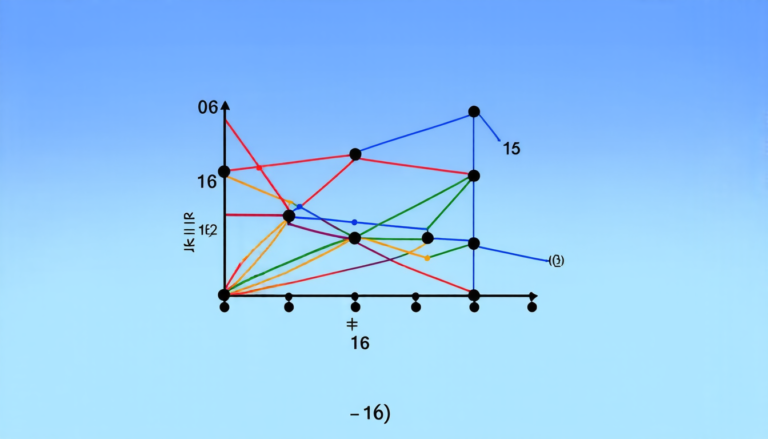
Control sets are a fundamental concept in mathematics, referring to the set of points that can be reached by controlling a system over time. In other words, they represent the possible trajectories that a system can take under different inputs or controls. Understanding control sets is crucial for designing and optimizing complex systems, as it allows engineers to predict their behavior and make informed decisions about how to manipulate them.
In this latest study, researchers have focused on linear control systems – those that involve simple mathematical equations describing the relationships between variables. These systems are particularly important in robotics and artificial intelligence, where they are used to model and control complex behaviors such as motion and decision-making.
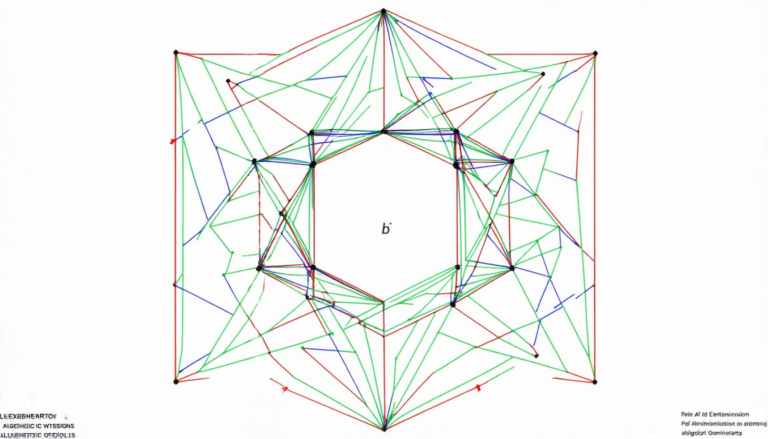
The key insight of this research is that certain types of linear control systems can be decomposed into simpler components, making it easier to analyze their behavior. By breaking down these systems into smaller pieces, researchers can better understand how they interact with each other and how they respond to different inputs or controls.
This decomposition technique has important implications for designing and optimizing complex systems. For instance, it allows engineers to identify specific points in the system where control sets are particularly large or unstable, which could be critical for achieving desired behaviors.
The study’s findings also have potential applications in fields beyond robotics and artificial intelligence. For example, they could inform the design of more efficient and stable power grids, or help optimize the behavior of complex biological systems such as the human brain.
In summary, this research has made significant progress in understanding control sets for linear control systems, with important implications for designing and optimizing complex systems. By decomposing these systems into simpler components, researchers have been able to shed light on their intricate relationships and better understand how they respond to different inputs or controls. This breakthrough has the potential to revolutionize fields such as robotics, artificial intelligence, and beyond.
Cite this article: “Decomposing Complexity: New Insights into Control Sets in Linear Systems”, The Science Archive, 2025.
Complex Systems, Control Sets, Linear Control Systems, Robotics, Artificial Intelligence, Mathematical Techniques, Decomposition Technique, System Behavior, Optimization, Power Grids, Biological Systems.