

Friday 07 March 2025
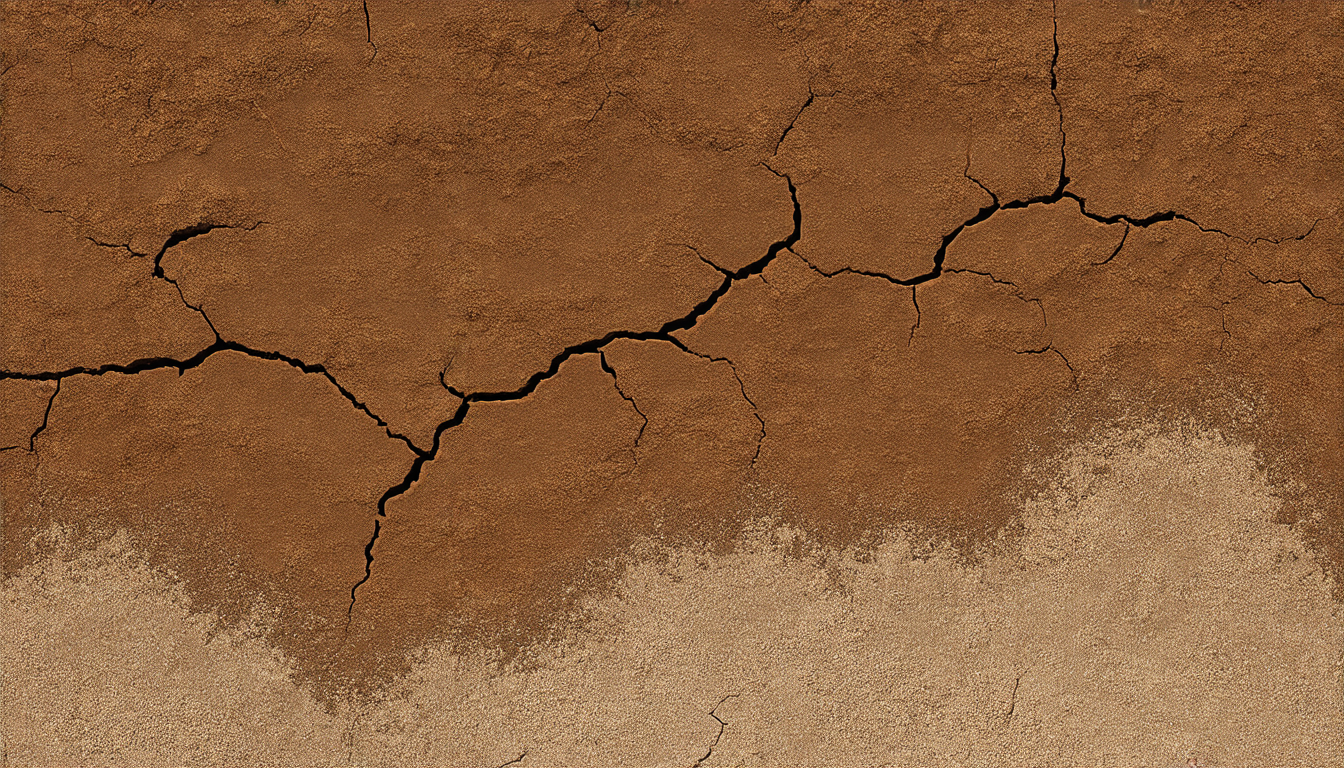
A new algorithm has been developed to simulate the intricate patterns that form on surfaces as they dry out, mimicking the way cracks emerge in materials like mud and concrete. The technique uses a recursive approach to generate networks of cracks that resemble those found in nature.
When a surface dries out, it can develop a complex pattern of cracks that are influenced by factors such as temperature, humidity, and the material’s composition. These patterns can be crucial for understanding how materials behave under different conditions, but they can also be difficult to predict using traditional methods.
The new algorithm uses a recursive approach to generate these crack patterns, starting with a small number of seeds or nuclei that are placed on the surface. The algorithm then divides each cell into smaller regions, creating a hierarchical structure that mirrors the way cracks form in real-world materials.
One of the key features of this algorithm is its ability to produce T-shaped and Y-shaped cracks, which are common in natural fracture patterns. These shapes are often missing from traditional simulations, which tend to focus on more simplistic crack geometries.
The researchers behind the algorithm have tested it using a range of different parameters and conditions, and their results show that it can accurately reproduce the types of crack patterns found in nature. They also found that the algorithm is able to capture subtle differences in the way cracks form under different conditions, such as changes in temperature or humidity.
This new technique has the potential to be used in a wide range of fields, from materials science and geology to biology and engineering. By allowing researchers to simulate crack patterns with greater accuracy, it could help scientists better understand how materials behave under stress and develop new techniques for predicting and preventing failures.
In addition, the algorithm’s ability to produce hierarchical structures could have implications for the development of new materials and technologies. For example, by mimicking the way cracks form in natural materials, researchers may be able to design new materials with improved strength and durability.
The recursive approach used in this algorithm also has potential applications beyond crack pattern simulation. It could be used to model other complex systems that exhibit hierarchical structures, such as biological networks or social networks.
Overall, this new algorithm offers a powerful tool for simulating the intricate patterns that form on surfaces as they dry out. Its ability to accurately reproduce natural crack patterns and capture subtle differences in the way cracks form under different conditions makes it an important advance in the field of materials science.
Cite this article: “Simulating Crack Patterns with Recursive Algorithm”, The Science Archive, 2025.
Materials Science, Crack Patterns, Surface Drying, Recursive Algorithm, Hierarchical Structures, T-Shaped Cracks, Y-Shaped Cracks, Fracturing, Simulation, Natural Materials.





