

Saturday 08 March 2025
Scientists have long been fascinated by the way fluids move and interact, from the swirling patterns of ocean currents to the gentle flow of water in a river. But when it comes to studying these movements on a microscopic scale, things get complicated. That’s where lattice Boltzmann methods come in – a set of mathematical tools that allow researchers to model fluid behavior at the molecular level.
The problem is that traditional methods for simulating fluids can be cumbersome and inaccurate, especially when dealing with complex systems like turbulent flows or multiphase mixtures. That’s why scientists have been searching for new ways to tackle these challenges. Enter the two-relaxation-time lattice Boltzmann scheme (TRT), a novel approach that promises to revolutionize our understanding of fluid dynamics.
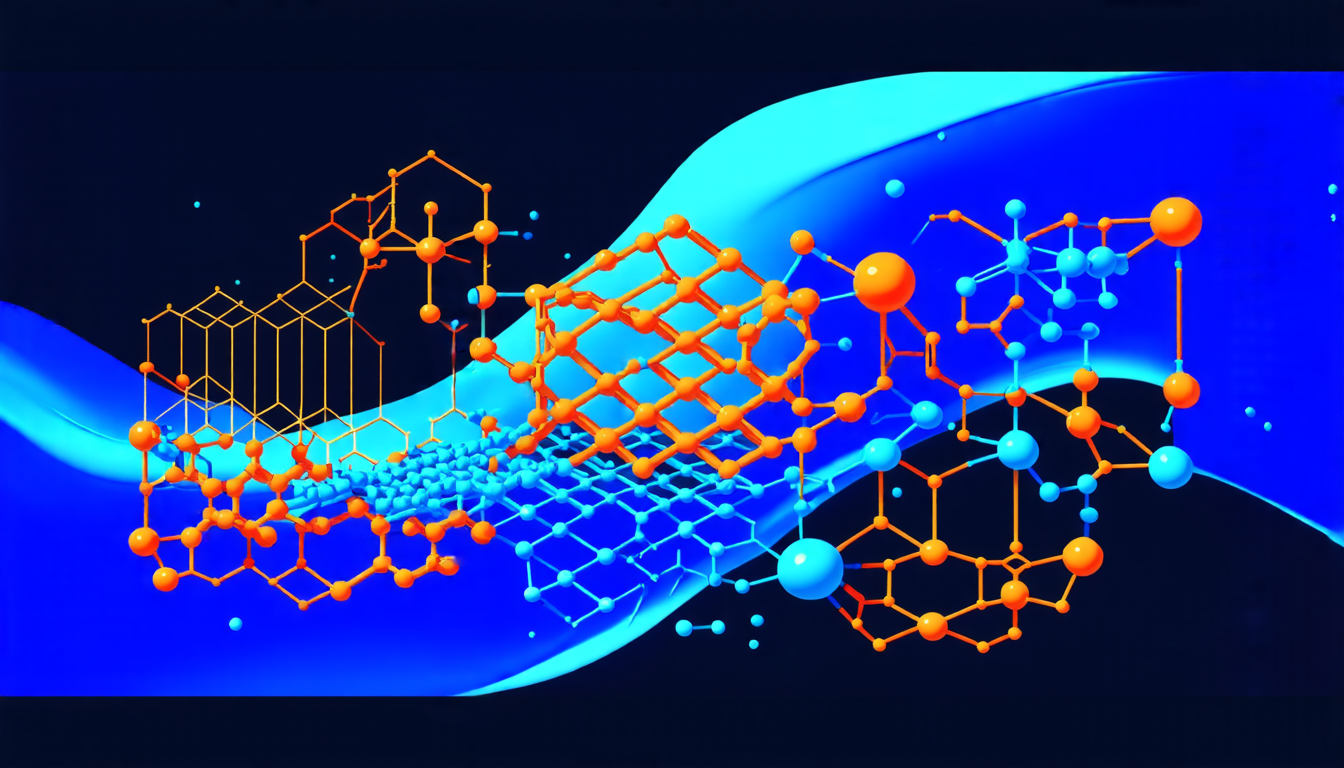
The TRT method is based on the idea of representing fluids as a collection of tiny particles, each moving through space according to its own set of rules. By modeling these particles and their interactions, researchers can simulate complex fluid flows with unprecedented accuracy. But here’s the twist: the TRT method uses two relaxation times – that’s right, two separate time scales – to describe how the particles move.
This might seem like a small detail, but it makes all the difference in the world. By using two relaxation times, researchers can capture the intricate details of fluid behavior that would be lost with traditional methods. It’s like the difference between watching a movie on a grainy old TV versus a crisp 4K screen – the TRT method gives us a much clearer view of what’s going on.
But how does it work? The TRT scheme uses a clever combination of mathematical tricks to simulate fluid flow at the molecular level. It starts by dividing space into tiny cubes, each representing a single particle. Then, using a set of rules based on the laws of physics, researchers can calculate how each particle moves and interacts with its neighbors.
The beauty of the TRT method is that it’s incredibly flexible. By adjusting the two relaxation times, researchers can tailor their simulations to specific systems or phenomena – from simulating the flow of fluids through tiny channels to modeling the behavior of complex mixtures like blood or oil.
One of the most exciting applications of the TRT method is in the field of fluid dynamics. Imagine being able to simulate the swirling patterns of ocean currents with unprecedented accuracy, or predicting the flow of fluids through tiny channels with precision.
Cite this article: “Lattice Boltzmann Methods Revolutionize Fluid Dynamics”, The Science Archive, 2025.
Lattice Boltzmann Methods, Fluid Dynamics, Molecular Level, Simulation, Particle Interactions, Relaxation Times, Turbulence, Multiphase Mixtures, Numerical Modeling, Computational Fluid Dynamics.





