

Saturday 08 March 2025
The universe is a complex and mysterious place, full of secrets waiting to be uncovered. One of the most intriguing areas of research is the study of gravitational waves, ripples in the fabric of spacetime that were first predicted by Einstein a century ago.
Gravitational waves are created when massive objects, such as black holes or neutron stars, collide or merge. As these objects move through spacetime, they disturb its fabric, causing tiny distortions that can be detected by sensitive instruments. These distortions can provide valuable insights into the nature of gravity and the behavior of massive objects.
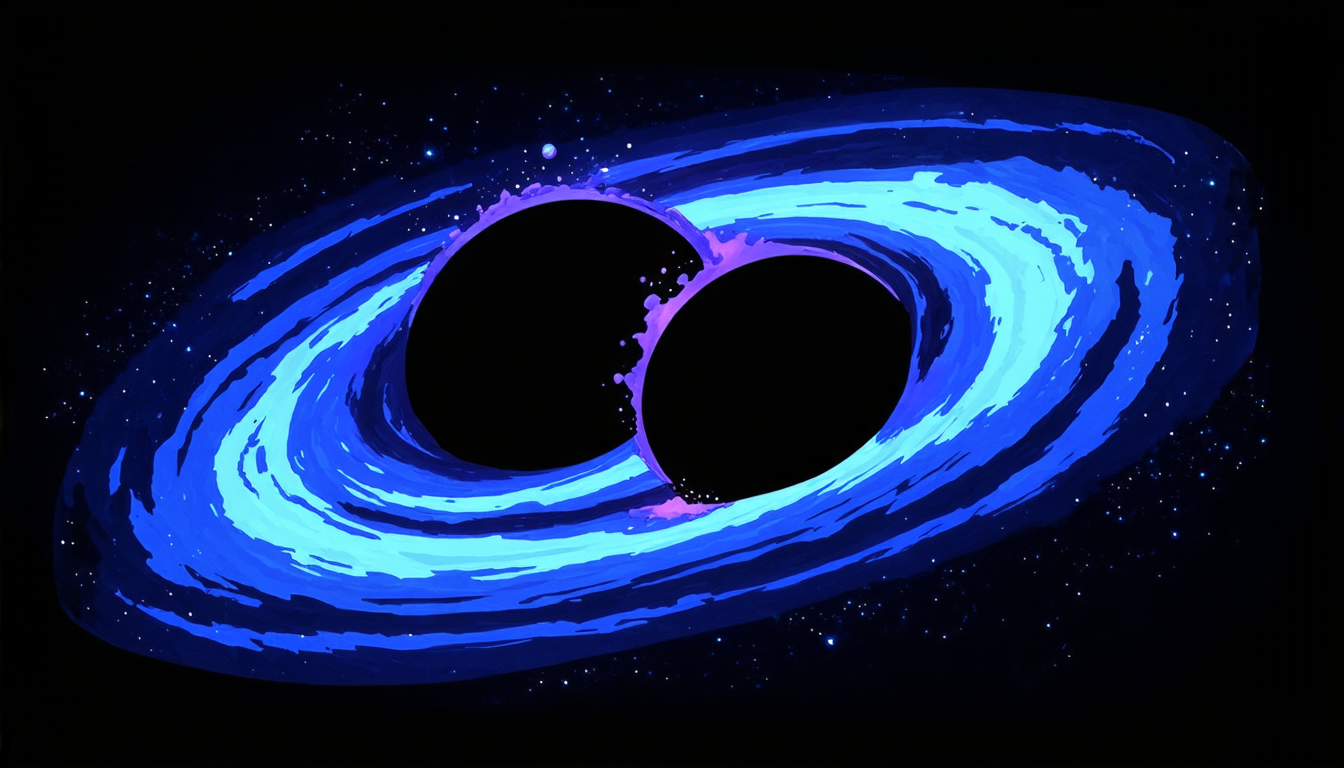
In recent years, scientists have made significant progress in detecting gravitational waves using advanced technologies such as laser interferometers. One of the most exciting discoveries was the detection of gravitational waves produced by the merger of two black holes, each with a mass about 30 times that of the sun.
However, there is still much to be learned about gravitational waves and their role in the universe. For example, scientists are interested in understanding how gravitational waves interact with matter and energy, and how they can be used to study the properties of black holes and neutron stars.
One promising area of research is the study of gravitational waves produced by axions, hypothetical particles that are thought to make up a significant portion of the universe’s dark matter. These particles are believed to interact with each other through a force called the axion-gauge field interaction, which could produce characteristic patterns in the gravitational wave signal.
Scientists have developed sophisticated algorithms and simulations to analyze the data from gravitational wave detectors and search for signs of these interactions. If successful, this research could provide valuable insights into the properties of dark matter and the behavior of black holes.
Another area of research is the study of gravitational waves produced by the merger of two neutron stars. These events are thought to be responsible for many of the elements found in the universe, including gold and uranium.
Scientists have detected several gravitational wave signals from neutron star mergers, but there is still much to be learned about these events. For example, researchers are interested in understanding how the merger process affects the properties of the resulting black hole or neutron star.
In addition, scientists are studying the polarization patterns of gravitational waves to gain insights into their sources and behavior. This research has the potential to reveal new information about the nature of gravity and the behavior of massive objects.
Overall, the study of gravitational waves is an exciting and rapidly evolving field that holds great promise for advancing our understanding of the universe.
Cite this article: “Unlocking the Secrets of Gravitational Waves”, The Science Archive, 2025.
Gravitational Waves, Black Holes, Neutron Stars, Dark Matter, Axions, Laser Interferometers, Spacetime, Gravity, Universe, Cosmology





