

Saturday 08 March 2025
The integration of large language models (LLMs) into hierarchical planning, a subfield of artificial intelligence that focuses on solving complex problems by breaking them down into smaller, more manageable tasks, has long been an elusive goal for researchers. While LLMs have shown great promise in various applications, their ability to effectively plan and reason about complex scenarios remains limited.
A recent study published in a leading AI journal sheds light on the current state of affairs in this area. The authors propose a taxonomy that categorizes the main integration methods between LLMs and hierarchical planning, providing a framework for researchers to build upon. They also introduce a benchmark dataset and provide initial results that serve as a reference point for future experimentation.
The study highlights the limitations of using LLMs directly as planners, often resulting in suboptimal performance due to their lack of understanding of the problem domain. To overcome this challenge, the authors propose a variety of strategies to enhance LLM performance, including providing additional knowledge about the problem and increasing the number of LLM calls during planning.
One of the key findings is that LLMs are better suited for generating plans than executing them. The study demonstrates that while LLMs can produce feasible plans, they often struggle with correctness, decomposing the plan into smaller tasks, and handling exceptions. This suggests that future research should focus on developing more sophisticated LLM-based planning systems that can effectively execute plans in complex environments.
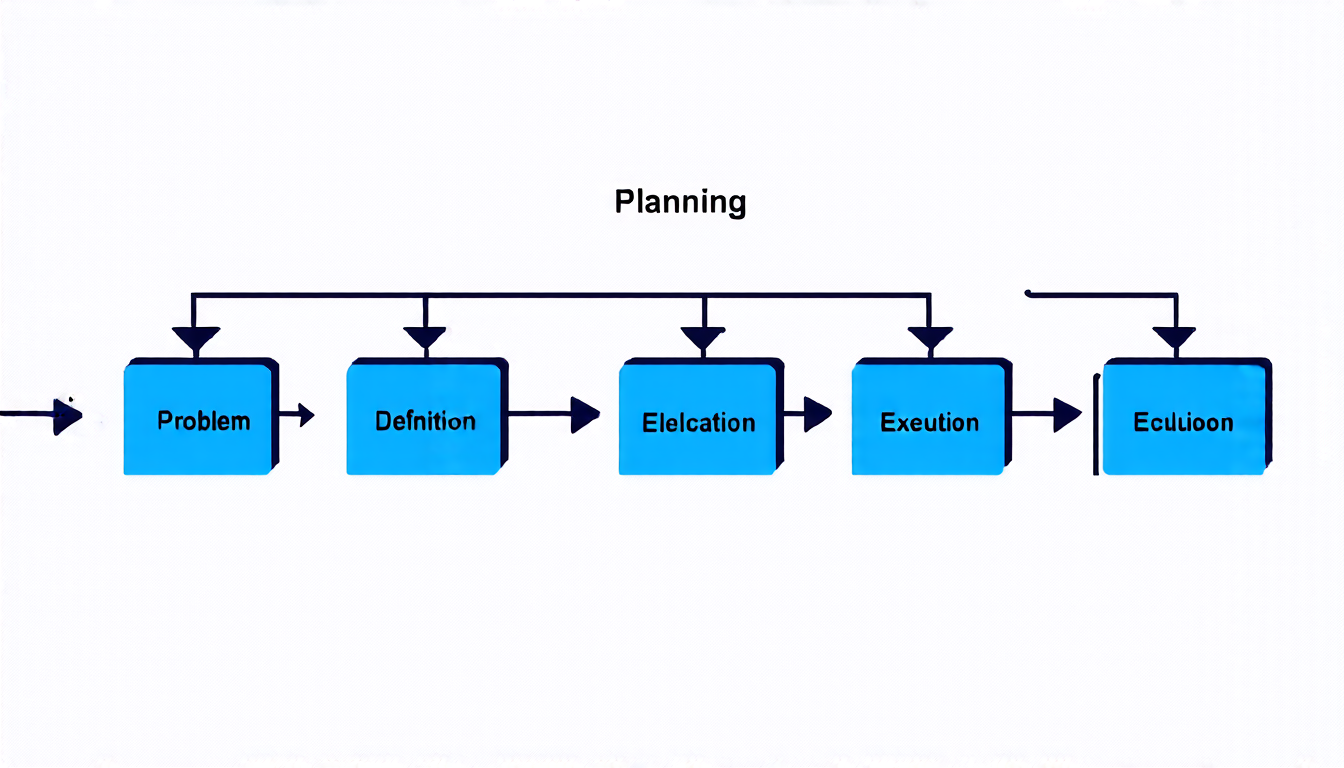
The proposed taxonomy provides a clear roadmap for researchers to explore different integration methods between LLMs and hierarchical planning. The authors identify four main roles that an LLM can play within the planning process: problem definition, plan elaboration, post-processing, and knowledge enhancement. They also categorize strategies for improving LLM performance into two dimensions: previous knowledge and feedback.
The study’s benchmark dataset is a significant contribution to the field, providing a standardized set of problems for researchers to test their methods against. The initial results demonstrate the challenges faced by current LLM-based planning systems, highlighting the need for further research and development in this area.
Overall, the study provides valuable insights into the current state of LLMs in hierarchical planning and identifies promising directions for future research. By exploring new integration methods and strategies, researchers can unlock the full potential of LLMs in complex problem-solving domains.
Cite this article: “Unlocking the Potential of Large Language Models in Hierarchical Planning”, The Science Archive, 2025.
Language Models, Hierarchical Planning, Artificial Intelligence, Complex Problems, Planning Systems, Problem Definition, Plan Elaboration, Post-Processing, Knowledge Enhancement, Benchmark Dataset





