

Saturday 08 March 2025
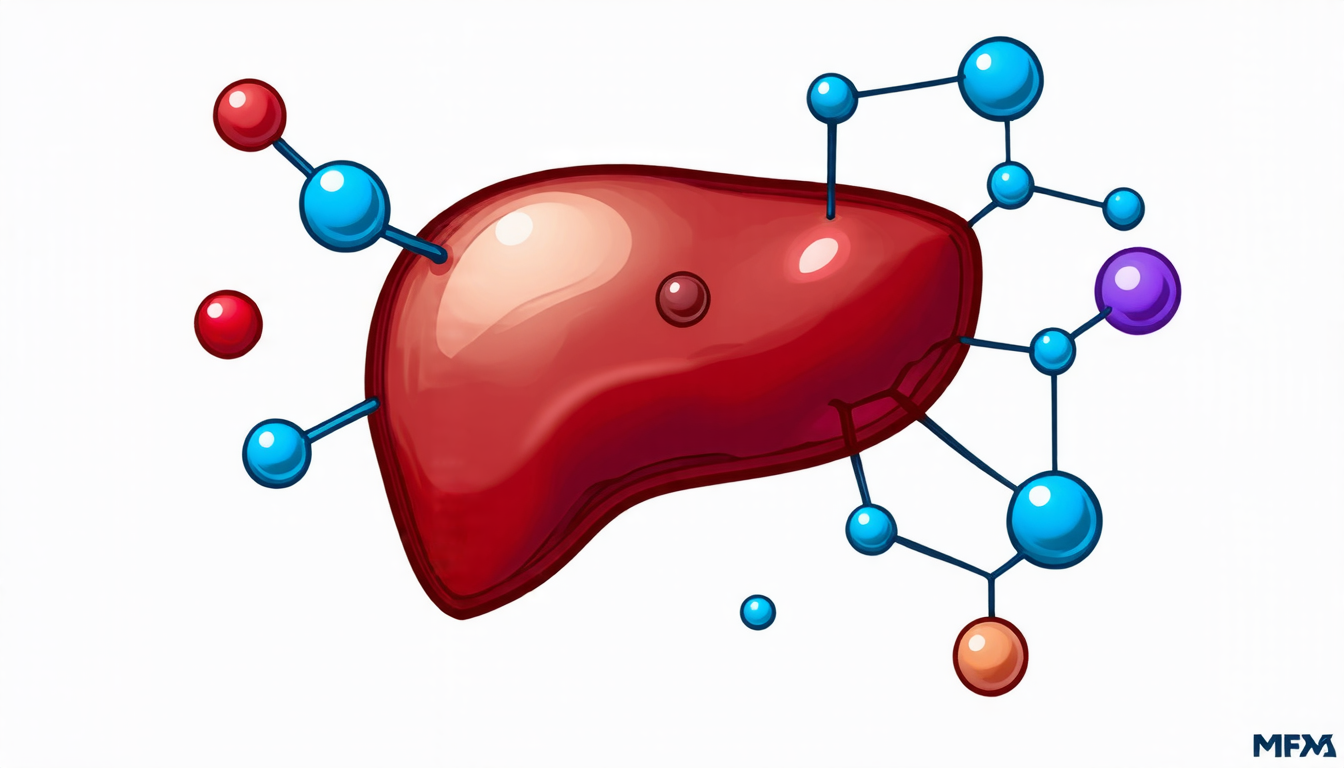
Scientists have long been fascinated by the human liver’s incredible ability to detoxify and regenerate itself. Now, a team of researchers has taken inspiration from this remarkable organ to develop a new artificial intelligence algorithm that outperforms traditional machine learning models.
The Artificial Liver Classifier (ALC) is a novel approach to classification problems, where it uses simple mathematical operations to reduce overfitting and improve performance. The ALC is based on the liver’s ability to break down toxins and process complex substances, which makes it an intriguing model for developing more efficient AI algorithms.
In traditional machine learning models, classifiers use complex neural networks or decision trees to make predictions. However, these methods often struggle with overfitting, where the model becomes too specialized in the training data and fails to generalize well to new, unseen data. The ALC addresses this issue by using a different approach, inspired by the liver’s detoxification process.
The researchers developed an improved version of the FOX optimization algorithm, which is used to train the ALC. This algorithm combines the strengths of different optimization methods, such as particle swarm optimization and genetic algorithms, to efficiently explore the vast solution space. The ALC’s architecture is based on a simple yet effective combination of linear regression, logistic regression, and decision trees.
The team tested the ALC on five benchmark datasets, including Iris Flower, Breast Cancer Wisconsin, Wine, Voice Gender, and MNIST. The results were impressive, with the ALC outperforming traditional machine learning models in terms of accuracy and speed. For example, on the Iris dataset, the ALC achieved 100% accuracy, surpassing logistic regression, multilayer perceptron, and support vector machine.
The ALC’s success can be attributed to its ability to reduce overfitting by using simple mathematical operations. This approach allows the model to focus on the most important features of the data, rather than getting bogged down in complex calculations. Additionally, the improved FOX optimization algorithm enables the model to efficiently explore the solution space, leading to better performance.
The Artificial Liver Classifier has significant implications for various fields, including healthcare, finance, and education. Its ability to outperform traditional machine learning models makes it an attractive option for solving complex classification problems. Furthermore, its simplicity and speed make it a viable choice for real-world applications.
In the future, researchers can explore ways to further improve the ALC by incorporating more advanced optimization algorithms or integrating other biological processes into the model.
Cite this article: “AI Inspired by Human Livers Detoxification Process Outperforms Traditional Machine Learning Models”, The Science Archive, 2025.
Artificial Intelligence, Machine Learning, Liver, Detoxification, Classification, Overfitting, Optimization, Linear Regression, Logistic Regression, Decision Trees





