

Saturday 08 March 2025
As scientists continue to push the boundaries of what is possible in the field of additive manufacturing, a new study has shed light on the intricacies of dendritic growth during this process.
Additive manufacturing, also known as 3D printing, allows for the creation of complex structures and shapes by layering materials such as metals and plastics. However, this process can be influenced by various factors, including the temperature gradient and velocity of the solidification front.
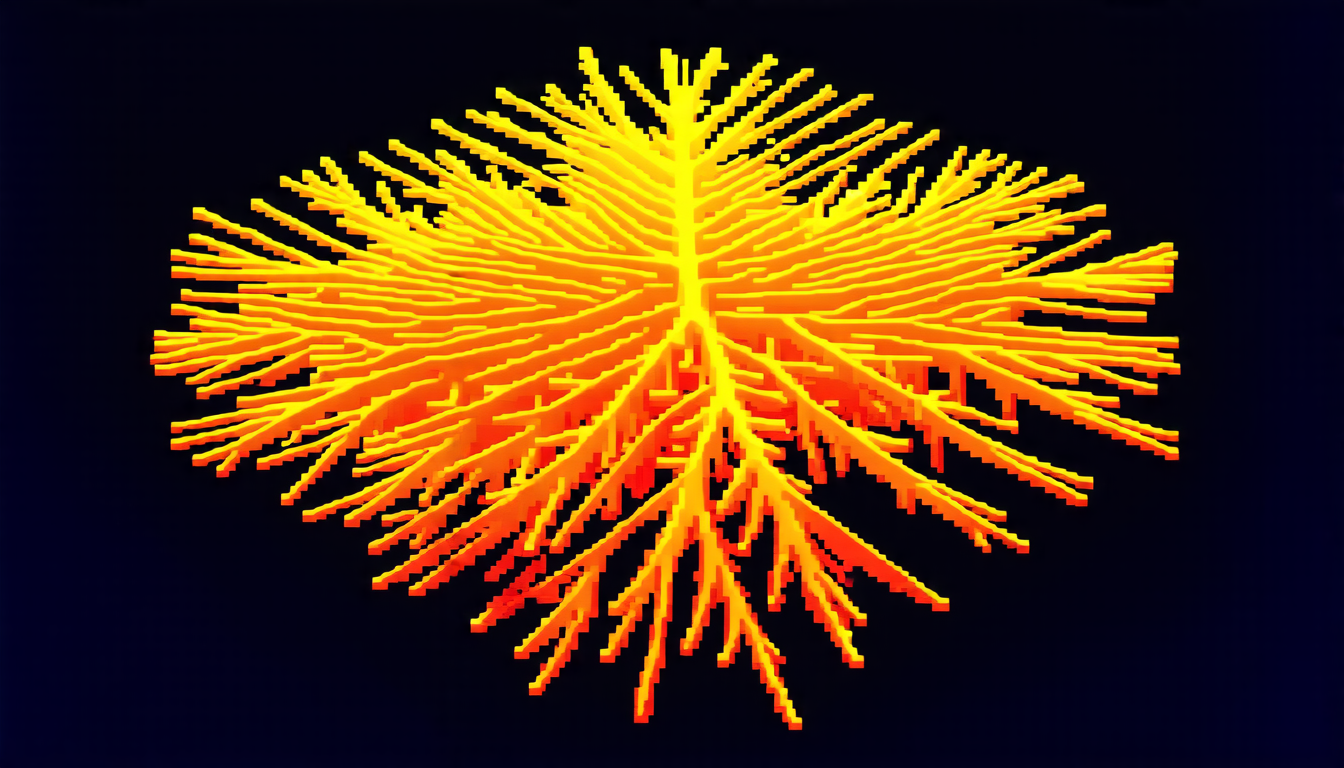
Researchers have long been fascinated by the dendritic growth patterns that emerge during additive manufacturing. Dendrites are branching crystals that form as molten metal cools and solidifies. The shape and size of these crystals can have a significant impact on the final properties of the material, such as its strength and durability.
In their study, scientists used computer simulations to explore the effects of different parameters on dendritic growth during additive manufacturing. They found that the orientation of the thermal gradient, or heat flow direction, plays a crucial role in determining the shape and size of the dendrites.
The researchers discovered that when the thermal gradient is aligned with the crystal lattice directions, the resulting dendrites tend to grow in a more uniform and symmetrical manner. However, when the thermal gradient is misaligned with the crystal lattice directions, the dendrites become tilted and develop a more complex branching pattern.
These findings have significant implications for the development of new materials and manufacturing techniques. By better understanding how to control dendritic growth during additive manufacturing, scientists may be able to create materials with improved properties and performance.
The study also highlights the importance of phase-field modeling in simulating complex processes such as dendritic growth. Phase-field models allow researchers to simulate the behavior of materials at the microscopic scale, providing valuable insights into the underlying mechanisms driving these processes.
As additive manufacturing continues to evolve and improve, it is likely that scientists will continue to uncover new and exciting phenomena related to dendritic growth. This research has provided a fascinating glimpse into the intricate dance between heat flow, crystal structure, and material properties, and holds promise for the creation of innovative materials and technologies in the future.
Cite this article: “Unraveling the Secrets of Dendritic Growth in Additive Manufacturing”, The Science Archive, 2025.
Additive Manufacturing, 3D Printing, Dendritic Growth, Crystal Structure, Thermal Gradient, Heat Flow, Solidification Front, Phase-Field Modeling, Materials Science, Microstructure





