

Saturday 08 March 2025
Scientists have made a significant breakthrough in understanding how water behaves when it’s trapped inside tiny pores of carbon materials. The discovery could have important implications for fields such as energy storage and environmental remediation.
Carbon materials, like activated charcoal, are known for their ability to absorb large amounts of gas and liquid. But until now, scientists haven’t fully understood what happens to the absorbed water molecules at the molecular level. A team of researchers has used advanced techniques, including ultrasonic waves and neutron scattering, to peer into the tiny pores of these materials.
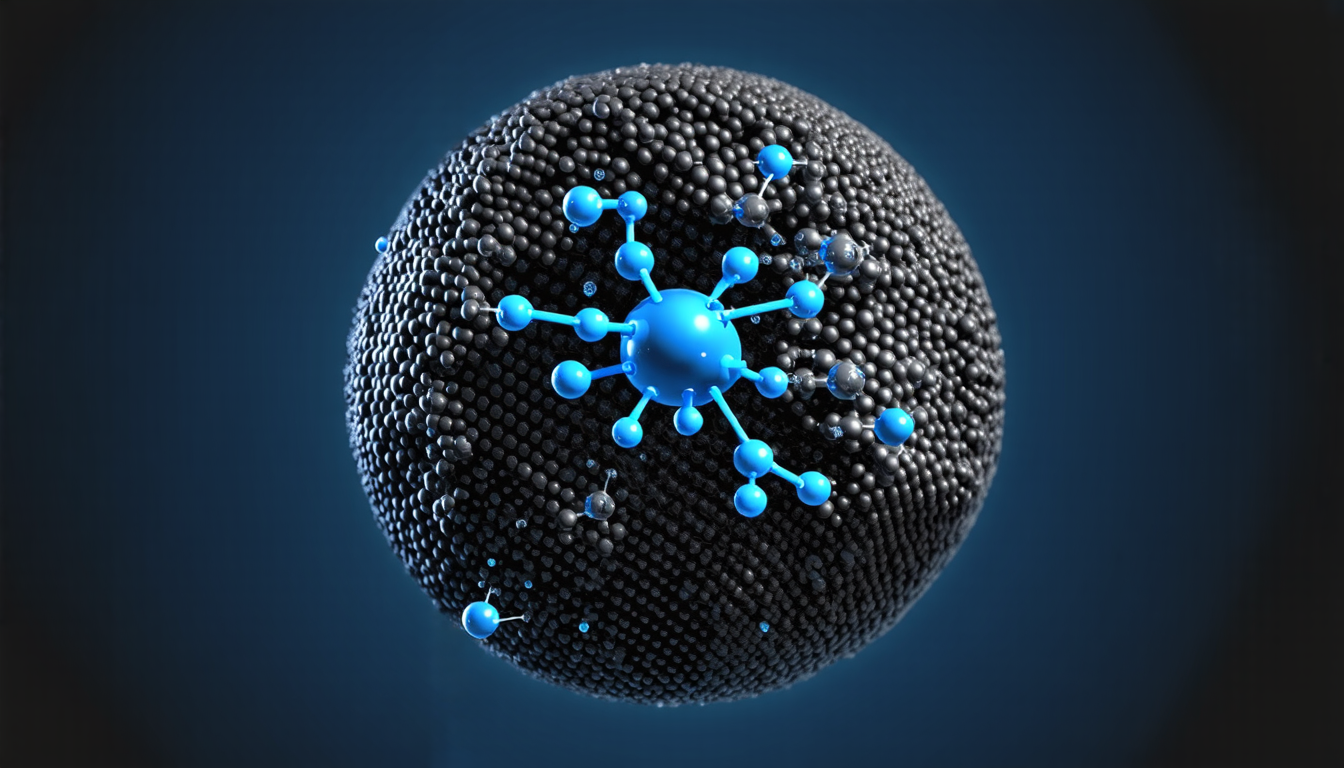
The study found that when water is trapped inside the carbon pores, it forms clusters of molecules that behave differently than bulk water. The clusters have a unique structure that allows them to interact with the surrounding carbon atoms in ways that influence their physical properties.
One key finding was that the clusters can alter the way sound waves propagate through the material. This has significant implications for fields like energy storage, where understanding how fluids move and interact is crucial. For example, better control over fluid dynamics could lead to more efficient batteries or fuel cells.
The research also sheds light on how carbon materials absorb and release pollutants from water and air. By understanding how water behaves inside these pores, scientists can develop new strategies for cleaning up contaminated sites or purifying drinking water.
The study’s findings have far-reaching implications for a range of fields, from energy and environmental science to materials engineering. It highlights the importance of considering the molecular-level behavior of fluids in complex systems like carbon materials.
By peering into the tiny pores of these materials, scientists can gain insights that could lead to new breakthroughs in areas like energy storage, pollution remediation, and advanced materials development. The research is a testament to the power of interdisciplinary collaboration and the importance of understanding the intricate details of complex systems.
Cite this article: “Unraveling the Mysteries of Waters Behavior in Carbon Pores”, The Science Archive, 2025.
Water, Carbon Materials, Energy Storage, Environmental Remediation, Ultrasonic Waves, Neutron Scattering, Molecular Level, Fluid Dynamics, Batteries, Fuel Cells





