
Saturday 08 March 2025
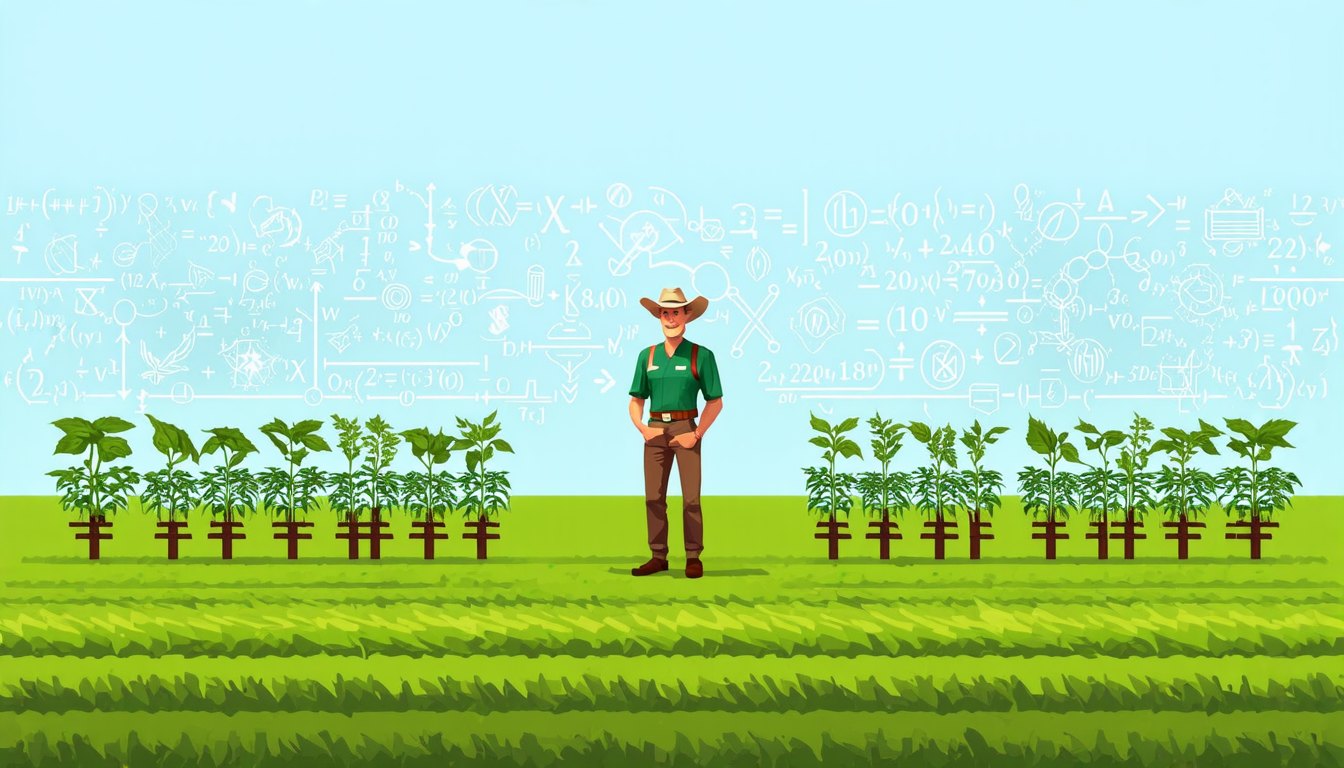
Scientists have made a significant breakthrough in understanding how to create the most efficient designs for testing new plant varieties. These designs, known as augmented square arrays, are used in agriculture to compare the performance of different plants and identify those that will thrive best in specific conditions.
The process begins with a smaller design, called a contraction, which is then expanded into a larger array. The key to creating an efficient design lies in selecting the right contraction, one that maximizes the number of unique combinations of plant varieties while minimizing the number of repeated tests.
Researchers have long struggled to find the perfect contraction, as the possibilities are virtually endless. However, a recent paper has shed new light on this problem by uncovering a link between the efficiency of the contraction and the resulting augmented design.
The study found that the best augmented designs can be achieved by using optimal contractions, which are those that have been carefully crafted to maximize their efficiency. This means that farmers and researchers can now focus on creating the most effective contractions, knowing that this will lead to better results in their experiments.
One of the key benefits of this breakthrough is that it allows scientists to test more plant varieties than ever before. This is particularly important for agriculture, where new crop varieties are constantly being developed to meet changing environmental conditions and consumer demands.
The research also has implications for other fields, such as medicine and materials science, where similar design challenges exist. By understanding how to create the most efficient designs, scientists can develop new treatments and products more quickly and cost-effectively.
The process of creating these augmented square arrays is complex, involving mathematical calculations and computer simulations. However, the end result is well worth the effort, as it allows researchers to gain valuable insights into the behavior of different plant varieties under various conditions.
In practical terms, this breakthrough means that farmers can expect more precise results from their experiments, allowing them to make better decisions about which crops to plant and how to optimize their yields. It also opens up new possibilities for research in fields such as ecology and environmental science, where scientists can use these designs to study the impact of different conditions on plant growth.
Overall, this breakthrough is an important step forward in the field of agricultural research, with far-reaching implications for our understanding of the natural world and our ability to improve it.
Cite this article: “Unlocking Efficient Designs for Plant Variety Testing”, The Science Archive, 2025.
Plant Varieties, Agricultural Research, Augmented Square Arrays, Contraction, Efficiency, Design, Testing, Optimization, Yield, Ecology