
Saturday 08 March 2025
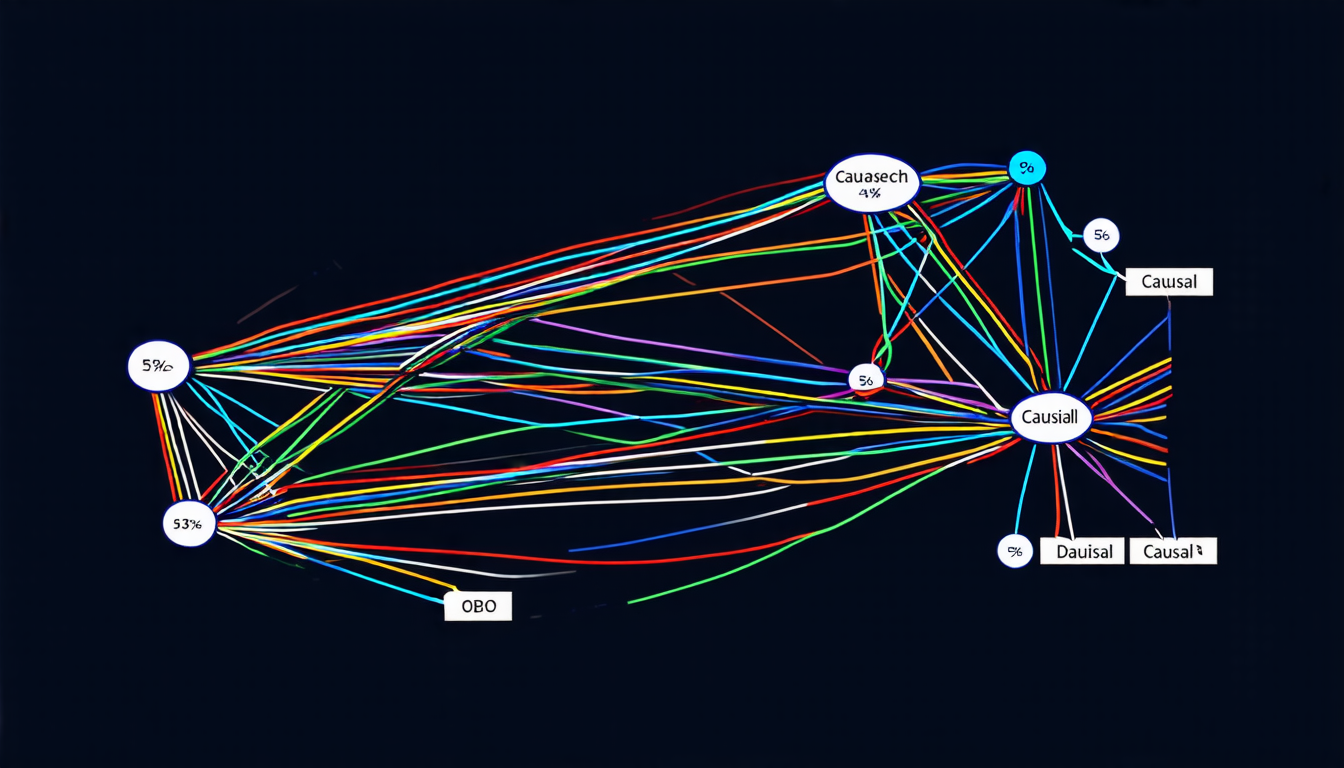
Researchers have long struggled to untangle the complex web of cause and effect in observational studies, where scientists try to understand how different variables influence each other without being able to manipulate them directly. A new approach has been developed that can help tease apart these relationships, even when there are multiple factors at play.
The problem is that many studies rely on proxy variables, such as instrumental variables or negative controls, which can be unreliable or difficult to find. In the case of multiple treatments, it’s particularly challenging to identify the effects of each individual treatment while accounting for unmeasured confounding variables.
To address this issue, researchers have developed a novel method that assumes sparsity in the causal effects, meaning that most treatments have no effect on the outcome variable. This approach uses a combination of statistical techniques and machine learning algorithms to identify the non-zero effects.
The method has been tested using both simulated and real-world data from Genome-Wide Association Studies (GWAS). The results show that it outperforms traditional methods in identifying causal effects, even when there are multiple treatments involved.
One key advantage of this approach is its ability to handle high-dimensional data, where the number of variables greatly exceeds the sample size. This is particularly important in modern genomics research, where scientists often work with thousands or even millions of genetic markers.
The method also has practical applications beyond genetics. For example, it could be used to study the effects of multiple environmental factors on disease risk or to understand how different socioeconomic indicators influence educational outcomes.
In addition to its technical advantages, this approach offers a more intuitive understanding of causality. By assuming sparsity in the causal effects, researchers can focus on identifying the most important relationships between variables, rather than being overwhelmed by a sea of potential interactions.
Overall, this new method has the potential to revolutionize our understanding of cause and effect in observational studies. By providing a more powerful and intuitive tool for identifying causal relationships, it could lead to significant advances in fields such as medicine, social sciences, and economics.
Cite this article: “Unraveling Complex Relationships: A Novel Approach to Identifying Causal Effects”, The Science Archive, 2025.
Causal Effects, Observational Studies, Machine Learning, Statistical Techniques, Genome-Wide Association Studies, Gwas, High-Dimensional Data, Genomics, Environmental Factors, Socioeconomic Indicators