

Saturday 08 March 2025
The quest for reliable energy storage has been a longstanding challenge in the field of power systems engineering. As renewable energy sources become increasingly prevalent, the need for efficient and effective energy storage solutions grows more pressing by the day. In this context, researchers have been exploring various approaches to optimize energy storage operations under uncertainty.
A recent paper presents a novel approach to energy storage arbitrage, which involves buying electricity at low prices and selling it back into the grid when demand is high. The authors develop a mathematical framework that incorporates three types of uncertainty: price forecasts, energy storage capacity, and market conditions. By analyzing these uncertainties, they create an efficient frontier that allows energy storage operators to trade off profit against risk.
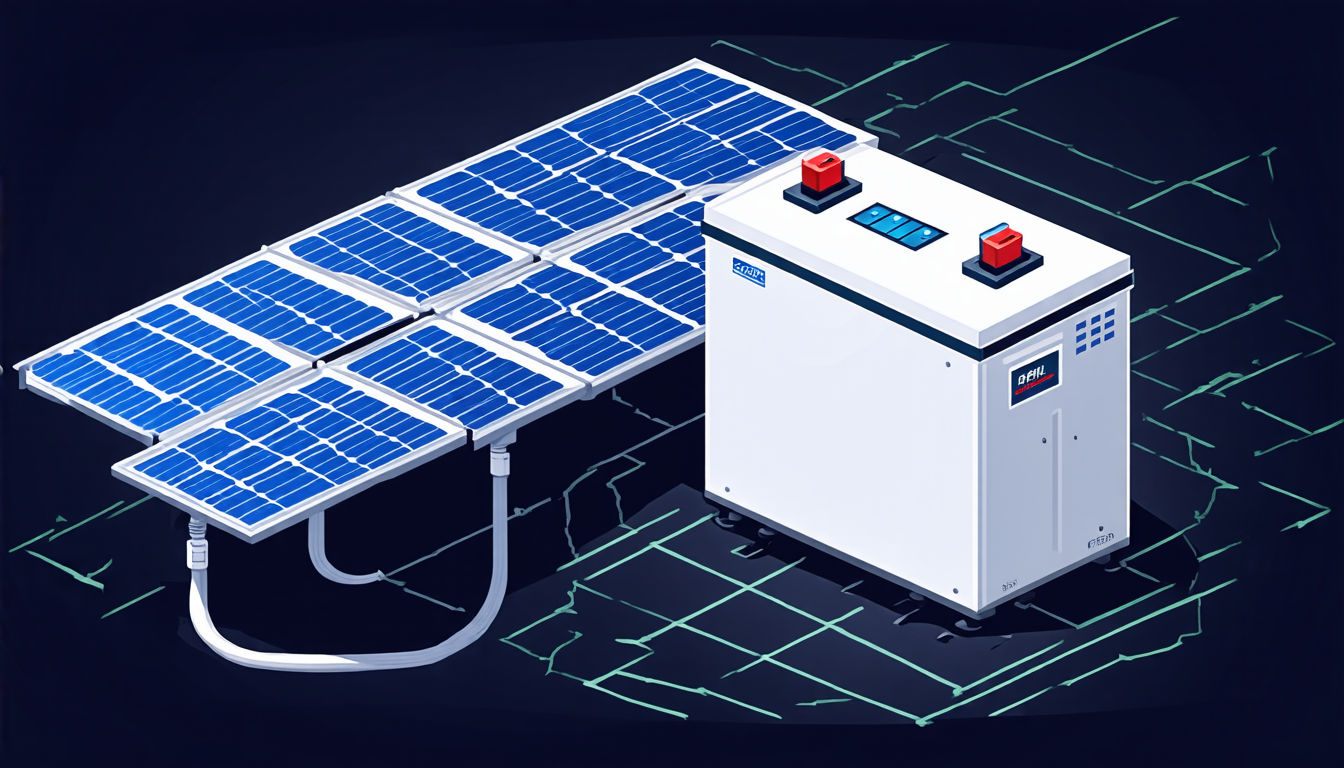
The framework is particularly useful for distributed energy storage systems, which are becoming increasingly popular as homeowners and businesses look to reduce their reliance on the grid. These systems typically involve small-scale energy storage units, such as batteries or fuel cells, that can be deployed at various locations throughout a network.
One of the key innovations of this paper is its use of robust optimization techniques to handle uncertainty. Rather than relying solely on probabilistic models, the authors employ a combination of polyhedral and ellipsoidal uncertainty sets to capture the complex relationships between different variables in the system.
The results are impressive: the framework is able to achieve higher profits while reducing risk compared to traditional approaches. The authors also demonstrate that their method can adapt to changing market conditions, making it particularly well-suited for real-world applications.
The implications of this research are far-reaching. For one, it has the potential to unlock new revenue streams for energy storage operators by allowing them to better manage risk and optimize profits. Additionally, the framework could play a key role in the development of more resilient and efficient grid systems.
In practice, the approach would involve using historical data to train machine learning models that can predict electricity prices and market conditions. These models would then be used to inform energy storage decisions, such as when to charge or discharge batteries.
While there is still much work to be done before this technology can be widely deployed, the potential benefits are undeniable. As the world continues to transition towards a more sustainable energy future, solutions like this one will be essential for ensuring that our grids remain reliable and efficient.
Cite this article: “Optimizing Energy Storage Operations Under Uncertainty”, The Science Archive, 2025.
Energy Storage, Power Systems Engineering, Renewable Energy, Uncertainty, Optimization, Arbitrage, Distributed Energy Storage, Robust Optimization, Machine Learning, Grid Systems





