

Saturday 08 March 2025
The quest for a more interpretable machine learning model has led researchers to develop a novel decision-making framework, dubbed the Learning Hyperplane Tree (LHT). This innovative approach offers a transparent and efficient way to classify data, outperforming traditional tree models in various public datasets.
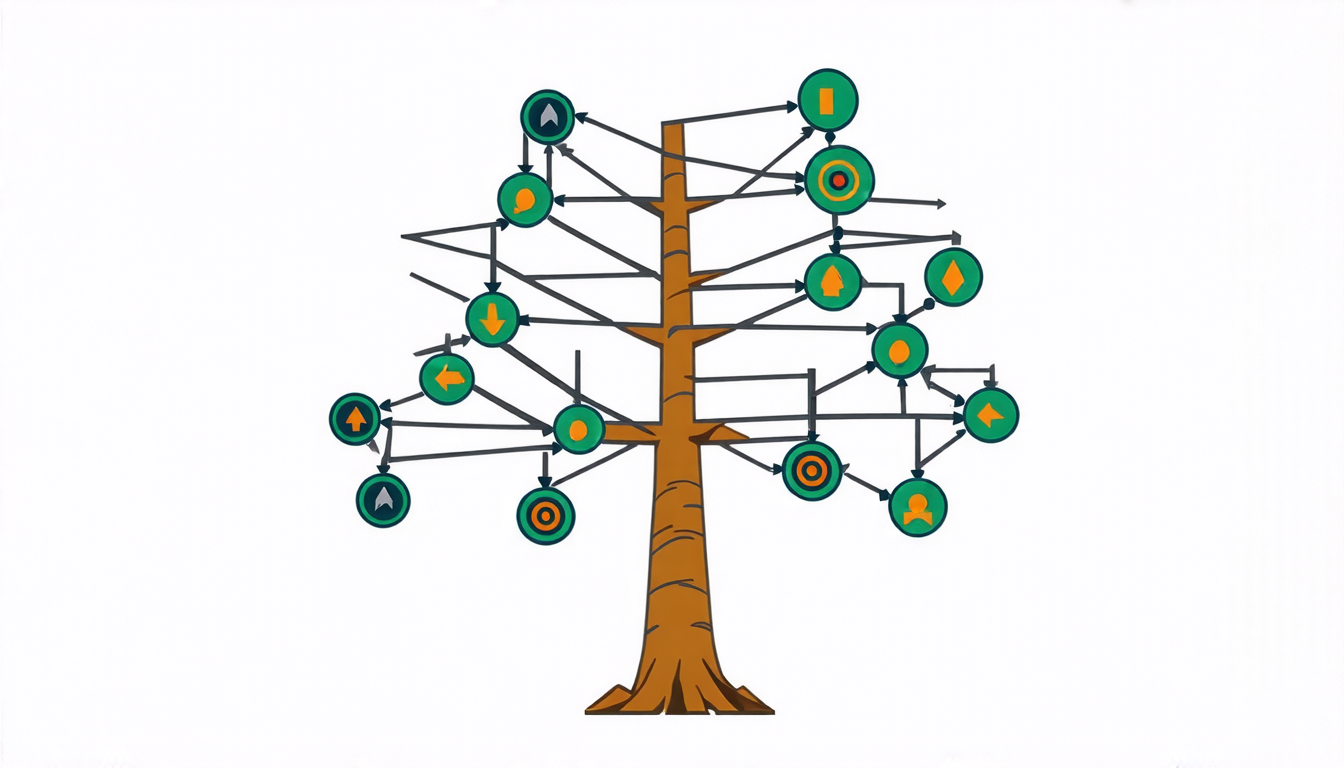
At its core, LHT is a multi-stage splitting strategy that partitions data using hyperplanes. By introducing new hyperplanes with each branching, the model progressively refines the separation between target and non-target class samples. Although individual splits may not achieve perfect separation, LHT’s structured approach enables clear tracking of feature contributions to the classification process.
The LHT framework comprises a series of branching blocks, each defined by a set of hyperplanes that separate data points into distinct regions. Each block is designed to handle a specific binary classification problem, and the results are aggregated to solve the overall classification task. The piecewise linear structure of LHT allows for fast inference and high interpretability.
One of the key advantages of LHT is its ability to provide insight into feature importance. By visualizing the feature weights associated with each branching block, researchers can gain a deeper understanding of how individual features contribute to the classification process. This transparency is particularly valuable in applications where data interpretation is crucial, such as medical diagnosis or financial forecasting.
To demonstrate the effectiveness of LHT, researchers tested the model on several public datasets, including the wine dataset. The results showed that LHT outperformed traditional tree models, achieving superior test accuracy and fast inference times. Furthermore, the visualizations of feature weights provided valuable insights into how individual features contributed to the classification process.
The development of LHT highlights the ongoing quest for more interpretable machine learning models. As data-driven decision-making becomes increasingly prevalent, the need for transparent and efficient models grows. By offering a structured approach to classification, LHT provides a promising solution for applications where data interpretation is essential.
Cite this article: “Learning Hyperplane Tree: A Novel Decision-Making Framework for Interpretable Classification”, The Science Archive, 2025.
Machine Learning, Decision-Making Framework, Learning Hyperplane Tree, Classification, Transparency, Interpretability, Feature Importance, Data Interpretation, Public Datasets, Tree Models





