

Saturday 08 March 2025
The internet is a busy place, with millions of devices connected and sending data back and forth every second. But as more people get online, it’s becoming harder for all that traffic to flow smoothly. That’s where congestion control comes in – a crucial system that helps prevent network overload and keeps the internet running efficiently.
But traditional congestion control methods have their limits. They can be slow to react, causing delays and packet loss when networks get busy. And with the rise of new applications like online gaming and video streaming, these limitations are becoming more apparent than ever.
Enter Enhanced Explicit Congestion Notification (EECN), a new approach that’s designed to tackle these challenges head-on. Developed by researchers, EECN is a smarter way to manage network congestion, one that takes into account the unique demands of modern internet usage.
At its heart, EECN is all about feedback – giving devices on the network more information about how much data can be sent at any given time. This allows them to adjust their transmission rates accordingly, preventing overload and ensuring a smooth flow of traffic.
But what really sets EECN apart is its ability to distinguish between different types of internet traffic. While traditional congestion control methods treat all data equally, EECN recognizes that some applications are more sensitive to delay and packet loss than others. For example, online gamers need fast and reliable connections to avoid lag and disconnections.
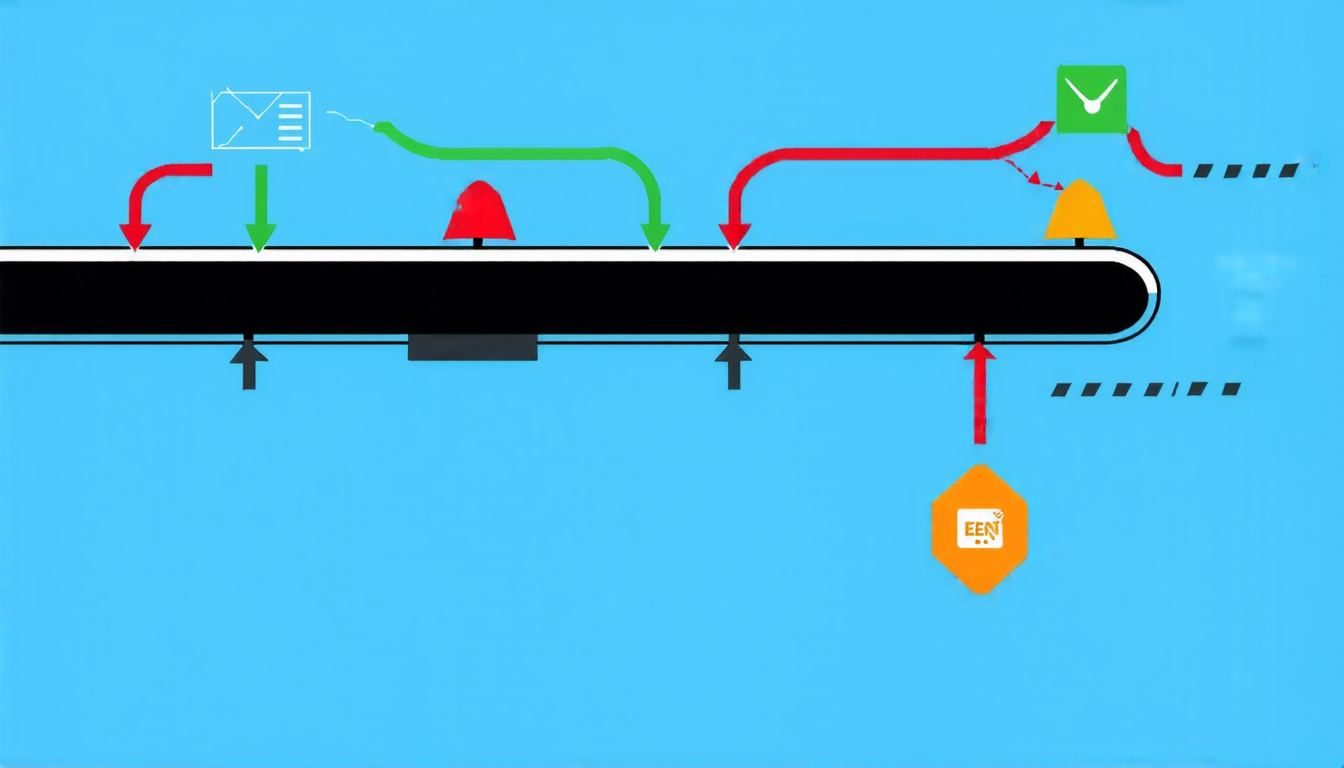
EECN achieves this through a clever combination of two mechanisms – explicit congestion notification (ECN) and multilevel congestion feedback. ECN is a signaling system that tells devices when the network is getting congested, while multilevel feedback provides more detailed information about the severity of the congestion.
Together, these mechanisms allow EECN to fine-tune its response to changing network conditions. When traffic gets busy, EECN can quickly adjust transmission rates to prevent overload, while still giving priority to critical applications like online gaming and video streaming.
The results are impressive – in simulations, EECN outperformed traditional congestion control methods by reducing packet loss and delay by up to 70%. And with its ability to adapt to changing network conditions, EECN promises to keep the internet running smoothly even as traffic continues to grow.
Of course, this is just the beginning. As the internet becomes increasingly important for our daily lives, developing more efficient and effective congestion control systems will be crucial.
Cite this article: “Enhancing Internet Efficiency with Enhanced Explicit Congestion Notification”, The Science Archive, 2025.
Congestion Control, Internet Traffic, Network Overload, Online Gaming, Video Streaming, Enhanced Explicit Congestion Notification, Eecn, Congestion Management, Packet Loss, Delay Reduction





