

Saturday 08 March 2025
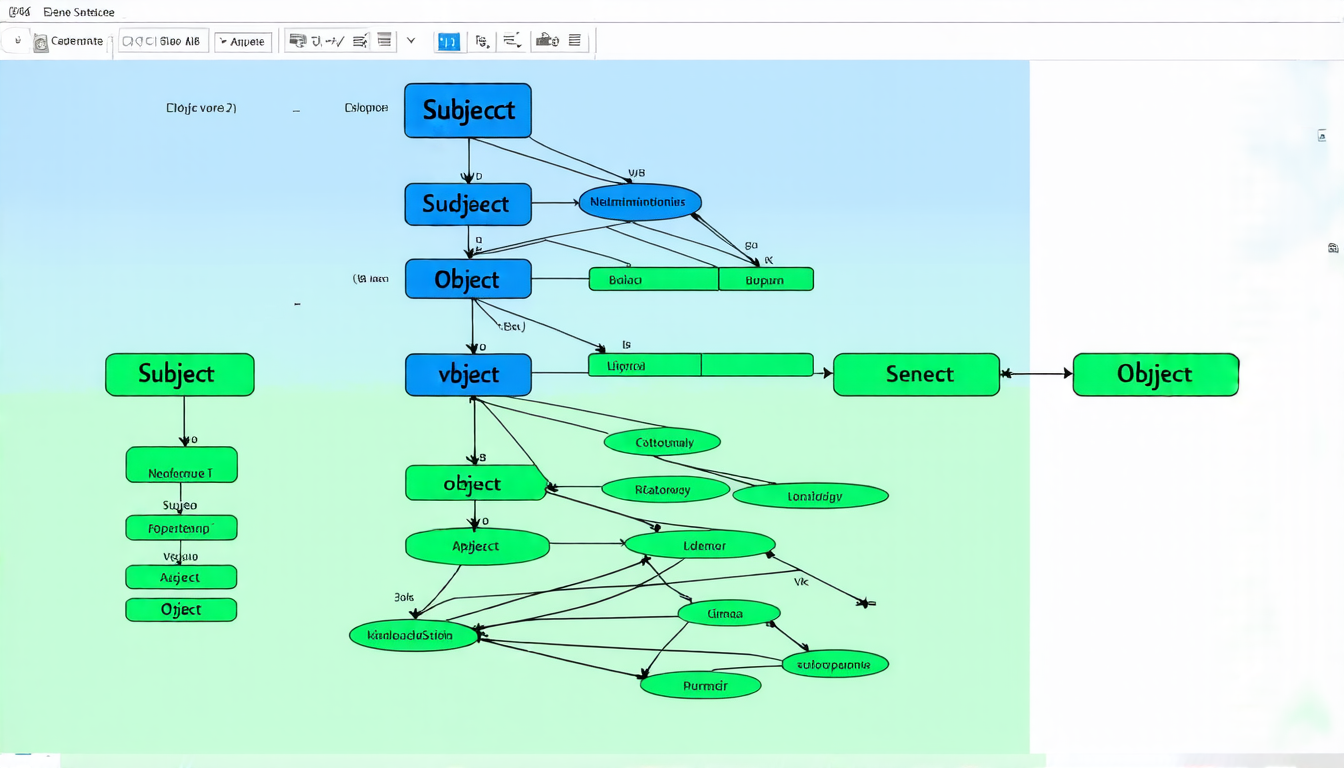
Recent research has shed new light on how language models process hierarchical and linear structures, a fundamental aspect of human communication. By analyzing the behavior of large language models, scientists have discovered that these AI systems are capable of distinguishing between grammatical rules that govern hierarchical relationships in language, such as subject-verb-object word order, and those that govern linear relationships, like word sequence.
To investigate this phenomenon, researchers trained seven different language models on a dataset containing English, Italian, Japanese, and Jabberwocky (a fictional language) sentences with varying degrees of complexity. The models were then tested on their ability to identify grammatically correct and incorrect sentences in each language.
The results showed that the language models performed significantly better on hierarchical structures than linear ones. This suggests that AI systems are capable of recognizing and processing hierarchical relationships, such as the subject-verb-object word order, which is a fundamental aspect of human language.
But what’s more fascinating is that the researchers found that different components within the language models were responsible for processing these two types of structures. Specifically, they identified specific neurons in the model’s attention mechanism and multilayer perceptron (MLP) layers that were highly active when processing hierarchical structures, while others were more active when processing linear ones.
To further investigate this finding, the researchers conducted a series of ablation experiments, where they selectively removed certain components from the language models and evaluated their performance on both hierarchical and linear grammars. The results showed that ablating the hierarchy-sensitive components significantly impacted the model’s ability to process hierarchical structures, while ablating linearity-sensitive components had little effect.
These findings have significant implications for our understanding of how AI systems process language. They suggest that these systems are capable of recognizing and processing complex hierarchical relationships, which is a key aspect of human communication. Furthermore, they highlight the importance of considering the internal workings of language models when designing and evaluating their performance on specific tasks.
The researchers also explored the ability of the language models to generalize from one language to another. They found that the models were able to adapt to new languages with varying degrees of success, but that their performance was significantly better when tested on grammatical structures that were similar in both the training and test languages.
Overall, this research provides valuable insights into the internal workings of language models and how they process hierarchical and linear structures. It highlights the importance of considering these factors when designing AI systems for tasks that require complex linguistic processing, such as natural language understanding and generation.
Cite this article: “Language Models Hierarchical Processing Abilities Revealed”, The Science Archive, 2025.
Language Models, Hierarchical Structures, Linear Relationships, Grammatical Rules, Subject-Verb-Object Word Order, Word Sequence, Attention Mechanism, Multilayer Perceptron, Ablation Experiments, Language Processing





