
Saturday 08 March 2025
A team of researchers has developed a new method for analyzing crime patterns that takes into account the complex relationships between different types of crimes and their locations.
Traditional approaches to analyzing crime data often focus on individual crimes, such as burglaries or assaults, without considering how they might be connected. But this approach can miss important patterns and trends that occur when multiple crimes are taken together.
The new method uses a type of statistical model called a Dirichlet process mixture model, which allows researchers to identify clusters of similar crimes and analyze their relationships with each other. The model can also account for the fact that different types of crimes may be more or less common in certain areas, and that crime patterns can change over time.
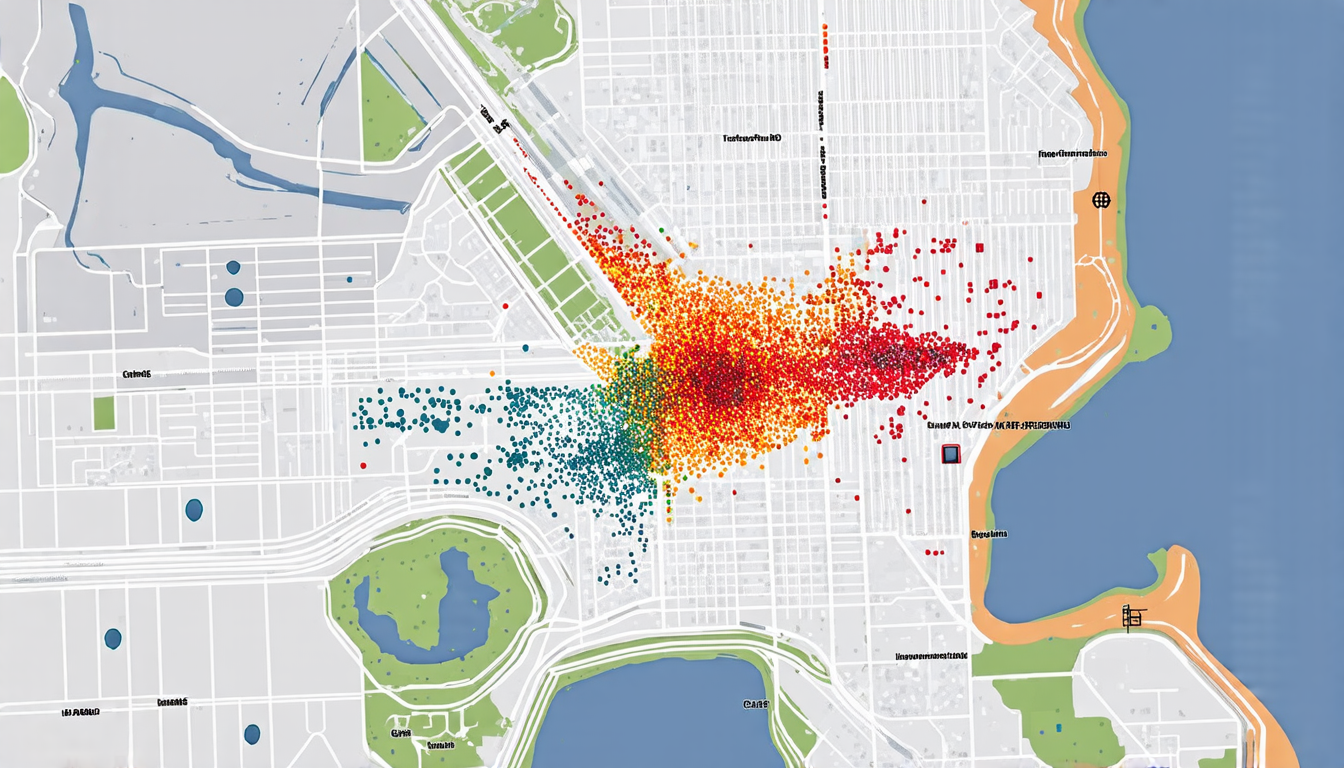
The researchers used the new method to analyze data on crime patterns in Valencia, Spain, which showed that certain types of crimes tend to cluster together in specific areas. For example, they found that areas with high levels of entertainment and nightlife activity were more likely to have a higher incidence of theft and robbery, while areas with high levels of financial activity were more likely to have a higher incidence of fraud.
The study also found that crime patterns can change over time, with certain types of crimes becoming more or less common in different areas. For example, the researchers found that areas with high levels of tourist activity tend to experience a surge in pickpocketing and petty theft during peak tourist seasons.
These findings have important implications for law enforcement agencies, which can use the new method to identify areas where crime is likely to occur and target their resources accordingly. The study also highlights the importance of considering the complex relationships between different types of crimes and their locations when developing strategies to reduce crime.
The researchers hope that their work will help to improve our understanding of crime patterns and inform more effective crime-fighting strategies. By taking into account the complex relationships between different types of crimes and their locations, they believe that law enforcement agencies can develop more targeted and effective approaches to reducing crime.
In addition to its potential applications in law enforcement, the new method could also be used in other fields such as urban planning and public health. For example, it could be used to identify areas where there is a high concentration of risk factors for certain types of disease or injury, and to develop targeted interventions to address these risks.
Overall, the study highlights the importance of considering the complex relationships between different types of crimes and their locations when developing strategies to reduce crime.
Cite this article: “Unraveling Crime Patterns: A New Statistical Approach”, The Science Archive, 2025.
Crime Patterns, Statistical Model, Dirichlet Process Mixture Model, Clusters, Relationships, Crime Analysis, Law Enforcement, Urban Planning, Public Health, Crime Reduction