
Saturday 08 March 2025
Scientists have made a significant breakthrough in understanding how gases behave near solid surfaces, a discovery that could have far-reaching implications for fields such as aerodynamics and materials science.
The research focuses on the boundary layer, a thin region where gas molecules interact with a surface. This interaction is crucial because it determines how gases move and flow around objects. However, due to its complexity, the behavior of this boundary layer has long been a topic of debate among physicists and engineers.
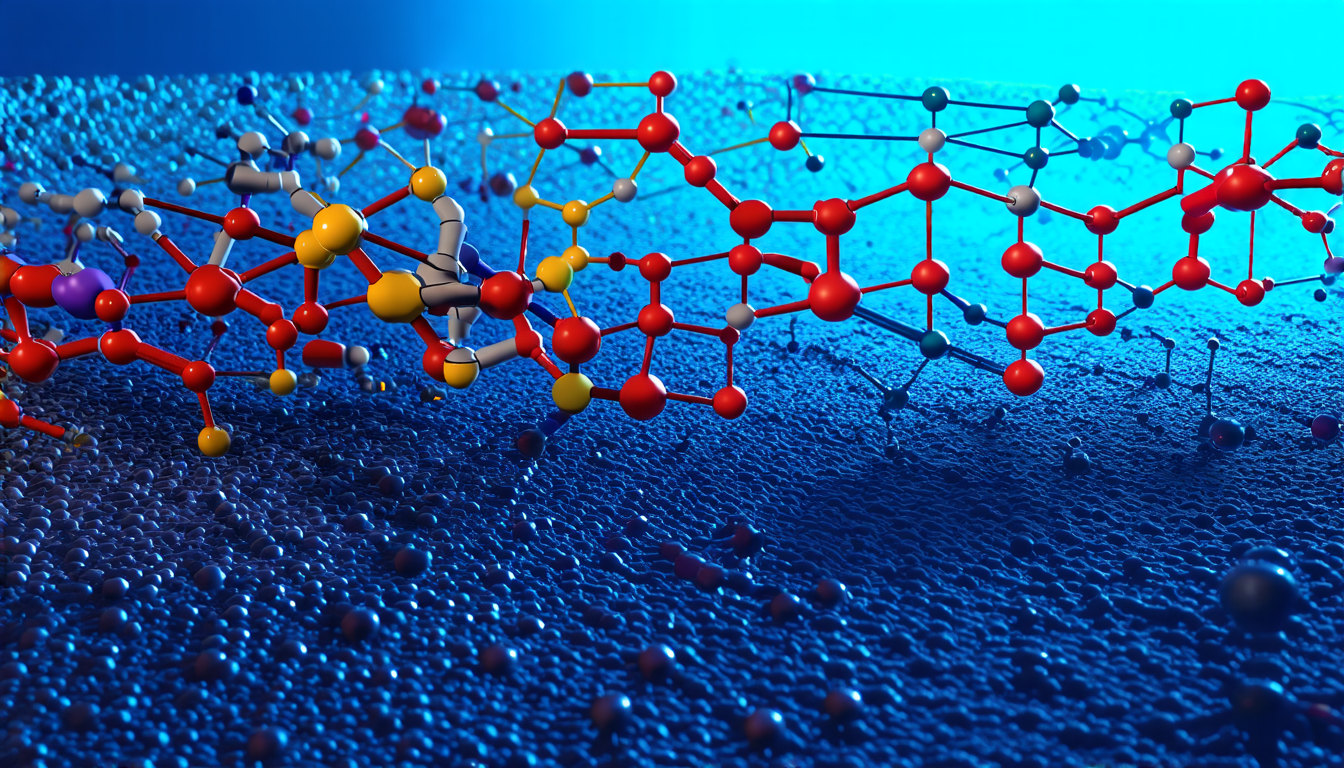
To tackle this challenge, researchers used computer simulations and mathematical models to study the interactions between gas molecules and solid surfaces. They found that the gas molecules behave in a way that is different from what was previously thought. Instead of following a uniform pattern, they form a complex layer with varying densities and velocities.
This discovery has significant implications for fields such as aerodynamics, where understanding the behavior of gases near surfaces is crucial for designing more efficient aircraft and wind turbines. It also has potential applications in materials science, where controlling the interactions between gas molecules and solid surfaces could lead to new technologies for filtering and cleaning.
One of the most exciting aspects of this research is its ability to predict the behavior of gases at the molecular level. By using advanced computer simulations, scientists can now model the interactions between individual gas molecules and solid surfaces with unprecedented accuracy. This allows them to make precise predictions about how gases will behave in different environments, a capability that has the potential to revolutionize many fields.
The researchers’ findings also shed new light on the role of surface roughness in affecting gas behavior. In the past, scientists had assumed that smooth surfaces were necessary for efficient gas flow. However, this research suggests that even slightly rough surfaces can have a significant impact on gas behavior, leading to more complex and unpredictable patterns.
Overall, this breakthrough has the potential to transform our understanding of gas behavior near solid surfaces. By providing new insights into the interactions between molecules and surfaces, it could lead to innovations in fields such as aerodynamics, materials science, and environmental engineering.
Cite this article: “Unlocking the Secrets of Gas Behavior Near Solid Surfaces”, The Science Archive, 2025.
Gases, Solid Surfaces, Boundary Layer, Aerodynamics, Materials Science, Computer Simulations, Mathematical Models, Gas Molecules, Surface Roughness, Molecular Level