

Saturday 08 March 2025
The task of allocating tasks to a team of robots can be a complex and time-consuming process, particularly in industries such as warehousing and logistics where efficiency is paramount. A new study has shed light on the best ways to approach this challenge, revealing that artificial intelligence (AI) algorithms can significantly improve the speed and effectiveness of task allocation.
Researchers have been exploring various AI-based methods for solving the task allocation problem, including machine learning and reinforcement learning approaches. These techniques involve training algorithms to learn from data and adapt to new situations, allowing them to make decisions quickly and efficiently.
One common approach is to use a decentralized market-based algorithm, where each robot acts as a bidder in an auction-like system. This allows robots to negotiate with each other and allocate tasks based on their capabilities and availability. However, this approach can be prone to inefficiencies and conflicts, particularly if the number of robots or tasks increases.
To address these limitations, researchers have turned to centralized algorithms that use AI to optimize task allocation. These methods involve using machine learning models to analyze data from sensors and other sources, allowing them to predict and adapt to changing conditions in real-time.
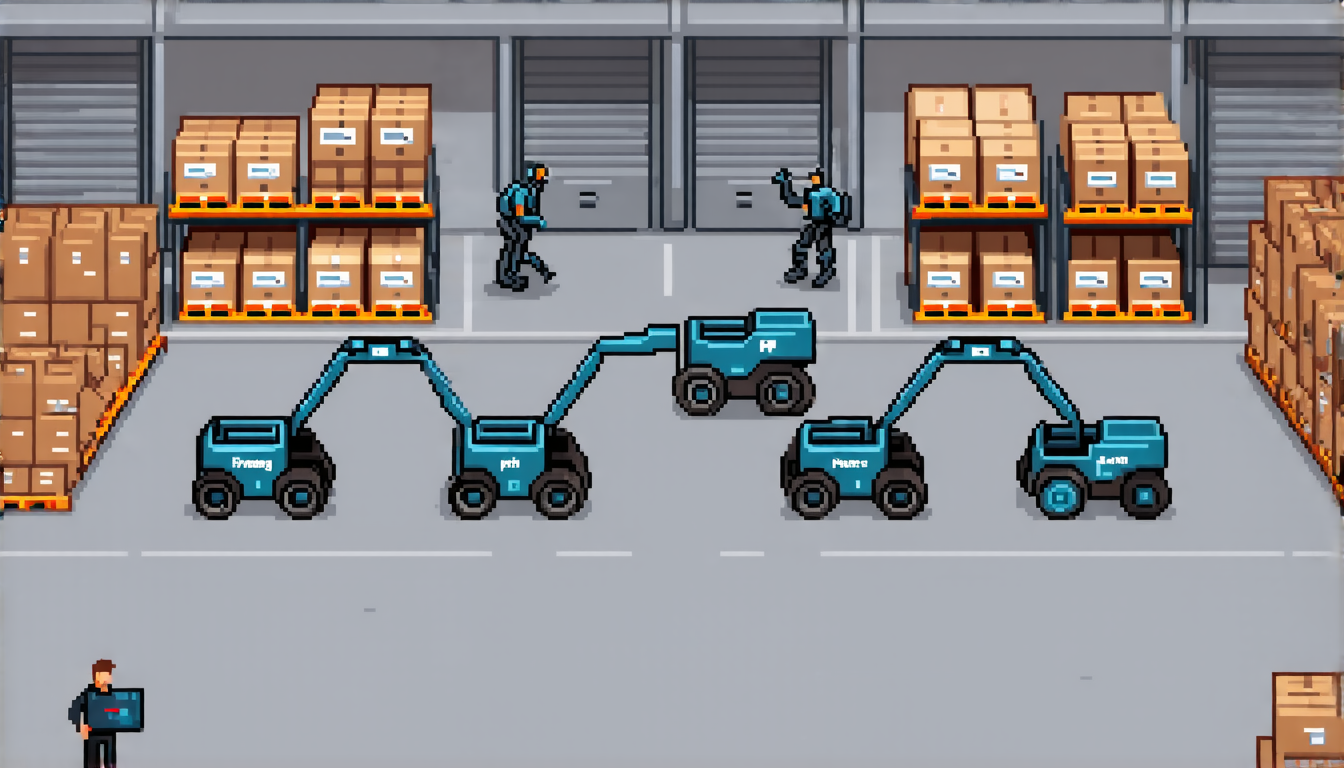
A recent study published in a leading scientific journal has demonstrated the effectiveness of this approach. Researchers developed an AI-based algorithm that used machine learning models to optimize task allocation for a fleet of autonomous mobile robots (AMRs) in a warehouse environment.
The results were impressive, with the AI algorithm able to reduce the time taken to complete tasks by up to 30% compared to traditional methods. The algorithm also improved the overall efficiency of the system, allowing AMRs to work together more effectively and reducing the risk of conflicts or inefficiencies.
The study highlights the potential benefits of using AI-based algorithms for task allocation in industries such as warehousing and logistics. By optimizing task allocation, companies can improve efficiency, reduce costs, and increase productivity. The technology also has broader applications, such as in healthcare and transportation, where it could be used to optimize the allocation of resources and personnel.
The use of AI-based algorithms is likely to become increasingly important in industries that rely on automation and robotics. As the number of robots and devices increases, the need for efficient task allocation will only grow more pressing. By developing advanced algorithms that can learn and adapt to new situations, companies can stay ahead of the curve and reap the benefits of increased efficiency and productivity.
The study’s findings have significant implications for industries that rely on automation and robotics.
Cite this article: “AI-Optimized Task Allocation Revolutionizes Efficiency in Warehousing and Logistics”, The Science Archive, 2025.
Artificial Intelligence, Task Allocation, Robotics, Warehousing, Logistics, Machine Learning, Reinforcement Learning, Decentralized Algorithm, Centralized Algorithm, Autonomous Mobile Robots





