

Saturday 08 March 2025
A team of researchers has made significant progress in understanding the complexity of matching cut problems on bipartite graphs, a fundamental concept in computer science and mathematics.
For decades, scientists have been trying to crack the code of matching cut problems, which involve finding the maximum number of edges that can be removed from a graph without disconnecting it. This may seem like an abstract puzzle, but it has real-world applications in fields such as networking, scheduling, and even biology.
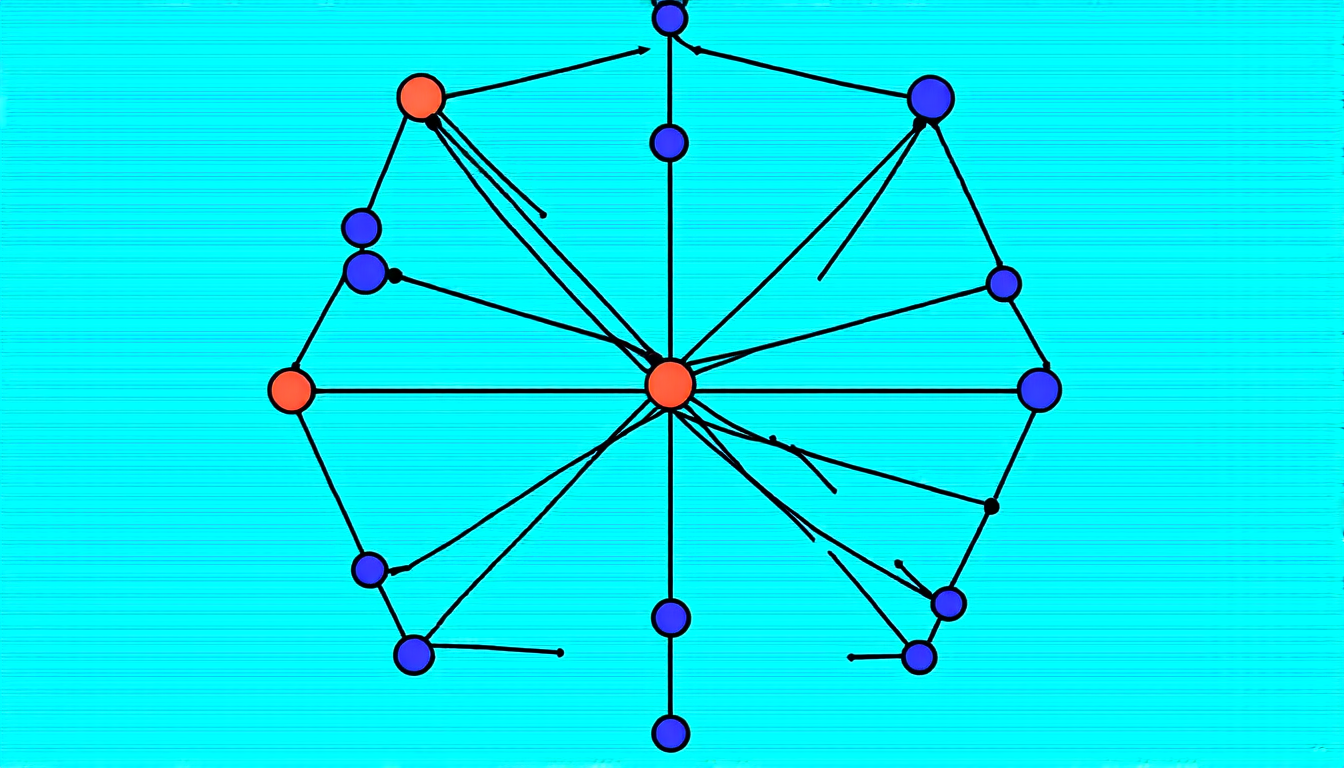
The problem becomes even more challenging when considering bipartite graphs, where one set of nodes connects only to another set of nodes. Bipartite graphs are particularly important because they can be used to model complex systems, such as social networks or biological networks, where different types of entities interact with each other.
By studying the properties of bipartite graphs, researchers have been able to identify certain patterns and structures that make it easier to solve matching cut problems. For example, if a graph has a small radius (measured in terms of the distance between nodes), it is generally easier to find the maximum number of edges that can be removed without disconnecting it.
The researchers used a combination of theoretical analysis and computational experiments to understand the complexity of matching cut problems on bipartite graphs. They found that, for certain types of graphs, the problem can be solved efficiently using existing algorithms, while for others, it becomes much harder to solve.
One of the key findings was that the diameter (the maximum distance between any two nodes in the graph) plays a crucial role in determining the complexity of the matching cut problem. Specifically, if the diameter is small, the problem can be solved more easily, but as the diameter increases, the problem becomes much harder to solve.
The researchers also discovered that the radius (the minimum distance between any node and its farthest neighbor) has an impact on the complexity of the problem. For graphs with a large radius, it may not be possible to find the maximum number of edges that can be removed without disconnecting the graph.
These findings have significant implications for the development of algorithms and computational methods for solving matching cut problems. By understanding the properties of bipartite graphs, researchers can design more efficient algorithms that can solve these problems more effectively.
The study also highlights the importance of considering the structure and properties of real-world networks in order to develop effective solutions to complex problems.
Cite this article: “Cracking the Code of Matching Cut Problems on Bipartite Graphs”, The Science Archive, 2025.
Matching Cut Problems, Bipartite Graphs, Computer Science, Mathematics, Graph Theory, Network Analysis, Algorithms, Computational Complexity, Network Structure, Graph Properties





