

Saturday 08 March 2025
Networks have become an integral part of our daily lives, connecting us to each other and to vast amounts of information. But behind the scenes, managing these networks is a complex task that requires precision and accuracy. A team of researchers has developed a new approach to network configuration translation, making it easier for administrators to switch between different devices and platforms.
The challenge lies in translating configurations from one device or platform to another. Each device has its own unique syntax, semantics, and functionality, making it difficult to translate configurations accurately. The problem is further compounded by the fact that many devices use different protocols and languages to communicate with each other.
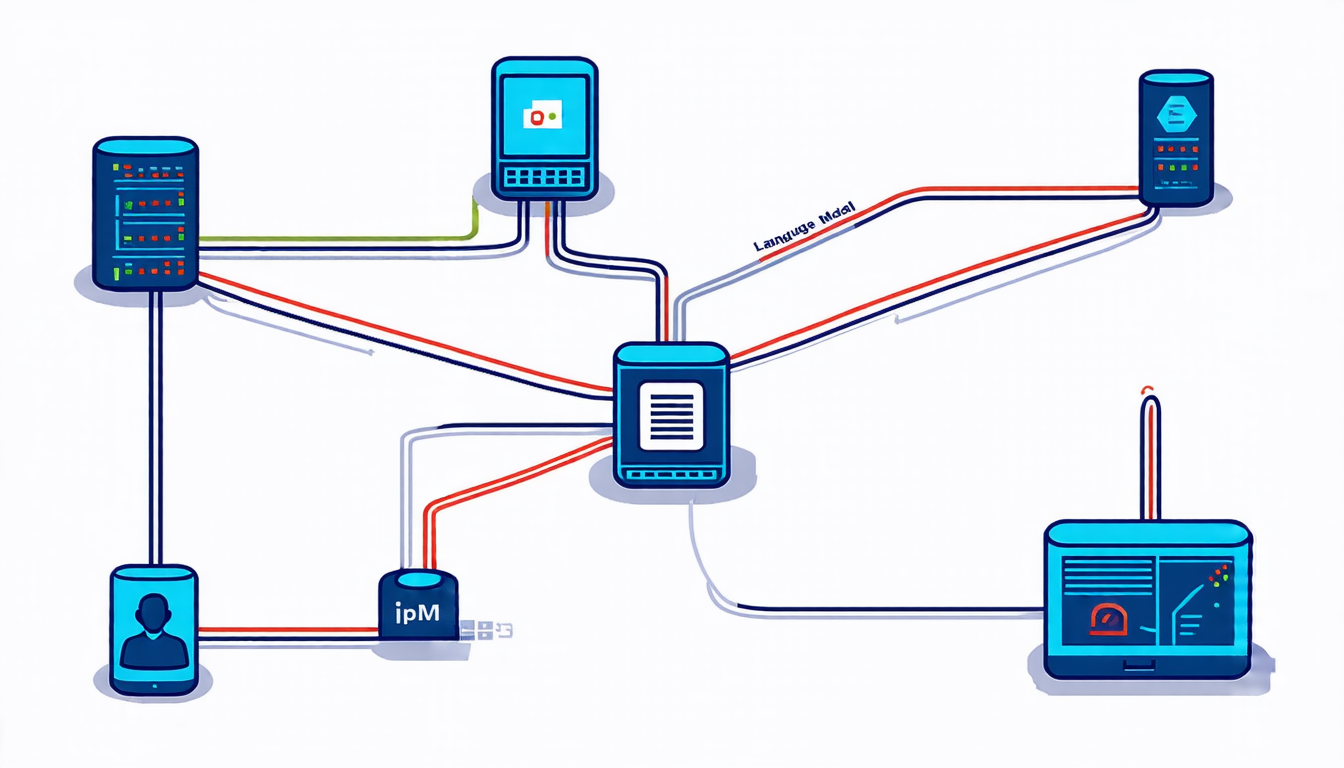
To address this issue, the researchers developed an intent-based framework for network configuration translation. This approach uses large language models (LLMs) to analyze and understand the syntax and semantics of different device configurations. By incorporating LLMs into the translation process, administrators can translate configurations more accurately and efficiently.
The framework consists of several key components. First, a parser module is used to extract intent from the source configuration. Intent refers to the underlying purpose or goal of the configuration, such as enabling OSPF protocol on an interface. The parser uses LLMs to analyze the syntax and semantics of the source configuration and identify relevant intent.
Next, the retrieved intent is used to retrieve corresponding configuration manuals for the target device. These manuals contain information about the syntax, semantics, and functionality of the target device’s configurations. By using LLMs to analyze these manuals, administrators can generate translated configurations that are accurate and precise.
The framework also includes a verification module that checks the accuracy and correctness of the translated configuration. This module uses LLMs to analyze the translated configuration against the original source configuration and identify any syntax or semantic errors.
To evaluate the effectiveness of the framework, the researchers conducted experiments using real-world network configurations from different devices and platforms. The results showed that the framework was able to translate configurations with high accuracy and precision, outperforming existing methods in many cases.
The implications of this research are significant for network administrators who need to manage complex networks with multiple devices and platforms. By providing a more accurate and efficient way to translate configurations, this approach can reduce errors and downtime, improving overall network performance and reliability.
In the future, the researchers plan to continue refining their framework and exploring new applications for LLMs in network configuration translation.
Cite this article: “Intent-Based Framework for Network Configuration Translation”, The Science Archive, 2025.
Network Configuration Translation, Intent-Based Framework, Large Language Models, Network Administrators, Device Configurations, Protocol Languages, Syntax Semantics, Parser Module, Verification Module, High Accuracy Precision





