

Saturday 08 March 2025
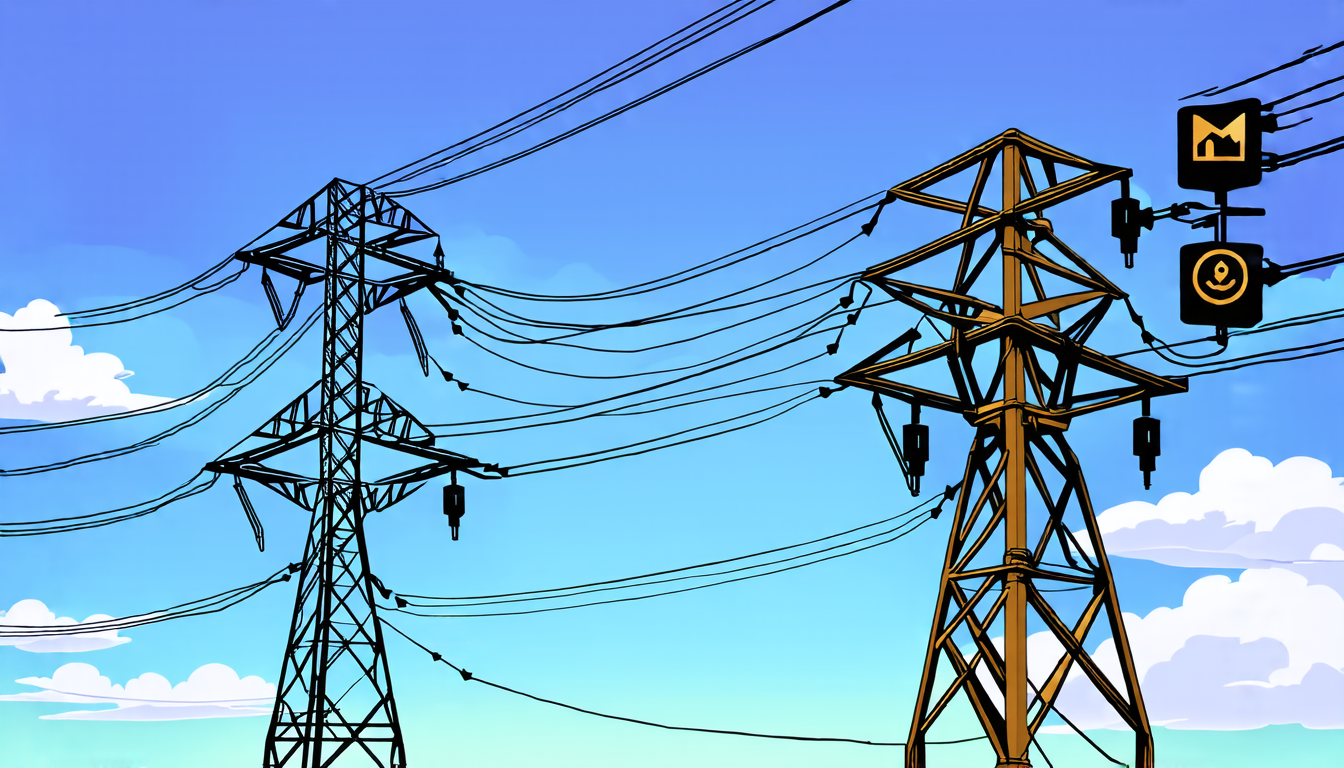
A new approach to generating synthetic power grids is being hailed as a major breakthrough in the field of electrical engineering. By using Bayesian hierarchical models, researchers have been able to create realistic simulations of complex power distribution systems, complete with unbalanced three-phase loads and varying phase assignments.
The need for accurate simulation tools has never been more pressing. As the world transitions to renewable energy sources and decentralized power generation, power grids are becoming increasingly complex and dynamic. This complexity makes it challenging to predict and manage system behavior, which can have severe consequences in terms of reliability and efficiency.
Traditionally, researchers have relied on simplified models or manual data collection to simulate power grid behavior. However, these approaches often lack the level of detail and realism required to accurately capture the intricacies of modern power systems. The new approach uses Bayesian hierarchical models to generate synthetic power grids that are indistinguishable from real-world systems.
The key innovation lies in the use of probabilistic techniques to model the complex interactions between different components of a power grid. By representing these interactions as probability distributions, researchers can generate realistic simulations of system behavior under various scenarios and conditions.
One of the most significant advantages of this approach is its ability to handle unbalanced three-phase loads, which are common in real-world power grids. Traditional models often struggle to accurately simulate these types of loads, leading to inaccurate predictions and poor performance.
The new approach also allows for varying phase assignments, which is critical for modeling the behavior of different types of loads and devices. By incorporating this level of detail into simulations, researchers can gain a much deeper understanding of how power grids function and respond to changing conditions.
The potential applications of this technology are vast. It could be used to optimize system performance, predict and prevent outages, and even inform policy decisions around energy infrastructure development.
While the approach is still in its early stages, it has already shown tremendous promise. Researchers have successfully generated synthetic power grids that accurately capture the behavior of real-world systems, complete with complex interactions between different components.
As the world continues to rely on increasingly complex power grids, the need for accurate simulation tools will only continue to grow. The new approach offers a major step forward in this regard, and its potential impact could be significant.
Cite this article: “Revolutionizing Power Grid Simulations with Bayesian Hierarchical Models”, The Science Archive, 2025.
Power Grids, Electrical Engineering, Bayesian Hierarchical Models, Synthetic Power Grids, Renewable Energy, Decentralized Power Generation, Probabilistic Techniques, Unbalanced Three-Phase Loads, Phase Assignments, Simulation Tools





