

Saturday 08 March 2025
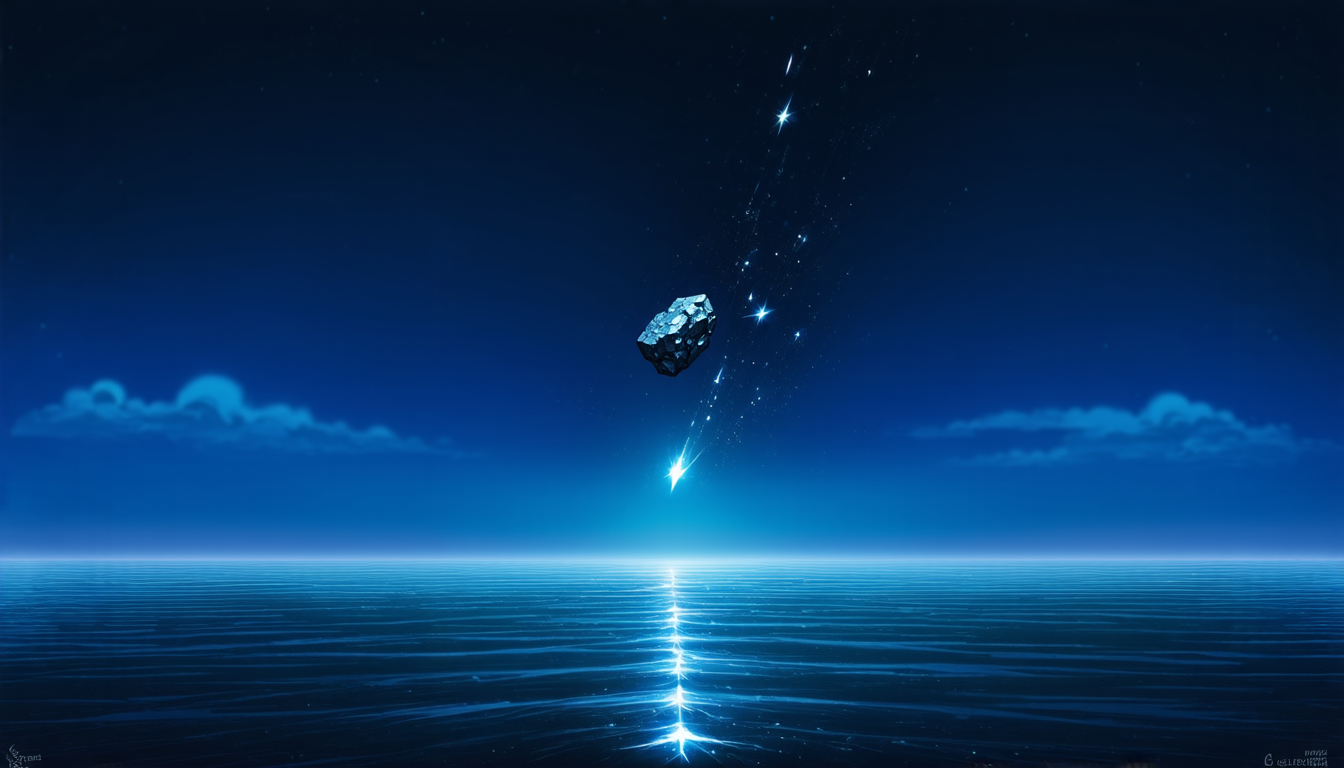
Scientists have long been fascinated by tiny, mysterious particles that fall to Earth from space. Known as micrometeorites, these tiny fragments of rock and metal are remnants of asteroids and comets that have broken apart and are now hurtling towards our planet.
Recently, a team of researchers has made a significant discovery about the origins of these micrometeorites. By studying the chemical composition of over 160 specimens collected from the surface of the Pacific Ocean, they found that many of them were highly differentiated, meaning they had undergone significant changes in temperature and pressure during their formation.
This finding is particularly interesting because it suggests that some micrometeorites may have originated from the Moon or Mars, rather than asteroids. This idea challenges our current understanding of the origins of these particles and raises new questions about how they ended up on Earth.
One of the key pieces of evidence supporting this theory is the presence of certain minerals in the micrometeorites that are more commonly found on the Moon and Mars than in asteroids. These minerals, known as spinels and pyroxenes, are formed under high-pressure conditions, which suggests that the micrometeorites may have undergone significant heating and cooling cycles during their formation.
Another important clue is the presence of certain chemical elements, such as iron and silicon, in higher concentrations than would be expected if they were simply fragments of asteroids. This suggests that the micrometeorites may have originated from a source with different geochemical characteristics than asteroids.
The researchers also found that many of the micrometeorites had unusual textures and morphologies, which could indicate that they underwent significant alteration during their journey to Earth. For example, some of the particles had crystalline structures that are typical of materials formed at high temperatures, while others showed signs of melting or quenching.
The implications of this study are far-reaching, as it suggests that micrometeorites may be a valuable source of information about the early history of our solar system. By studying these tiny particles in more detail, scientists may be able to learn more about the formation and evolution of the Moon, Mars, and other celestial bodies.
The discovery also raises questions about how these particles ended up on Earth. Did they fall to our planet as a result of atmospheric entry, or were they deposited by meteorites that broke apart in the atmosphere? Further research is needed to answer these questions and uncover the secrets of the micrometeorites.
Cite this article: “Micrometeorites: A Window into the Early History of Our Solar System”, The Science Archive, 2025.
Micrometeorites, Asteroids, Comets, Meteorites, Moon, Mars, Pacific Ocean, Spinels, Pyroxenes, Silicon





