

Saturday 08 March 2025
When you’re driving in a car, it’s easy to take for granted the complex systems that keep us safe on the road. One of these crucial components is the seatbelt, designed to restrain us in case of sudden stops or accidents. But what happens when this vital safety feature malfunctions? A recent study has shed light on the risks associated with lap belt loading conditions, providing valuable insights for car manufacturers and researchers alike.
The investigation focused on the iliac wing, a bony structure located at the front of the pelvis. In frontal crashes, the iliac wing is subjected to significant forces, which can lead to fractures if the seatbelt fails to distribute the load properly. To better understand this phenomenon, scientists analyzed 20 female pelvises using post-mortem human subjects (PMHS) and a specially designed testing machine.
The results showed that sex does not significantly impact iliac wing fracture tolerance under frontal lap belt loading conditions. This finding is significant because it suggests that seatbelt design should focus on other factors, such as age and body size, to improve occupant safety. In fact, the study found that age was a strong predictor of fracture force in both female and combined male-female datasets.
To better understand these findings, it’s essential to consider the complexities of human anatomy. The iliac wing is a delicate structure that requires precise loading conditions to prevent fractures. The seatbelt, when properly designed and functioning, can effectively distribute forces across this region. However, if the belt fails or malfunctions, the iliac wing may be subjected to excessive stress, leading to potentially serious injuries.
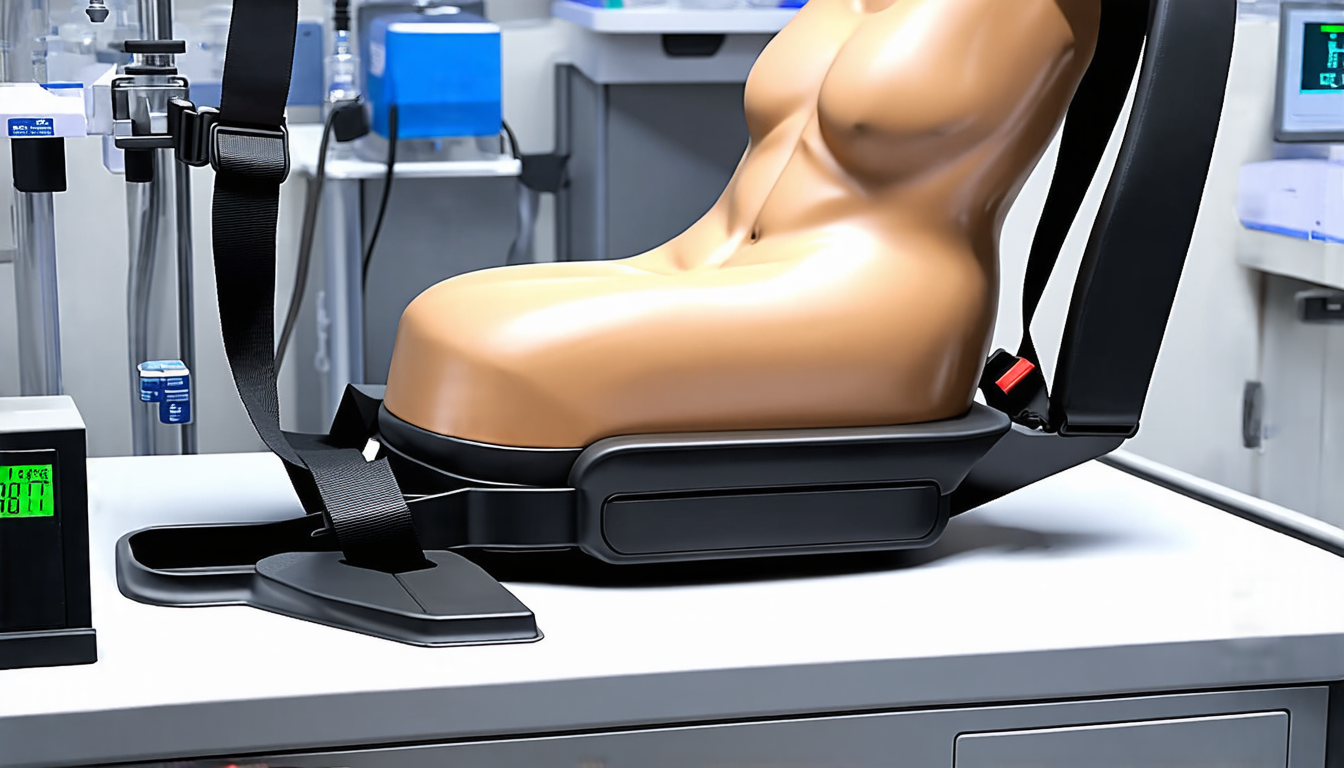
The study’s authors utilized a novel testing approach, which involved potting the pelvis in a custom-made cup to simulate real-world loading conditions. This method allowed researchers to accurately replicate the forces and angles experienced by occupants during frontal crashes. The testing machine also enabled scientists to adjust variables such as the notch-to-belt angle, which is critical for understanding how seatbelts interact with the human body.
The implications of this research are far-reaching. Car manufacturers can use these findings to refine their design processes, creating safer and more effective seatbelts that better protect occupants in all types of crashes. Additionally, researchers may apply these insights to develop new testing protocols, enabling them to better simulate real-world scenarios and improve the overall safety of vehicles.
Cite this article: “Seatbelt Safety: Understanding the Risks of Lap Belt Loading Conditions”, The Science Archive, 2025.
Seatbelts, Lap Belt Loading Conditions, Iliac Wing, Pelvis, Fractures, Frontal Crashes, Occupant Safety, Human Anatomy, Seatbelt Design, Crash Testing





