

Saturday 08 March 2025
Recent advancements in machine learning have enabled researchers to develop new methods for predicting and controlling the quality of metal additive manufacturing (AM) processes. One such method is the use of symbolic regression models, which can accurately predict the dimensions and geometry of melt pools, as well as the amount of spatter produced during the process.
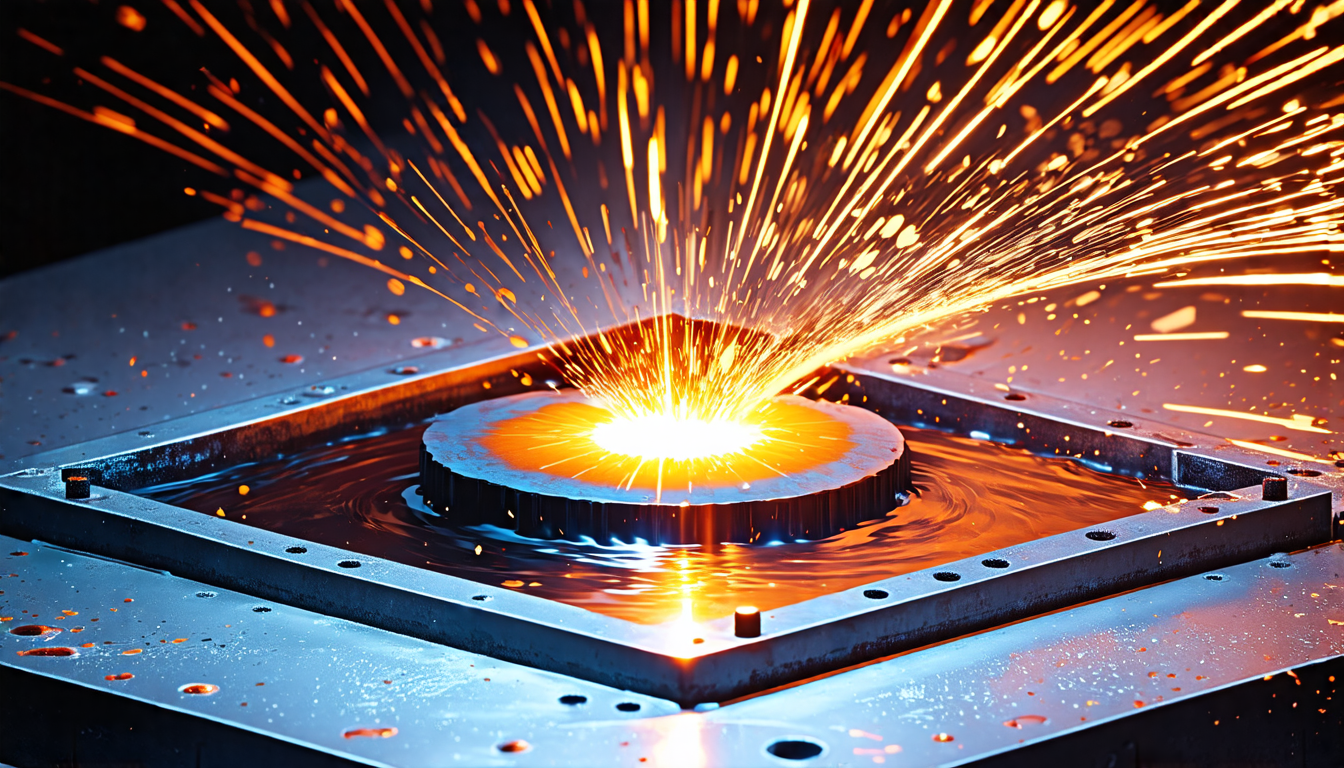
Melt pools are small pools of molten metal that form on the surface of a build plate during AM, and they play a crucial role in determining the quality of the final product. By predicting the dimensions and geometry of these pools, researchers can better understand how to optimize the printing process to achieve consistent results.
The new method uses a combination of machine learning algorithms and polynomial symbolic regression models to make predictions about melt pool behavior. The approach involves training the model on a large dataset of experimental data, which includes information about the process conditions, such as power and velocity, as well as the resulting melt pool dimensions and geometry.
One key benefit of this approach is its ability to handle complex, non-linear relationships between the process conditions and melt pool behavior. Traditional regression methods can struggle with these types of relationships, but the symbolic regression model used in this study is able to capture them accurately.
The researchers tested their method on a dataset of over 280 experimental runs, using a laser powder bed fusion (LPBF) machine to print samples of stainless steel. They found that the model was able to predict melt pool dimensions and geometry with high accuracy, even when the process conditions were varied significantly.
In addition to predicting melt pool behavior, the researchers also used their method to investigate the relationship between spatter production and melt pool dimensions. Spatter is a common problem in AM processes, as it can lead to defects and reduce the overall quality of the final product. By understanding how spatter production is related to melt pool behavior, researchers may be able to develop new strategies for reducing this problem.
The study’s findings suggest that there is a strong relationship between spatter production and the dimensions of the melt pool. Specifically, the model found that larger melt pools tend to produce more spatter, while smaller melt pools tend to produce less. This knowledge could be used to optimize the printing process by adjusting the power and velocity settings to achieve the desired melt pool size.
Overall, this study demonstrates the potential of machine learning and symbolic regression models for improving the quality and consistency of metal additive manufacturing processes.
Cite this article: “Predicting Melt Pool Behavior in Metal Additive Manufacturing using Symbolic Regression Models”, The Science Archive, 2025.
Machine Learning, Additive Manufacturing, Melt Pool Behavior, Symbolic Regression Models, Polynomial Regression, Process Conditions, Laser Powder Bed Fusion, Stainless Steel, Spatter Production, Defect Reduction.





