

Saturday 08 March 2025
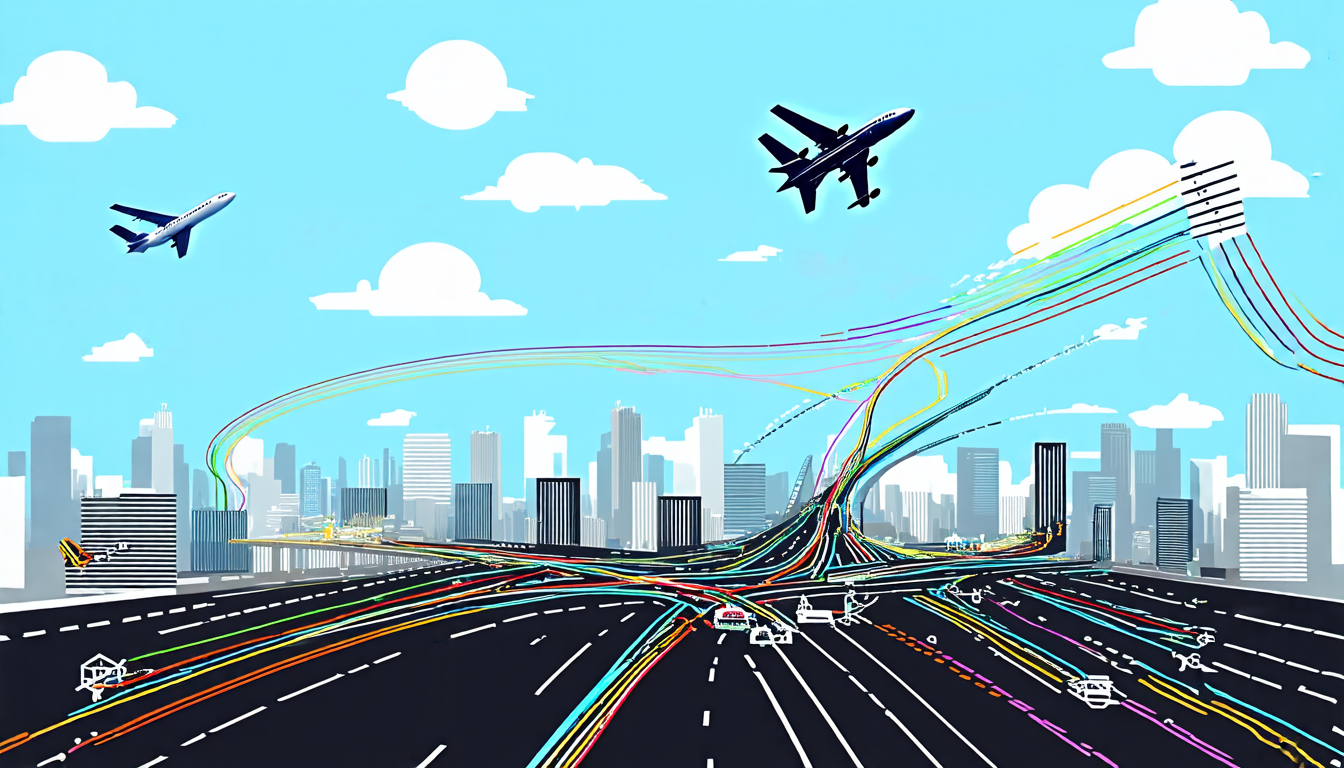
As urban air mobility (UAM) takes off, ensuring safe separation between aircraft is a critical challenge. In a dense cityscape, multiple flight corridors intersect and converge, creating potential bottlenecks where accidents can occur. A team of researchers has developed a novel approach to prevent these conflicts by leveraging shared scheduling protocols.
The problem with traditional air traffic control systems is that they rely on centralized authorities to manage airspace. This can lead to delays and inefficiencies, especially in high-traffic areas like cities. By contrast, the new system uses decentralized protocols that allow individual aircraft to coordinate with each other in real-time.
The researchers developed three shared scheduling protocols: Carrier Sense Multiple Access with Collision Detection (CSMA/CD), Shortest Remaining Time First (SRTF), and Round Robin. Each protocol has its strengths and weaknesses, but they all share the goal of ensuring safe separation between aircraft.
In a simulation study, the team tested these protocols in various scenarios, including high-traffic conditions and the presence of non-compliant aircraft. The results showed that even with a small number of non-compliant aircraft, the shared scheduling protocols were able to significantly reduce the risk of conflicts.
The CSMA/CD protocol, for example, uses a first-come, first-served approach to manage access to intersections. This means that aircraft can enter an intersection only when it is clear of other traffic. SRTF, on the other hand, prioritizes aircraft based on their remaining time in the system, allowing those with shorter times to enter the intersection first.
Round Robin takes a more predictable approach, assigning fixed turns to each flight corridor. This ensures that each corridor gets an equal amount of access to the intersection, reducing congestion and delays.
While these protocols are promising, there is still work to be done before they can be implemented in real-world UAM systems. The researchers plan to continue refining their algorithms and testing them in more realistic scenarios.
The potential benefits of shared scheduling protocols are significant. By allowing individual aircraft to coordinate with each other, the system could reduce delays and increase efficiency. This could be especially important in urban areas, where air traffic is often congested and unpredictable.
As UAM continues to evolve, it’s clear that ensuring safe separation between aircraft will be a critical challenge. The development of shared scheduling protocols like these may hold the key to unlocking the full potential of this technology.
Cite this article: “Decentralized Protocols for Safe Air Traffic Management in Urban Air Mobility”, The Science Archive, 2025.
Urban Air Mobility, Air Traffic Control, Shared Scheduling Protocols, Decentralized Protocols, Collision Detection, Csma/Cd, Srtf, Round Robin, Aircraft Coordination, Safe Separation.





