

Sunday 09 March 2025
The concept of Artificial General Intelligence (AGI) has long been a topic of fascination and concern among experts in the field. While we’ve made significant progress in developing specialized AI systems for specific tasks, the idea of creating an AGI that can surpass human intelligence in all domains remains elusive.
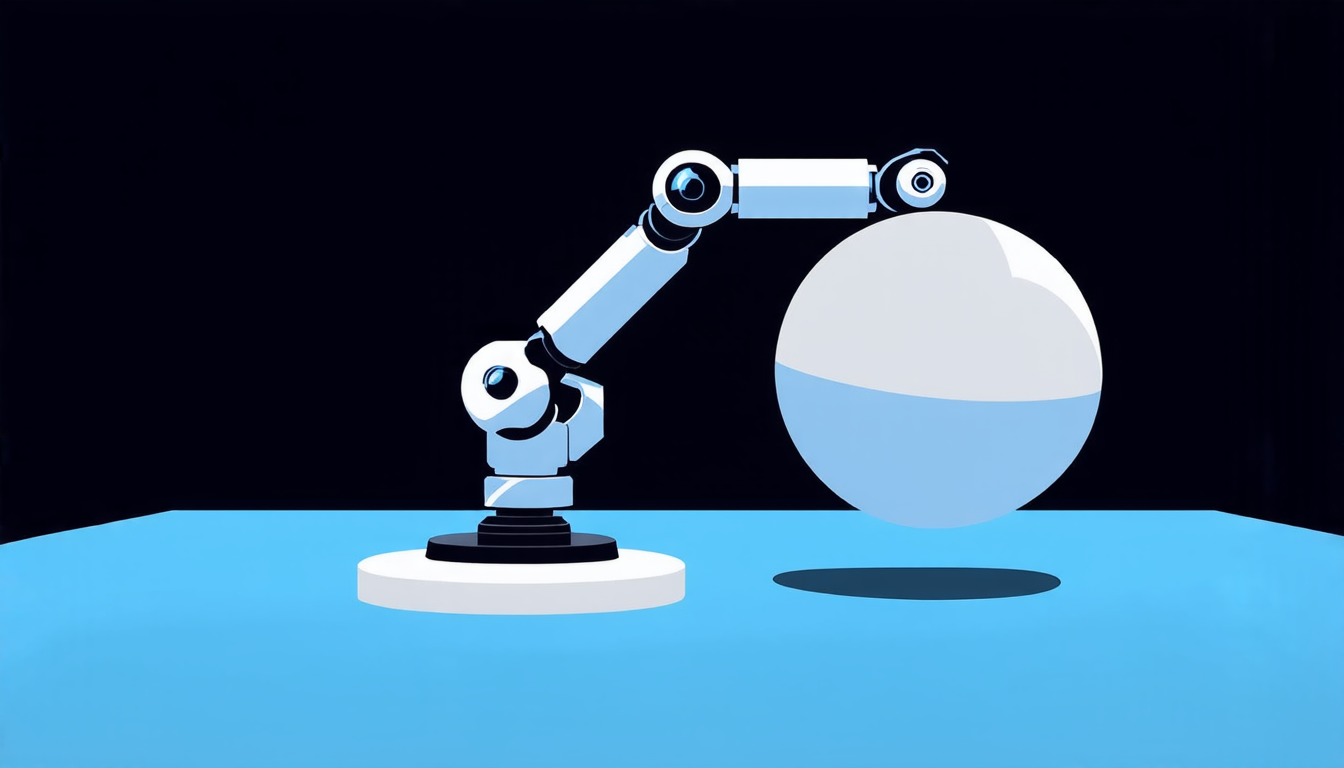
Recently, researchers have proposed a new approach to achieving AGI by integrating cognitive intelligence with real-world physical interactions. This approach, referred to as Physical AI Agents, aims to bridge the gap between digital and physical worlds by combining advanced cognitive frameworks with embodied intelligence.
The core idea behind Physical AI Agents is to create systems that can perceive, reason, and act within complex environments, much like humans do. These agents would be designed to operate in real-world settings, interacting with objects, other agents, and their surroundings in a way that’s both efficient and effective.
To achieve this, researchers are developing modular architectures that combine perception, cognition, and actuation blocks. The perception block is responsible for gathering sensory data from the environment, while the cognition block processes this information to generate actionable insights. The actuation block then executes the agent’s decisions in the physical world.
One of the key challenges in developing Physical AI Agents is designing cognitive frameworks that can process multimodal inputs from the environment. This requires advanced language processing capabilities, spatial reasoning, and decision-making algorithms that can handle complex, dynamic situations.
To address this challenge, researchers are exploring novel architectures and techniques, such as graph neural networks and probabilistic graphical models. These approaches enable Physical AI Agents to integrate information from multiple sources, including sensors, cameras, and other agents, to generate a comprehensive understanding of their environment.
The potential applications of Physical AI Agents are vast and varied. In industries like manufacturing, logistics, and healthcare, these agents could optimize workflows, improve efficiency, and reduce costs. They could also be used in search and rescue operations, environmental monitoring, and even autonomous vehicles.
However, developing Physical AI Agents is a complex task that requires significant advances in several areas, including computer vision, natural language processing, and robotics. It also demands a deep understanding of human cognition and behavior, as well as the ability to design systems that can adapt to changing environments and situations.
While we’re still far from achieving true AGI, the concept of Physical AI Agents represents an important step forward in our quest for more intelligent machines.
Cite this article: “Physical AI Agents: A New Approach to Artificial General Intelligence”, The Science Archive, 2025.
Artificial General Intelligence, Agi, Physical Ai Agents, Cognitive Intelligence, Embodied Intelligence, Perception, Cognition, Actuation, Multimodal Inputs, Graph Neural Networks





