

Sunday 09 March 2025
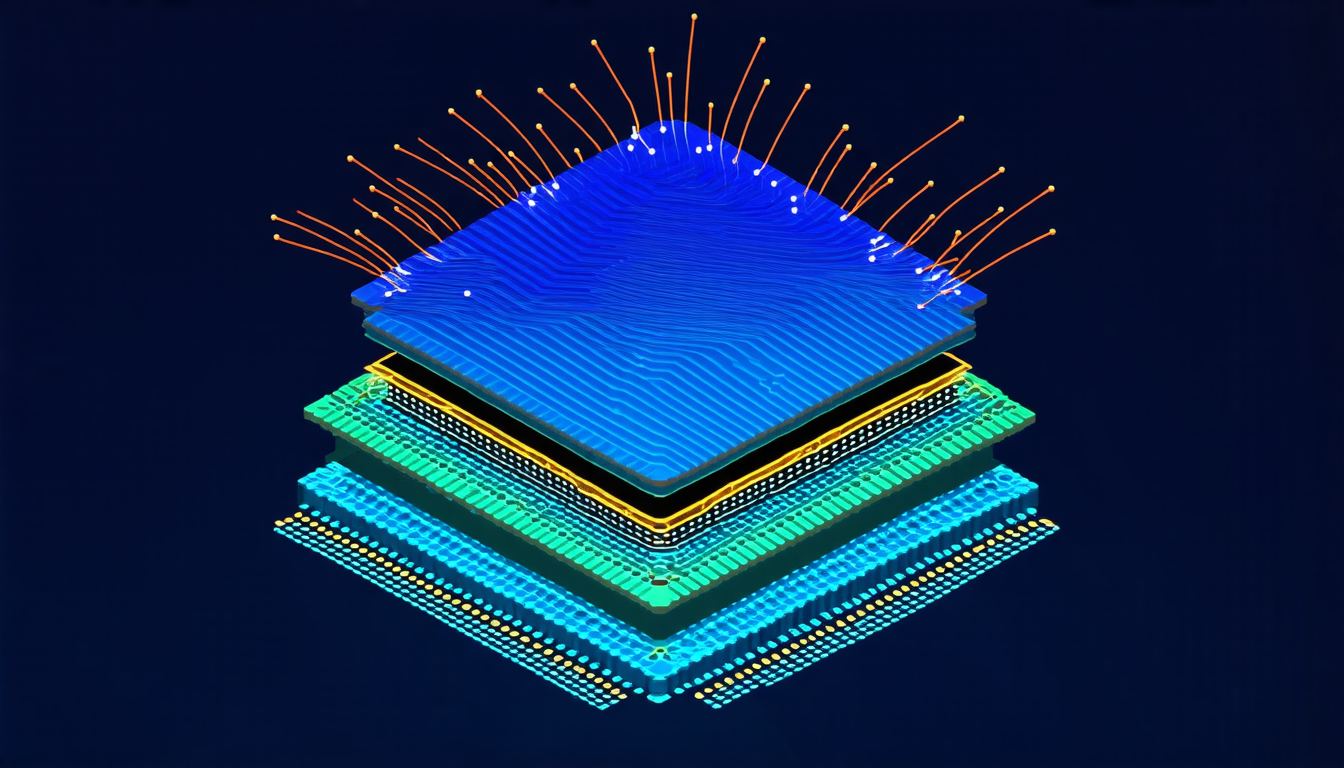
Scientists have made a significant breakthrough in understanding the properties of twisted two-dimensional materials, which have been hailed as a potential game-changer for electronics and computing. These materials, known as transition metal dichalcogenides (TMDs), are composed of layers of atoms that can be stacked together to create unique electronic properties.
Researchers have long been fascinated by TMDs because they exhibit a phenomenon called the quantum spin Hall effect, which is a topological property that allows them to conduct electricity without resistance. This property makes them ideal for use in ultra-efficient electronics and computing devices.
However, scientists have struggled to understand how TMDs work at the molecular level. In particular, they have been unable to explain why some TMDs exhibit a phenomenon called the fractional quantum spin Hall effect, which is a more complex version of the quantum spin Hall effect that involves the interaction between electrons in different layers.
Recently, a team of scientists from ETH Zurich and the University of Zurich made a breakthrough in understanding how TMDs work at the molecular level. By using advanced computer simulations and theoretical models, they were able to show that the fractional quantum spin Hall effect is caused by the interaction between electrons in different layers of the material.
This discovery has significant implications for the development of new electronic devices. For example, it could enable the creation of ultra-efficient transistors and other electronics components that are capable of operating at much higher speeds than current devices.
The researchers used a combination of advanced computer simulations and theoretical models to study the properties of TMDs. They used a technique called density functional theory (DFT) to simulate the behavior of electrons in the material, and then used a theoretical model known as the Kohn-Sham equation to understand how these electrons interact with each other.
By combining these two approaches, the researchers were able to show that the fractional quantum spin Hall effect is caused by the interaction between electrons in different layers of the material. This discovery has significant implications for the development of new electronic devices, and could enable the creation of ultra-efficient transistors and other electronics components.
The researchers are now working on developing practical applications of their discovery. They believe that their findings could be used to create new types of electronics devices that are capable of operating at much higher speeds than current devices.
Cite this article: “Scientists Unlock Secrets of Twisted 2D Materials, Paving Way for Ultra-Efficient Electronics”, The Science Archive, 2025.
Transition Metal Dichalcogenides, Quantum Spin Hall Effect, Fractional Quantum Spin Hall Effect, Electronic Properties, Ultra-Efficient Electronics, Computing Devices, Density Functional Theory, Kohn-Sham Equation, Advanced Computer Simulations, Theoretical Models.





