

Sunday 09 March 2025
Researchers have made significant progress in developing a new method for anonymizing medical images, which could significantly improve patient privacy and data protection.
The approach, known as generative medical image anonymization, uses a combination of machine learning algorithms and deep learning techniques to create synthetic images that retain the same statistical properties as the original images. This means that while the anonymized images are indistinguishable from the real ones, they do not contain any identifying information about the patients who underwent imaging.
The method works by first projecting the input image into a latent space using an autoencoder, which is a type of neural network that can learn to compress and reconstruct data. The autoencoder is then trained on a dataset of anonymized images, which allows it to learn the patterns and relationships between different features in the images.
Once the autoencoder has been trained, it can be used to generate new, anonymized images that are similar to the original ones but do not contain any identifying information. This is achieved by adding noise to the latent space, which disrupts the patterns and relationships learned by the autoencoder and prevents it from generating images that are too similar to the real ones.
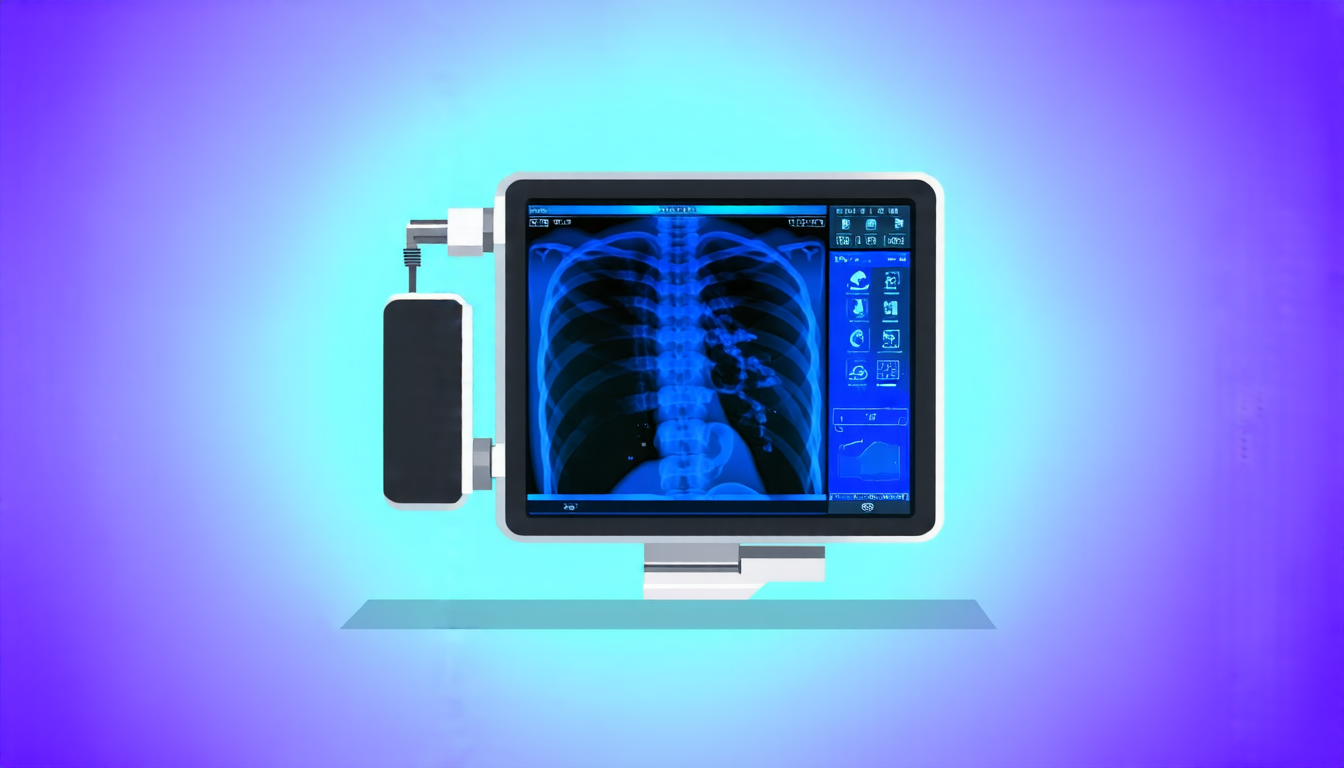
The researchers tested their method using a dataset of chest X-ray images and found that it was able to generate anonymized images that were highly realistic and difficult to distinguish from the original images. They also compared their approach to existing methods for anonymizing medical images and found that it outperformed them in terms of both accuracy and efficiency.
The implications of this research are significant, as it could enable healthcare providers to share medical images with researchers and other healthcare professionals without compromising patient privacy. It could also help to reduce the costs associated with storing and managing large datasets of medical images.
One potential limitation of the method is that it requires a large dataset of anonymized images to train the autoencoder, which can be time-consuming and resource-intensive. However, the researchers believe that this limitation will become less significant as more data becomes available.
Overall, this research represents an important step forward in the development of methods for anonymizing medical images, and has the potential to make a significant impact on patient privacy and healthcare data protection.
Cite this article: “Anonymizing Medical Images with Deep Learning Techniques”, The Science Archive, 2025.
Medical Images, Anonymization, Machine Learning, Deep Learning, Autoencoder, Neural Network, Patient Privacy, Data Protection, Healthcare, Medical Imaging





