

Sunday 09 March 2025
Artificial Intelligence has made tremendous progress in recent years, and one of the most significant advancements is the development of Retention Layers for Transformer-based models. These innovative layers enable AI systems to learn and adapt in real-time, much like humans do.
Traditional AI models rely on static patterns and rules to make predictions or take actions. However, this approach has limitations, especially when dealing with dynamic and complex environments. To overcome these challenges, researchers have designed Retention Layers that mimic the human brain’s ability to retain and recall information over time.
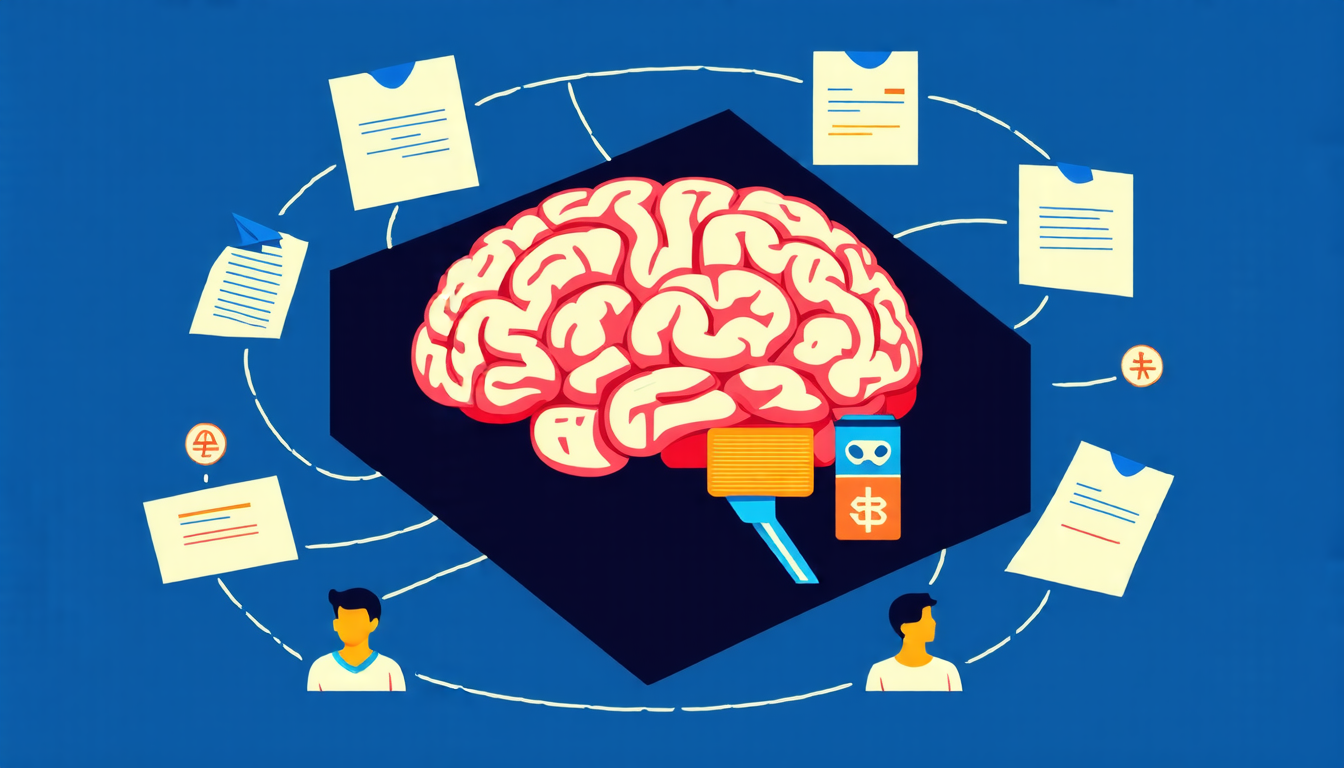
The concept is simple yet powerful: a Retention Layer allows AI models to store and retrieve previously learned patterns, enabling them to adapt to changing situations and learn from experience. This is achieved through the integration of two primary components: memory and attention.
Memory refers to the storage of new information in the model’s internal state. Attention, on the other hand, enables the model to selectively focus on relevant pieces of information when making predictions or taking actions. By combining these two mechanisms, Retention Layers allow AI models to learn incrementally, refining their understanding of complex patterns and relationships over time.
The impact of Retention Layers is far-reaching, with applications in various fields, including natural language processing, computer vision, and robotics. For instance, in the realm of language modeling, Retention Layers enable AI systems to learn from user interactions, adapt to changing linguistic patterns, and even predict future conversations. In computer vision, these layers allow AI models to recognize objects and scenes more accurately by incorporating learned knowledge about previously encountered environments.
One of the most significant advantages of Retention Layers is their ability to facilitate continuous learning and adaptation. Unlike traditional AI models that require retraining from scratch when faced with new data or changing conditions, Retention Layers enable models to learn incrementally, refining their performance over time.
The potential applications of Retention Layers are vast and varied. In the field of healthcare, for instance, Retention Layers could be used to develop AI-powered diagnostic systems that learn from patient data and adapt to changing medical knowledge. In finance, these layers could enable AI models to predict market trends more accurately by incorporating learned insights about historical patterns.
While the development of Retention Layers is a significant achievement, it also presents new challenges for researchers. For instance, ensuring the integrity and security of stored information is crucial to prevent unauthorized access or tampering.
Cite this article: “Unlocking Adaptive Intelligence with Retention Layers”, The Science Archive, 2025.
Artificial Intelligence, Retention Layers, Transformer-Based Models, Real-Time Learning, Adaptive Systems, Memory, Attention, Incremental Learning, Continuous Adaptation, Security, Integrity
Reference: M. Murat Yaslioglu, “Attention is All You Need Until You Need Retention” (2025).





