

Sunday 09 March 2025
In a breakthrough discovery, scientists have finally pinpointed the source of a mysterious gamma-ray signal detected in the aftermath of a massive star explosion. For years, astronomers had been scratching their heads over the unusual emission, which seemed to defy explanation.
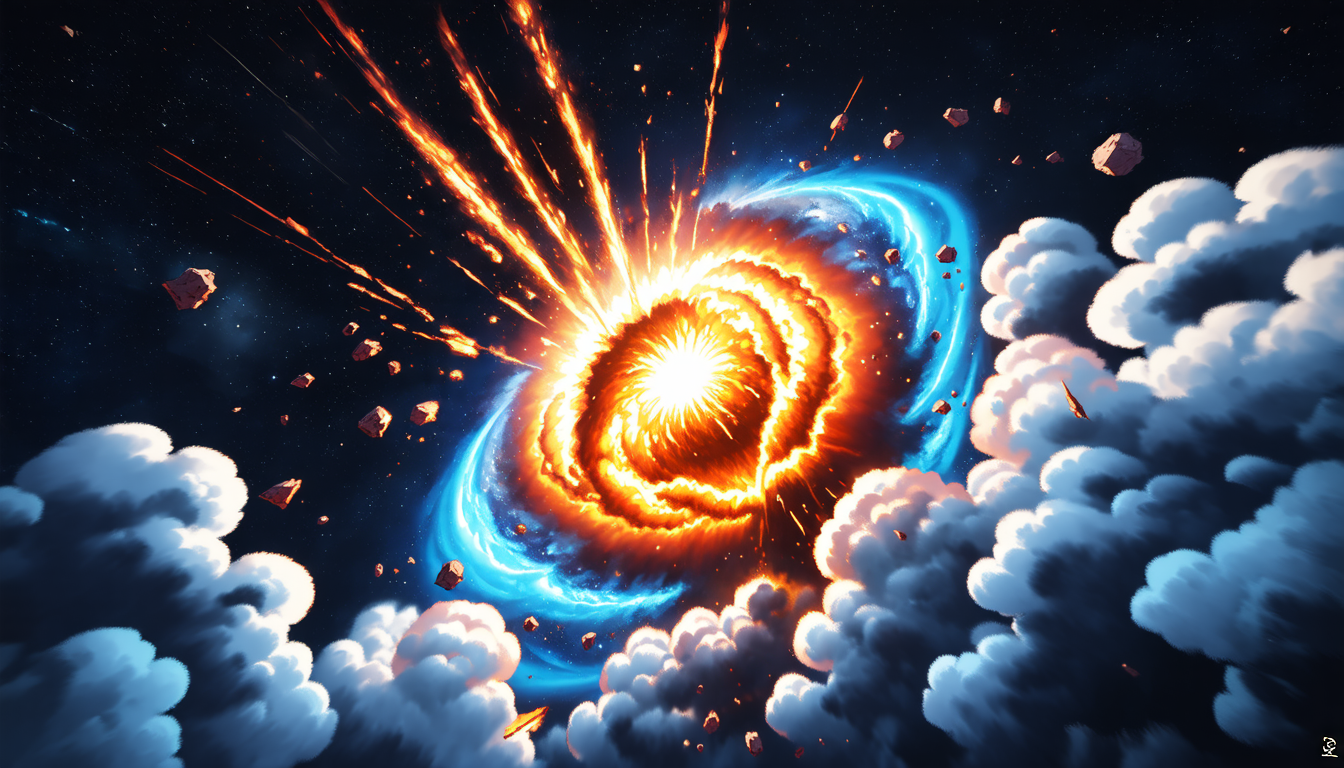
The star in question is a magnetar, an extremely powerful and rare type of neutron star that’s capable of producing intense magnetic fields. When it exploded in 2004, scientists detected a massive burst of energy, known as a giant flare, that was visible from Earth. This event was so powerful that it could be seen by the naked eye, making it one of the brightest astronomical events ever recorded.
As researchers began to analyze the data from this explosion, they noticed something peculiar – a faint glow of gamma radiation lingering in the aftermath of the event. But what was causing this emission? Was it some sort of unknown physical process at work?
To get to the bottom of things, scientists turned to computer simulations and complex models to recreate the conditions surrounding the star’s explosion. By running these simulations through powerful computers, they were able to recreate the extreme environments that would have existed during the flare.
The results were astonishing. According to their calculations, the gamma-ray emission was actually a sign of rapid neutron capture, or r-process nucleosynthesis, occurring in the hot, dense material ejected by the star’s explosion. This process is responsible for creating many heavy elements found on Earth, like gold and uranium.
But here’s the kicker – this process had never been observed before in such extreme conditions. The intense magnetic fields surrounding the magnetar seemed to have created an environment where r-process nucleosynthesis could occur, producing a burst of heavy elements that would normally take billions of years to form naturally.
The implications of this discovery are far-reaching. For one, it suggests that magnetars may play a significant role in shaping the chemical composition of our galaxy. It also opens up new avenues for researchers studying these enigmatic stars, which could ultimately lead to a greater understanding of the fundamental forces at work in the universe.
As scientists continue to study this phenomenon, we’re likely to uncover even more secrets about the mysteries of cosmic explosions and the birth of heavy elements. And who knows – maybe one day we’ll be able to harness the power of these events to create new technologies that change the course of human history.
Cite this article: “Unveiling the Secrets of Cosmic Explosions”, The Science Archive, 2025.
Gamma-Ray Signals, Magnetars, Neutron Stars, Star Explosions, Giant Flares, Gamma Radiation, R-Process Nucleosynthesis, Heavy Elements, Cosmic Explosions, Astronomy





