

Sunday 09 March 2025
As students learn to write code, they often rely on AI-powered tools that can generate solutions to programming problems. But what happens when these tools provide complete answers without requiring students to think critically about the code? A recent study suggests that this approach may be doing more harm than good.
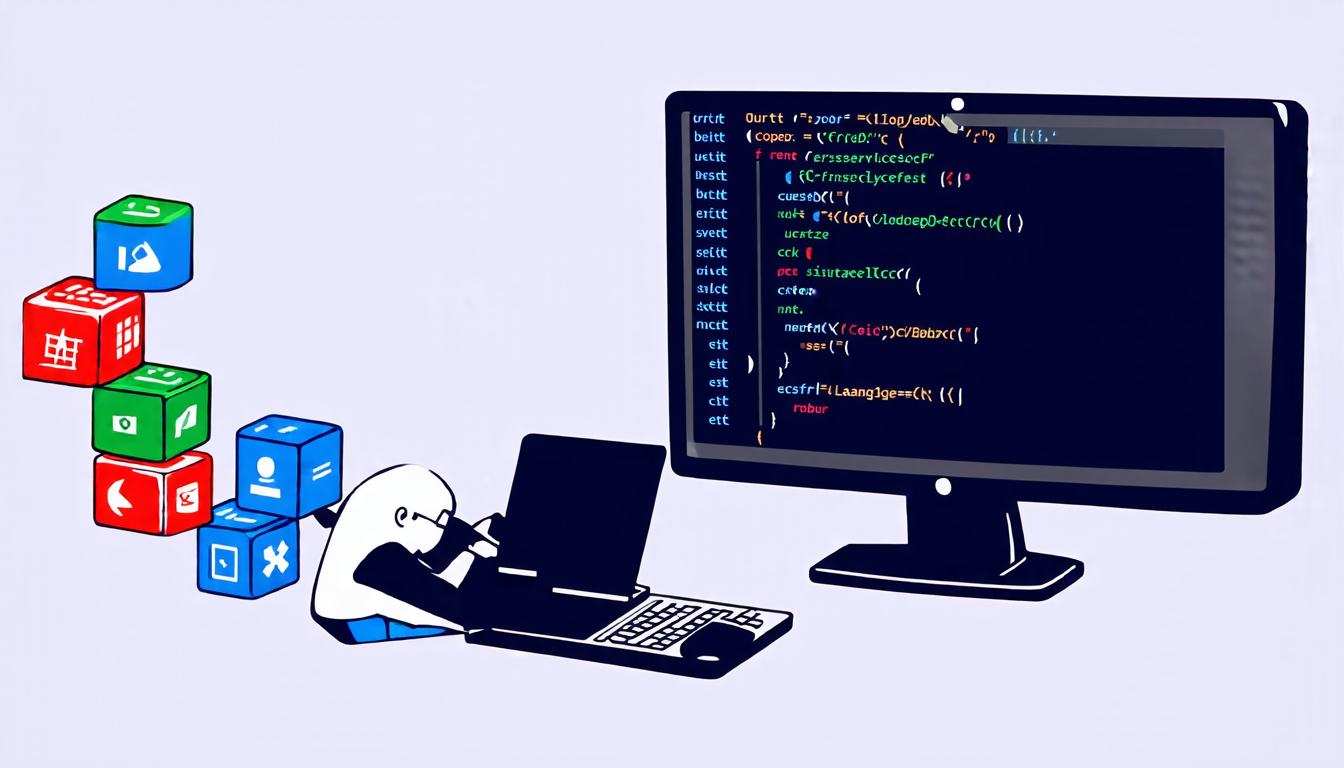
Researchers at the University of Michigan set out to investigate how students engage with programming practice when given either personalized Parsons puzzles or complete correct solutions as support. Parsons puzzles are an increasingly popular active learning exercise where students arrange a set of drag-and-drop code blocks to solve a problem. The personalized puzzles were tailored to each student’s existing code, making them more effective scaffolding tools.
The study involved 118 students who worked on four programming practice problems in either the puzzle-scaffolding condition or the control condition, which provided complete solutions. The results showed that students in the puzzle-scaffolding condition spent significantly more time practicing than those in the control condition. Not only did they spend more time on each problem, but they also invested more effort overall.
The findings suggest that providing personalized Parsons puzzles as support can increase student engagement with programming practice. But why is this important? When students are given complete solutions without requiring them to think critically about the code, they may not develop a deeper understanding of the material. They may simply memorize the solution and apply it to future problems without truly comprehending the underlying principles.
In contrast, the puzzle-scaffolding approach requires students to actively engage with the code, rearranging blocks to solve the problem. This process encourages critical thinking and problem-solving skills, which are essential for effective programming. By providing this type of support, educators can help students develop a more robust understanding of programming concepts and improve their ability to write code independently.
The study’s results also highlight the potential trade-offs between providing support and encouraging independent learning. While some students appreciated the personalized puzzles as a way to receive guidance, others felt that they still needed more help. Similarly, some students in the control condition were satisfied with receiving complete solutions, while others found them too limiting.
As AI-powered tools become increasingly prevalent in education, it’s essential for educators to consider how these tools can be used effectively to support student learning. By providing personalized Parsons puzzles as scaffolding, educators can encourage critical thinking and problem-solving skills while also increasing student engagement with programming practice. Ultimately, the goal is to help students develop a deeper understanding of programming concepts and become more effective programmers in their own right.
Cite this article: “The Dark Side of AI-Powered Code Generation”, The Science Archive, 2025.
Ai-Powered Tools, Programming Practice, Parsons Puzzles, Personalized Scaffolding, Critical Thinking, Problem-Solving Skills, Student Engagement, Independent Learning, Trade-Offs, Educational Support





