
Sunday 09 March 2025
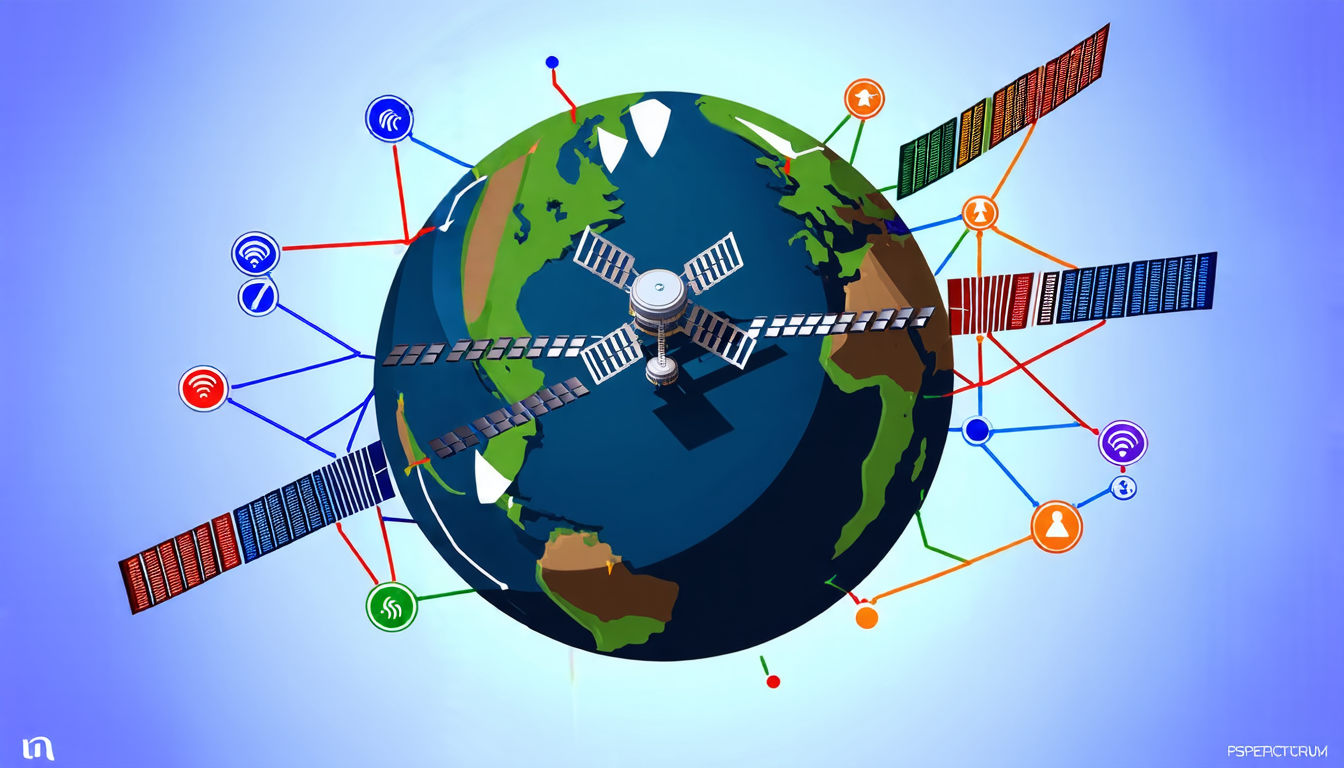
The future of wireless communication is taking shape, and it’s a game-changer. The rise of satellite constellations like SpaceX’s Starlink and Amazon’s Kuiper Systems has created a new landscape for wireless networks, where traditional terrestrial systems are being augmented by non-terrestrial ones. But with more users and devices demanding seamless connectivity, efficient spectrum allocation is becoming increasingly crucial.
Enter the Hierarchical Deep Reinforcement Learning (HDRL) framework, a novel approach to dynamic spectrum allocation that’s been gaining attention in the research community. By leveraging network nesting and multi-agent reinforcement learning, HDRL enables adaptive spectrum management across both terrestrial and non-terrestrial networks.
The key insight behind HDRL is that traditional approaches to spectrum sharing often focus on individual components of the system, such as base stations or satellites, without considering the larger network architecture. In contrast, HDRL takes a holistic view, decomposing the optimization problem into manageable sub-problems at each level of the hierarchical structure.
This approach allows for more efficient resource allocation and better adaptation to changing network conditions. By learning from experience and adjusting its strategy accordingly, HDRL can optimize spectrum utilization in real-time, reducing interference and improving overall network performance.
One of the most significant benefits of HDRL is its ability to address the unique challenges posed by non-terrestrial networks. With satellites operating at vastly different altitudes and angles, traditional approaches often struggle to account for these factors. HDRL’s hierarchical structure, however, allows it to capture this complexity and develop strategies that take into account the distinct characteristics of each network component.
The implications of HDRL are far-reaching. As wireless networks become increasingly congested, efficient spectrum allocation will be critical to ensuring reliable connectivity and meeting growing demands for bandwidth. By providing a more adaptive and responsive approach to resource management, HDRL could help unlock new possibilities for wireless communication, from high-speed internet access to mission-critical applications like emergency response and disaster relief.
Moreover, the potential benefits of HDRL extend beyond the realm of wireless networks themselves. As 6G and future wireless technologies begin to take shape, researchers will need innovative solutions to tackle the increasingly complex challenges posed by these systems. HDRL’s hierarchical approach could serve as a model for tackling other complex optimization problems in fields like artificial intelligence, logistics, and more.
In short, HDRL represents a significant step forward in the quest for efficient spectrum allocation.
Cite this article: “Hierarchical Deep Reinforcement Learning: A Game-Changer for Efficient Spectrum Allocation”, The Science Archive, 2025.
Wireless Communication, Satellite Constellations, Hierarchical Deep Reinforcement Learning, Dynamic Spectrum Allocation, Network Nesting, Multi-Agent Reinforcement Learning, Adaptive Spectrum Management, Non-Terrestrial Networks, Efficient Resource Allocation, Real-Time Optimization.