

Sunday 09 March 2025
The quest for better medical image classification just got a whole lot more interesting. Researchers have been working on developing models that can accurately diagnose diseases from images, but it’s often a challenge due to the limited availability of labeled data and the complexity of medical imagery.
One approach has been to use pre-trained large vision-language models (LVLMs), which have shown promise in zero-shot and few-shot learning tasks. However, these models still struggle when it comes to adapting to domain-specific features in medical images. To address this issue, a team of researchers has proposed a novel framework that fine-tunes LVLMs with hierarchical contrastive alignment.
The idea behind this approach is to create a two-stage training process. In the first stage, the visual encoder of the LVLM is fine-tuned on pseudo-labeled medical image data to adapt it to domain-specific structural and texture features. At the same time, the text encoder is retrained on a corpus of medical text descriptions to better capture nuanced medical semantics.
In the second stage, the model is trained using a hierarchical contrastive loss function that aligns image and text embeddings at multiple levels. This multi-level alignment strategy ensures that the model captures both coarse and fine-grained features relevant to medical diagnosis.
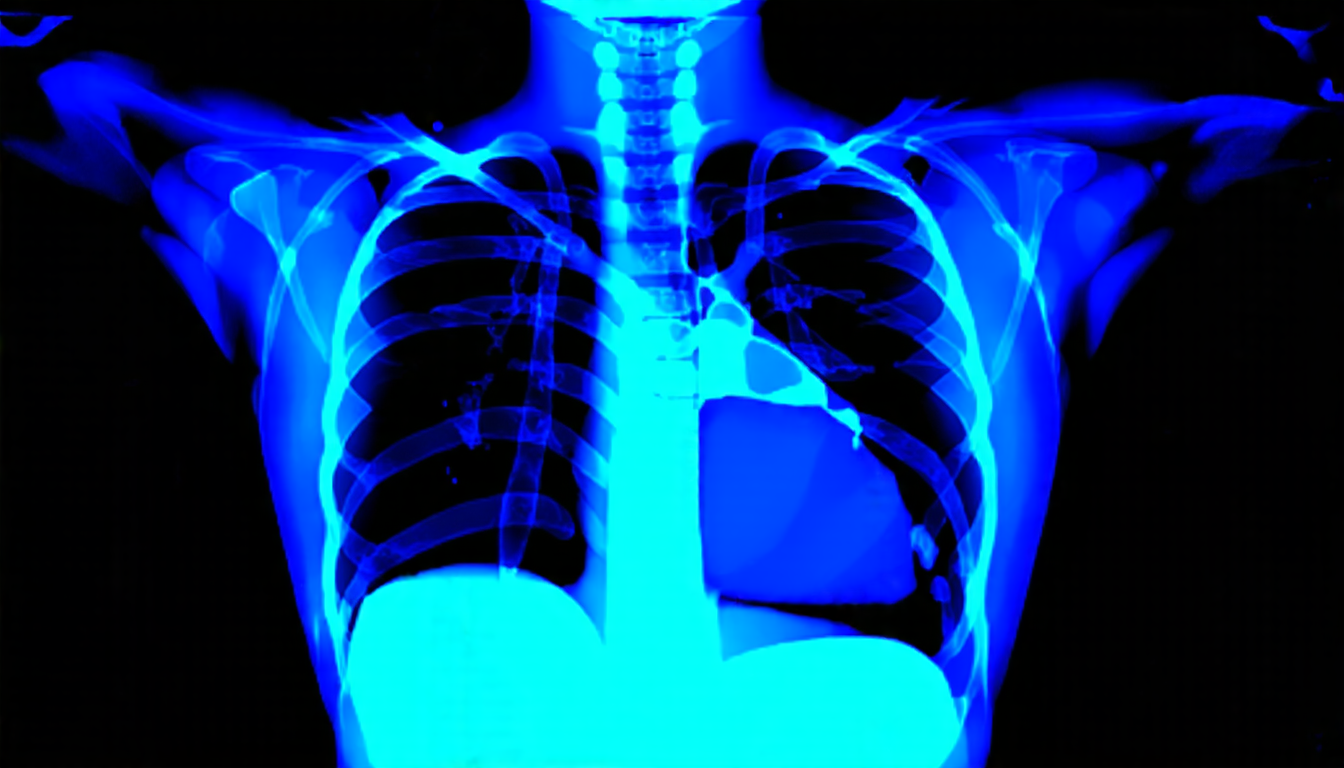
The results are impressive: the proposed method outperforms state-of-the-art baselines in few-shot settings, achieving superior accuracy and area under the ROC curve (AUC) on two benchmark medical imaging datasets – Chest X-ray and Breast Ultrasound. The model also demonstrates robustness to noisy textual descriptors and maintains computational efficiency.
But what’s most exciting about this work is its potential to improve real-world clinical decision-making. Medical image classification is a critical task that can have life-or-death consequences, so any advancements in accuracy and interpretability are crucial.
The researchers’ approach has several advantages over existing methods. For one, it doesn’t require large amounts of labeled data, which is often a major challenge in medical imaging. Additionally, the hierarchical contrastive alignment strategy allows the model to capture complex relationships between visual and textual features, leading to more accurate diagnoses.
While this work is still in its early stages, it has significant implications for the development of AI-powered diagnostic tools. As healthcare providers continue to grapple with the complexities of medical imaging analysis, innovative approaches like this one may hold the key to unlocking more accurate and reliable diagnosis.
Cite this article: “Fine-Tuning Vision-Language Models for Accurate Medical Image Classification”, The Science Archive, 2025.
Medical Image Classification, Ai-Powered Diagnostic Tools, Deep Learning Models, Vision-Language Models, Contrastive Alignment, Hierarchical Training, Medical Imaging Datasets, Chest X-Ray, Breast Ultrasound, Few-Shot Learning, Domain Adaptation.





