
Sunday 09 March 2025
The intricate dance of neurons in our brains is a complex process that has fascinated scientists for decades. One key aspect of this dance is how neurons communicate with each other through synaptic connections, and how these connections can change over time to shape our thoughts and behaviors.
Researchers have long been interested in understanding the rules governing these changes, known as spike-timing-dependent plasticity (STDP). STDP refers to the way that the timing of neural activity affects the strength of connections between neurons. For example, when one neuron fires just before another neuron, it can strengthen their connection. This process is thought to play a key role in learning and memory.
A recent study has shed new light on how STDP works, particularly in recurrent networks where neurons are connected in loops. These networks are thought to be important for many brain functions, including our ability to remember events from years ago or recognize patterns.
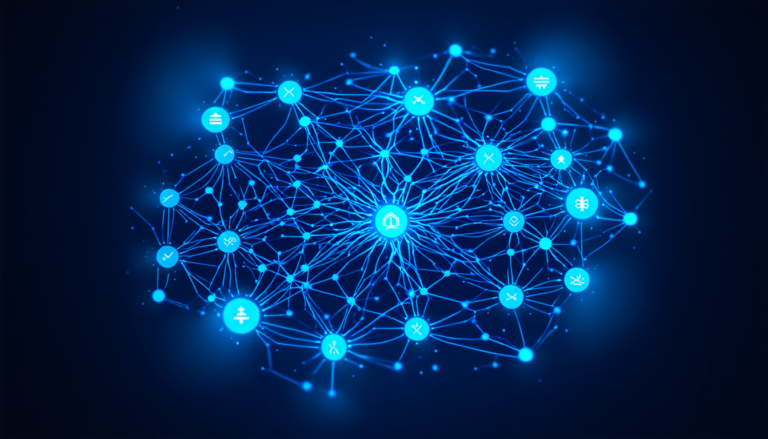
The researchers used computer simulations to study the behavior of these recurrent networks under different conditions. They found that when the connections between neurons are causal, meaning that one neuron’s activity is strictly followed by another’s, the network can maintain distinct assemblies even with significant overlap in membership. This means that multiple groups of neurons can work together to process information without getting mixed up.
On the other hand, when the connections are acausal, or non-causal, the network tends to merge these assemblies into a single group. This could be important for learning and memory, as it would allow the brain to reorganize its neural circuits in response to new experiences.
The researchers also found that the stability of these assemblies depends on the degree of overlap between them. When there is too much overlap, the network can become unstable and start to oscillate wildly. This could be related to neurological disorders such as epilepsy, where abnormal oscillations in brain activity are thought to play a key role.
Overall, this study provides new insights into how STDP shapes the behavior of recurrent networks in the brain. The findings suggest that causal connections between neurons may be important for maintaining distinct assemblies and preventing chaos in the brain’s neural circuits.
The research also highlights the importance of considering the timing of neural activity when studying the brain. By understanding how the timing of spikes affects the strength of connections between neurons, scientists can gain a deeper appreciation for the intricate dance of neural activity that underlies our thoughts, behaviors, and memories.
Cite this article: “Unraveling the Complex Dance of Neurons: New Insights into Spike-Timing-Dependent Plasticity”, The Science Archive, 2025.
Neurons, Synaptic Connections, Spike-Timing-Dependent Plasticity, Stdp, Neural Activity, Learning, Memory, Recurrent Networks, Brain Function, Neuronal Assemblies