

Sunday 09 March 2025
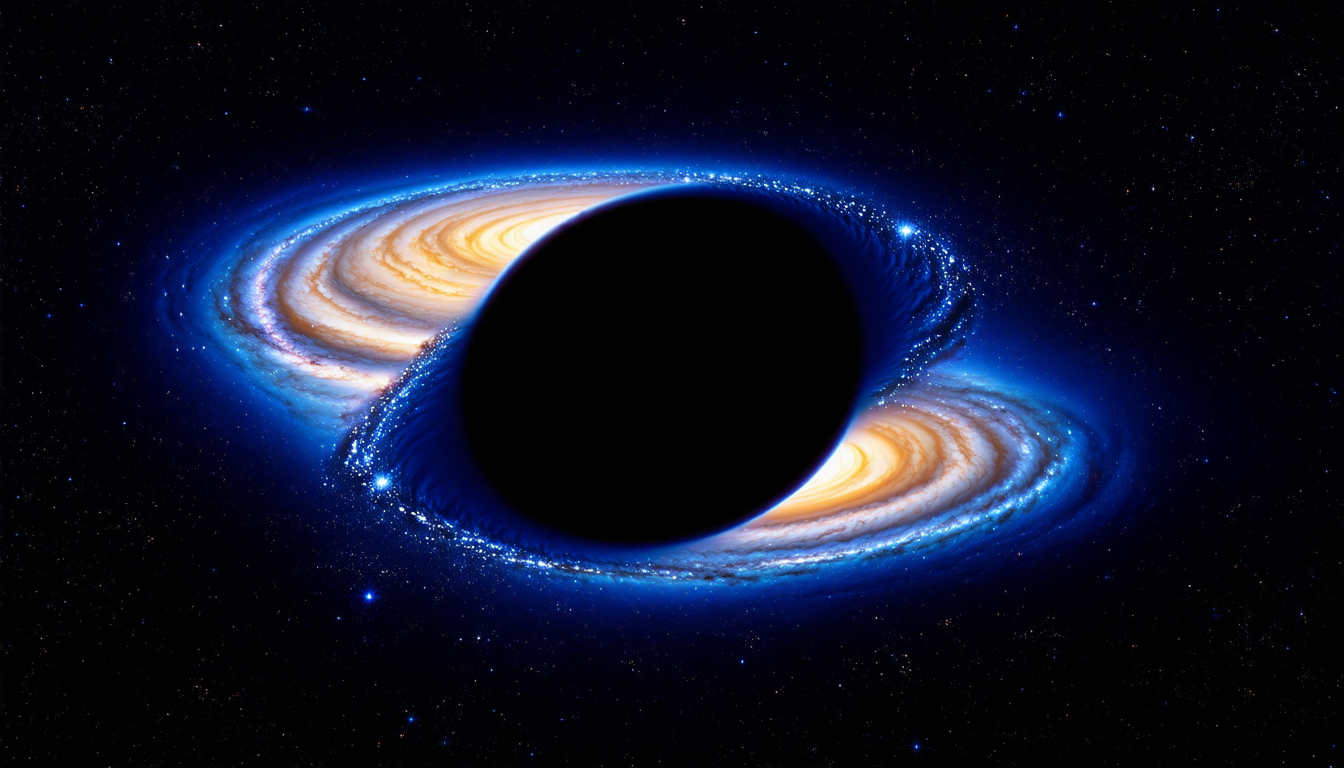
The hunt for tidal disruption events, a phenomenon where a star is torn apart by a supermassive black hole at the centre of a galaxy, has long been an exciting area of research in astrophysics. These events can provide valuable insights into the properties of these black holes and the surrounding galaxies.
Recently, scientists have been using the Mini SiTian array to search for tidal disruption events. This array is essentially a pathfinder for the wider SiTian project, which will eventually consist of 60 telescopes located at observatories in China. The Mini SiTian has already begun its survey, with promising results.
Using mock observations and sophisticated computer simulations, researchers have been able to estimate how many tidal disruption events they expect to detect using the Mini SiTian array. Their calculations suggest that the array will discover around 0.53 per year, depending on the limiting magnitude of the observations.
But why is this important? Tidal disruption events can provide valuable insights into the properties of supermassive black holes and the galaxies they inhabit. By studying these events, scientists can learn more about how these black holes form and evolve over time, and how they interact with their surroundings.
The Mini SiTian array is also expected to detect a significant number of tidal disruption events in the coming years. In fact, simulations suggest that the full SiTian project will discover around 204 per year, which would represent a major increase in our understanding of these phenomena.
One of the key challenges facing researchers in this field is the need to distinguish between true tidal disruption events and other types of transients, such as supernovae or gamma-ray bursts. This requires sophisticated data analysis techniques and careful consideration of the properties of each event.
The Mini SiTian array’s results are already providing valuable insights into the nature of tidal disruption events. For example, researchers have been able to study the distribution of these events in terms of their redshift, which is a measure of how much the light from the event has been stretched by the expansion of the universe. This information can help scientists understand more about the properties of supermassive black holes and the galaxies they inhabit.
Overall, the Mini SiTian array’s search for tidal disruption events represents an exciting new frontier in astrophysical research. By studying these phenomena in greater detail, scientists hope to gain a deeper understanding of the universe and its many mysteries.
Cite this article: “Unlocking Secrets of Supermassive Black Holes with Tidal Disruption Events”, The Science Archive, 2025.
Astrophysics, Tidal Disruption Events, Supermassive Black Holes, Galaxies, Sitian Project, Mini Sitian Array, Telescopes, Simulations, Data Analysis, Transients





