

Sunday 09 March 2025
A team of researchers has made a significant breakthrough in the field of acoustic scene classification, a technology that enables machines to identify and analyze sounds in various environments. By combining quantum-inspired transformers with a technique called variational autoencoder-based data augmentation, they have developed a model that can accurately classify acoustic scenes even when faced with noise and limited data.
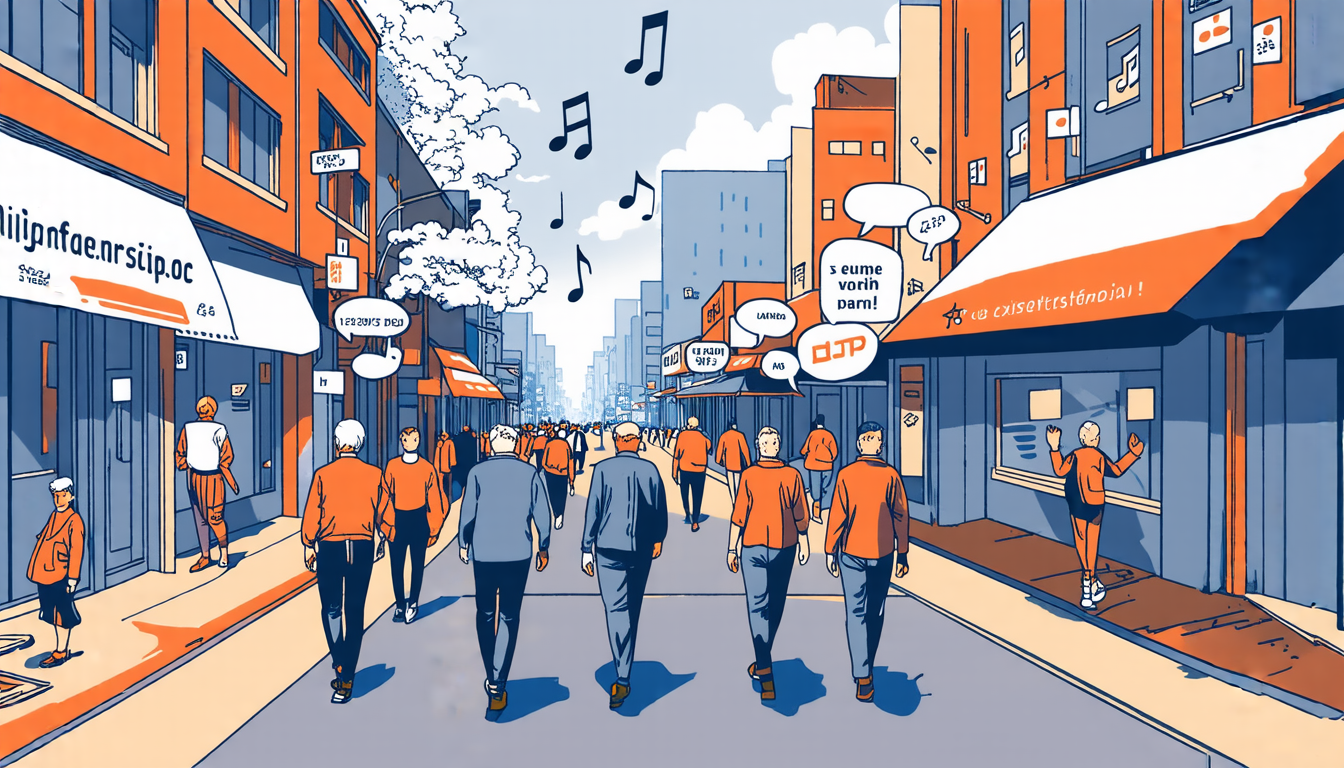
The researchers used a dataset of 10-second audio recordings from 15 different acoustic scenes, including busy streets, quiet homes, and bustling cafes. They then trained their model to identify patterns in the sounds and associate them with specific environments. The result was a system that could accurately classify acoustic scenes with an accuracy rate of up to 88.5%.
The key innovation behind this technology is the use of quantum-inspired transformers. These are artificial neural networks that mimic the way particles behave in quantum systems, allowing for more efficient processing of complex data. In the context of acoustic scene classification, these transformers enable the model to capture subtle patterns and relationships between sounds that would be difficult or impossible for traditional machine learning algorithms to identify.
The researchers also employed a technique called variational autoencoder-based data augmentation to generate synthetic audio data. This involves using the trained model to generate new sound patterns that are similar to those in the original dataset, but not identical. By incorporating these synthetic samples into the training process, the model becomes more robust and better able to generalize to new, unseen environments.
The potential applications of this technology are vast. For example, it could be used to improve noise-cancelling headphones or develop more accurate sound recognition systems for smart speakers and voice assistants. It could also have implications for fields such as environmental monitoring, where the ability to accurately classify sounds in real-time could help conservation efforts.
One of the most significant advantages of this technology is its ability to perform well even when faced with limited data or noisy environments. This makes it an attractive solution for applications where high-quality audio recordings are not always available. Additionally, the use of quantum-inspired transformers and variational autoencoder-based data augmentation enables the model to learn more complex patterns and relationships between sounds, making it a powerful tool for acoustic scene classification.
Overall, this breakthrough has significant implications for the field of machine learning and its applications in various domains. The ability to accurately classify acoustic scenes using limited data or noisy environments is a major step forward, and one that could have far-reaching consequences for fields such as environmental monitoring, noise-cancelling technology, and more.
Cite this article: “Breakthrough in Acoustic Scene Classification with Quantum-Inspired Transformers”, The Science Archive, 2025.
Acoustic Scene Classification, Quantum-Inspired Transformers, Variational Autoencoder-Based Data Augmentation, Machine Learning, Noise-Cancelling Headphones, Smart Speakers, Voice Assistants, Environmental Monitoring, Conservation Efforts, Audio Analysis.





