
Sunday 09 March 2025
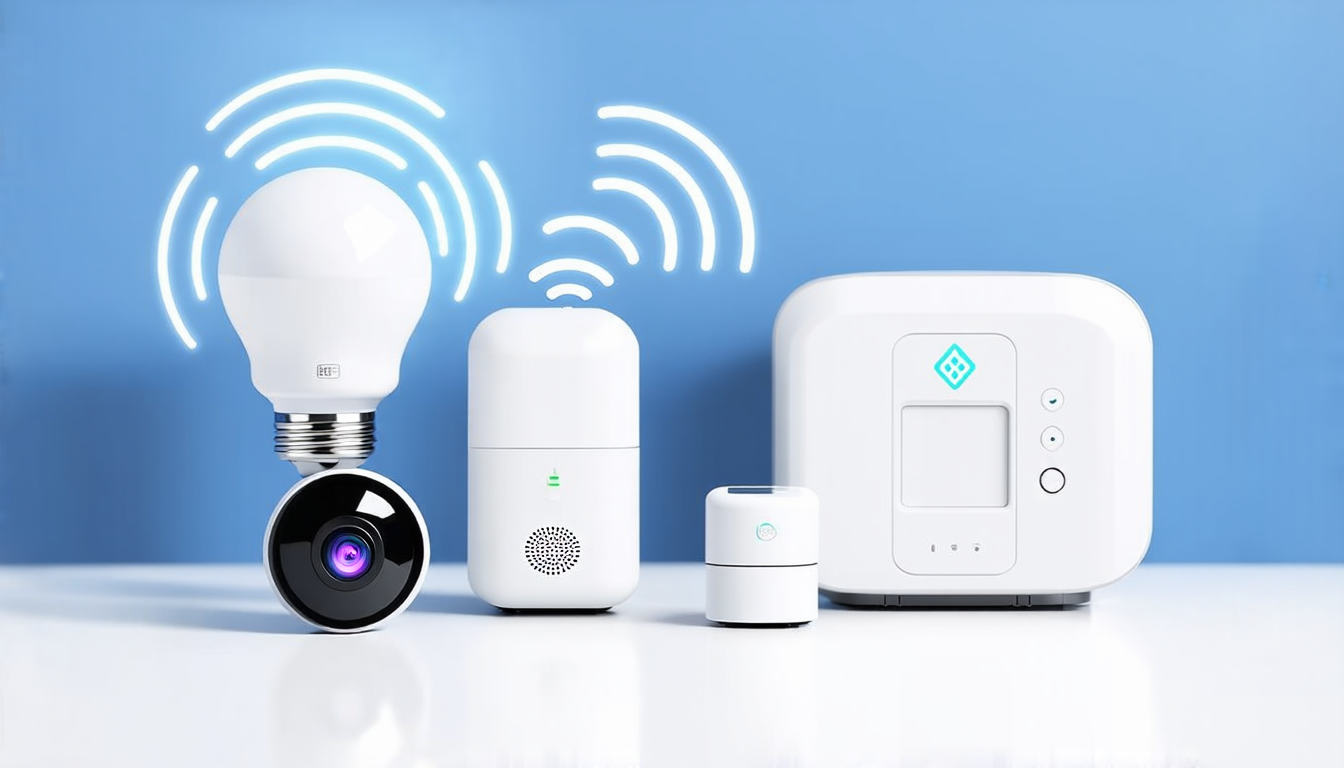
The Internet of Things (IoT) is rapidly expanding, and our daily lives are becoming increasingly intertwined with a vast network of connected devices. From smart home appliances to wearables, IoT technology has made it possible for us to control, monitor, and interact with our surroundings in ways previously unimaginable.
However, as the number of IoT devices continues to grow, so do concerns about their power consumption and communication capabilities. Traditional methods of powering these devices rely on batteries or external energy sources, which can be bulky, expensive, and environmentally unsustainable.
In recent years, researchers have been exploring alternative solutions for powering IoT devices, including wireless energy harvesting (WEH) technology. WEH involves capturing ambient energy from the environment, such as radio waves, light, or vibrations, and converting it into electricity to power devices.
One promising approach is ambient backscatter communication (ABC), a technique that enables devices to transmit data using ambient energy harvested from surrounding radio frequencies. This method allows devices to operate in low-power mode, reducing their environmental impact while maintaining reliable communication.
A recent study published in the journal IEEE Communications Surveys & Tutorials provides an overview of the standardization efforts on physical layer design for ambient IoT (A-IoT) devices. The researchers examined the transmission and reception architectures of A-IoT devices, including random access procedures and link-level simulations to evaluate performance under various signal-to-noise ratios.
The study highlights the importance of optimizing power consumption in A-IoT devices, particularly in applications where maintenance-free and battery-less operation is essential. To achieve this, researchers are exploring novel techniques such as ambient energy harvesting, advanced modulation schemes, and efficient coding methods.
One key challenge facing A-IoT technology is its compatibility with existing wireless communication systems. To overcome this hurdle, standardization bodies such as 3GPP are developing new specifications for A-IoT devices that can seamlessly integrate with existing networks.
The potential applications of A- IoT technology are vast and varied. In healthcare, for example, wearable sensors could be powered by ambient energy harvested from the environment, enabling real-time monitoring of vital signs and early disease detection. In smart cities, A- IoT devices could be used to monitor environmental conditions, traffic patterns, and public safety without the need for expensive infrastructure.
As the Internet of Things continues to evolve, it is clear that A- IoT technology will play a crucial role in shaping its future.
Cite this article: “Unlocking the Potential of Ambient IoT Technology”, The Science Archive, 2025.
Wireless Energy Harvesting, Ambient Backscatter Communication, Iot Devices, Power Consumption, Environmental Sustainability, Radio Frequencies, Standardization, Physical Layer Design, Ambient Energy Harvesting, Modulation Schemes.