

Sunday 09 March 2025
Mobile robots are becoming increasingly common in our daily lives, from vacuuming our floors to navigating warehouses. But for these robots to operate effectively, they need to be able to build a map of their surroundings and locate themselves within it – a process known as simultaneous localization and mapping (SLAM).
Researchers have developed various SLAM systems using different sensors and approaches, but a new study has compared the performance of several popular methods in a real-world setting. The results show that some methods are better suited to certain environments and tasks than others.
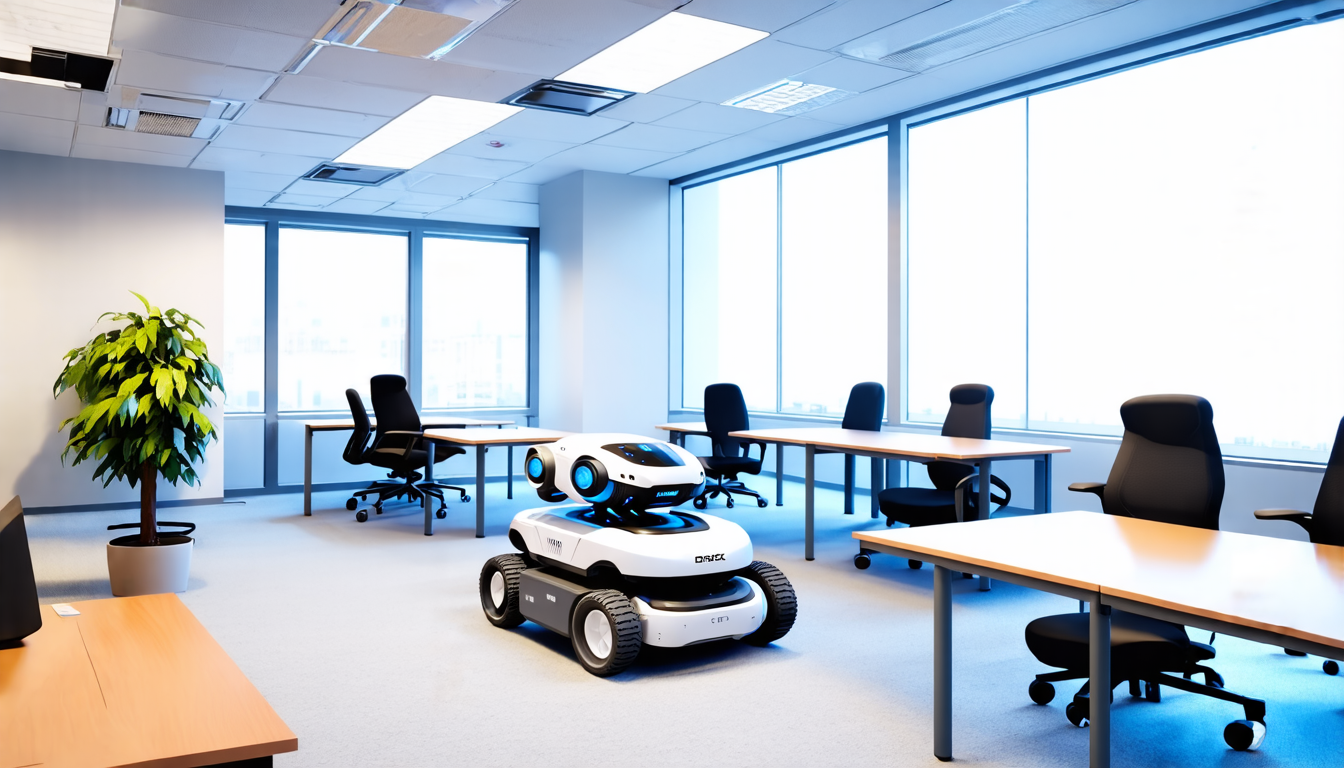
The study tested six SLAM systems using a mobile robot equipped with 2D lidar, monocular and stereo cameras. These sensors provided data on the robot’s surroundings, which was then used to build a map and determine its location. The experiments were conducted in an office environment with various features such as tables, chairs, and corridors.
The results showed that 2D lidar-based SLAM systems were particularly effective in this setting, providing accurate maps and localization. These systems use a laser scanner to create a detailed 2D map of the environment, which is then used to localize the robot.
Monocular camera-based SLAM systems, on the other hand, struggled in this environment due to the lack of depth information provided by a single camera. They were able to build maps and locate themselves, but with less accuracy than the lidar-based systems.
Stereo camera-based SLAM systems fared better, providing accurate maps and localization thanks to the additional depth information provided by the two cameras. However, they also required more computational power than the lidar-based systems.
The study highlights the importance of choosing the right SLAM system for a particular task or environment. For example, if a robot needs to operate in a cluttered warehouse with many obstacles, a stereo camera-based SLAM system may be more effective due to its ability to detect depth and avoid collisions.
On the other hand, a 2D lidar-based SLAM system may be better suited for a clean and open office environment like the one used in this study. Understanding the strengths and limitations of different SLAM systems can help developers design more effective robots that are better equipped to navigate complex environments.
As mobile robots continue to become an increasingly important part of our daily lives, developing more accurate and efficient SLAM systems will be crucial for their successful deployment.
Cite this article: “SLAM Systems Compared in Real-World Setting”, The Science Archive, 2025.
Mobile Robots, Slam, Simultaneous Localization And Mapping, Lidar, Cameras, Monocular, Stereo, 2D Maps, Robotics, Navigation





