

Sunday 09 March 2025
Scientists have made a significant breakthrough in understanding how DNA molecules move and interact with each other. This may seem like a mundane topic, but it has far-reaching implications for our understanding of life itself.
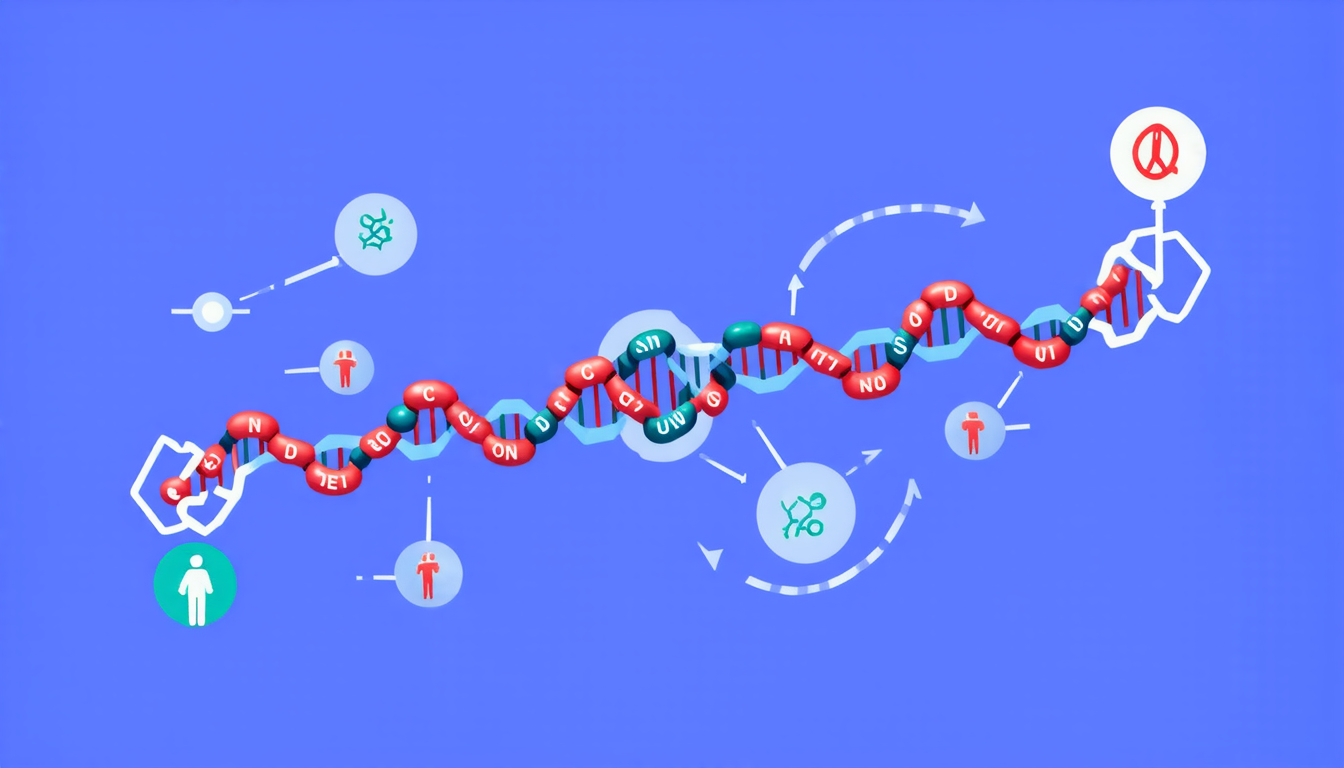
DNA is often thought of as a static molecule, but in reality, it’s constantly moving and interacting with its surroundings. Think of it like a long, flexible rod that can bend and twist in different ways. When DNA molecules are close together, they can interact with each other through weak chemical bonds, which affects how they move.
Researchers have been studying these interactions using computer simulations and mathematical models. They’ve discovered that the movement of DNA molecules is not just random – it’s actually influenced by the specific sequence of letters along the molecule. This means that the way DNA moves can depend on its genetic makeup.
One of the key findings was that certain sequences of letters can make DNA molecules more likely to move in a particular direction or speed up their movement. This could have important implications for our understanding of how genes are expressed and how diseases develop.
The researchers also found that the interactions between DNA molecules can lead to the formation of knots and tangles, which can affect the way they move and interact with each other. This is important because knots in DNA can reduce its mechanical strength and make it more susceptible to damage.
To better understand these complex interactions, the scientists developed a new mathematical model that takes into account the specific sequence of letters along the DNA molecule. They used this model to simulate the movement of DNA molecules under different conditions, such as varying temperatures and concentrations of salt.
The results showed that the model was able to accurately predict the movement of DNA molecules and how they interact with each other. This is a major breakthrough because it provides a new way to understand the behavior of DNA molecules in different contexts.
This research has important implications for our understanding of life at the molecular level. It could help us develop new treatments for diseases that are caused by defects in DNA structure or function, such as certain types of cancer. It could also lead to new ways of manipulating DNA molecules to create new biological systems or modify existing ones.
In the future, researchers plan to use this model to study other complex biological systems and understand how they interact with each other at the molecular level. This will help us develop a deeper understanding of life itself and potentially lead to breakthroughs in medicine, biology, and other fields.
Cite this article: “Unraveling the Dynamics of DNA Molecules”, The Science Archive, 2025.
Dna, Movement, Interaction, Sequence, Genes, Expression, Disease, Knots, Tangles, Mathematical Model





