

Sunday 09 March 2025
A team of researchers has developed a new way to detect and prevent a type of cyber attack that involves manipulating the timing of signals within a computer chip. The attack, known as a timing fault injection attack, can be used by hackers to gain unauthorized access to sensitive information.
The attack works by injecting faults into the timing of a computer chip’s clock signal, which is used to synchronize the operation of different parts of the chip. By manipulating this signal, an attacker can cause errors in the chip’s calculations and potentially gain access to confidential data.
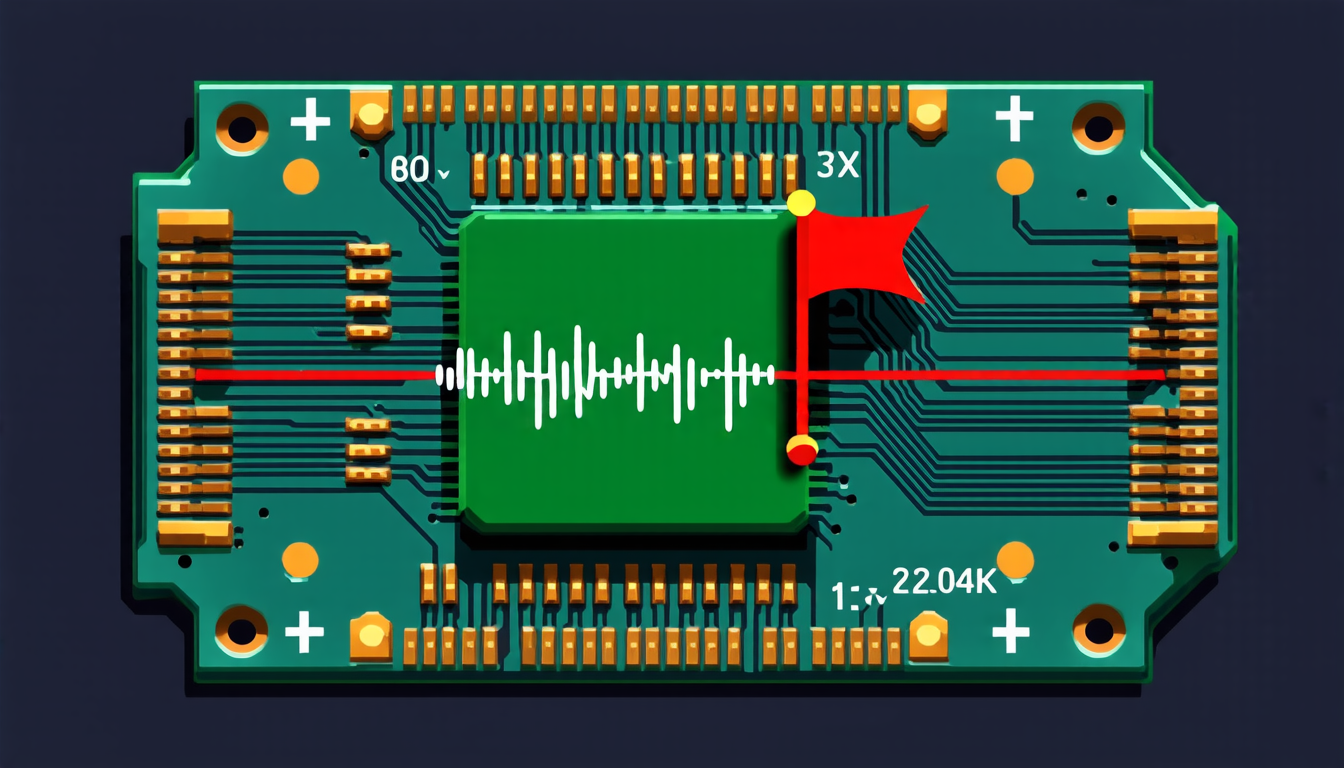
To combat this type of attack, the researchers have developed a new circuit that can detect when a timing fault injection attack is being attempted. The circuit uses a combination of digital and analog components to monitor the clock signal and identify any anomalies that may indicate an attack.
One of the key advantages of the new circuit is its ability to detect attacks in real-time, allowing it to respond quickly and effectively to prevent unauthorized access to sensitive information. Additionally, the circuit can be easily integrated into existing computer chips, making it a practical solution for protecting against timing fault injection attacks.
The development of this new circuit has significant implications for the security of computer systems. It provides a powerful tool for detecting and preventing timing fault injection attacks, which could potentially be used by hackers to gain access to sensitive information. By incorporating this circuit into existing computer chips, it is possible to significantly improve the security of these systems and prevent unauthorized access to confidential data.
The researchers’ work builds on previous studies that have shown the potential for timing fault injection attacks to be used as a means of gaining unauthorized access to sensitive information. Their new circuit represents a significant advancement in the field of computer security, offering a practical solution for detecting and preventing these types of attacks.
In addition to its applications in computer security, the new circuit could also have implications for other areas where timing signals are used, such as in medical devices or financial systems. The ability to detect anomalies in these signals could potentially be used to identify problems or errors that may not be immediately apparent, allowing for more accurate and reliable operation.
Overall, the development of this new circuit represents an important advancement in the field of computer security. Its ability to detect timing fault injection attacks in real-time makes it a powerful tool for protecting against unauthorized access to sensitive information, and its potential applications extend beyond the field of computer security to other areas where timing signals are used.
Cite this article: “New Circuit Detects and Prevents Timing Fault Injection Attacks in Computer Chips”, The Science Archive, 2025.
Timing Fault Injection Attack, Cyber Attack, Computer Chip, Clock Signal, Digital, Analog, Real-Time Detection, Security, Computer Systems, Timing Signals





