

Sunday 09 March 2025
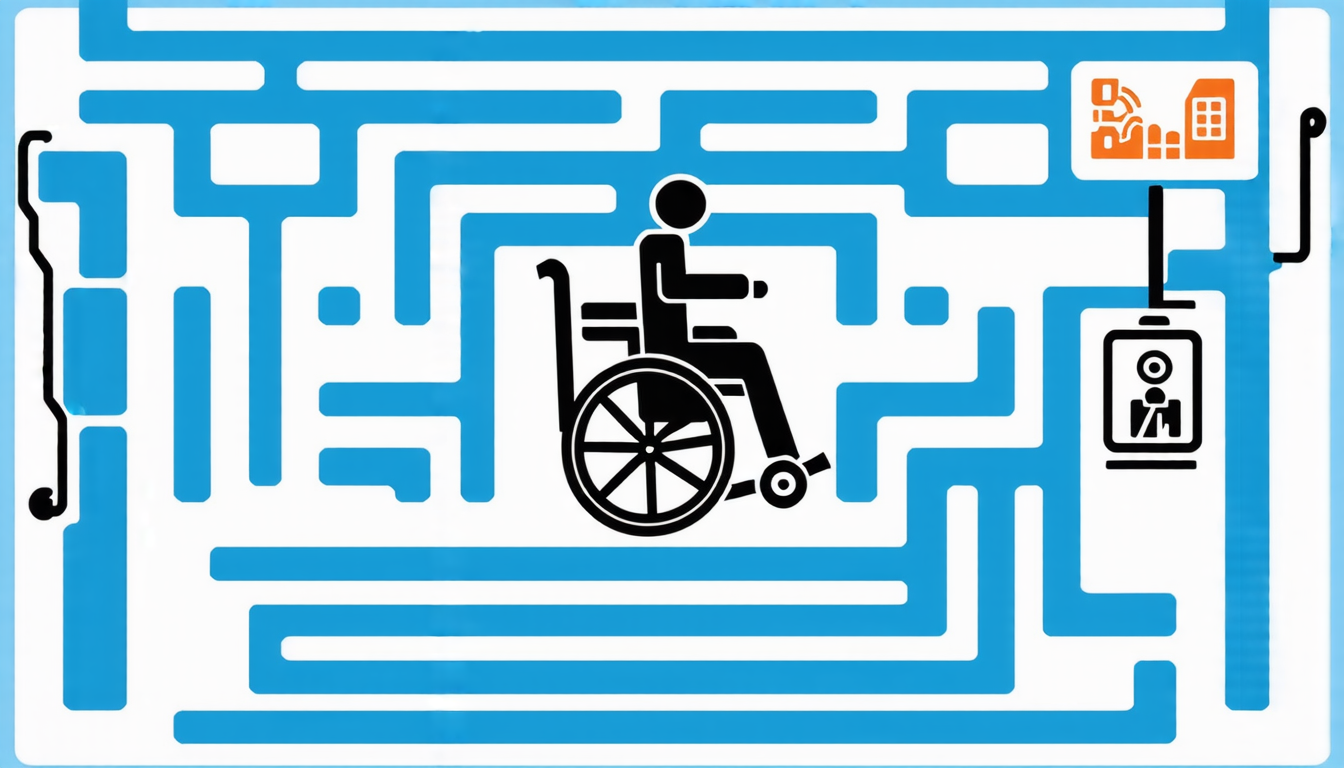
Researchers have made significant strides in developing a smart wheelchair that can navigate complex indoor environments with ease, all while allowing users to maintain control and agency over their movements.
The CoNav Chair, as it’s called, is equipped with a suite of sensors – including LiDAR, cameras, and an inertial measurement unit – that work together to create a detailed map of its surroundings. This map is then used by the wheelchair’s advanced navigation system to plan the most efficient and safe route to a user’s destination.
But here’s the clever part: the CoNav Chair doesn’t just rely on autonomous navigation. It also allows users to take control, either by providing manual input or adjusting the level of autonomy they want to exert. This shared control approach is designed to make the wheelchair more intuitive and user-friendly, as it can adapt to a user’s needs and preferences.
In testing, the CoNav Chair demonstrated impressive performance, navigating complex indoor environments with ease while minimizing collisions and maximizing efficiency. Users were able to maintain control over their movements, even in tight spaces or when faced with unexpected obstacles.
The potential implications of this technology are significant. For people with mobility impairments, a smart wheelchair like the CoNav Chair could offer greater independence and freedom of movement. And for caregivers and healthcare professionals, it could provide a more effective and efficient way to support patients’ daily needs.
Of course, there’s still much work to be done before the CoNav Chair can become a reality. The researchers will need to continue refining their algorithms and testing their system in real-world scenarios. But the progress they’ve made so far is undeniably promising – and it’s exciting to think about the possibilities that this technology could hold for people around the world.
The CoNav Chair’s advanced navigation system uses a combination of sensors and mapping techniques to create a detailed model of its surroundings. This allows it to plan efficient routes and avoid obstacles, while also providing users with real-time feedback on their progress.
One key challenge facing the development of smart wheelchairs is ensuring that they can effectively interact with humans. The CoNav Chair’s shared control approach addresses this by allowing users to take control and adjust the level of autonomy they want to exert. This not only makes the wheelchair more intuitive, but also provides users with a greater sense of agency and independence.
The researchers’ work on the CoNav Chair has also highlighted the importance of considering user needs and preferences in the design of assistive technologies.
Cite this article: “Smart Wheelchair Technology Enables Increased Independence and Control”, The Science Archive, 2025.
Smart Wheelchair, Autonomous Navigation, Shared Control, Sensors, Lidar, Cameras, Inertial Measurement Unit, Mapping, Assistive Technology, Mobility Impairment





