

Sunday 09 March 2025
As robotics and artificial intelligence continue to advance, researchers are pushing the boundaries of what machines can do. Recently, scientists have made significant strides in developing autonomous robots that can learn from their environment and adapt to new situations.
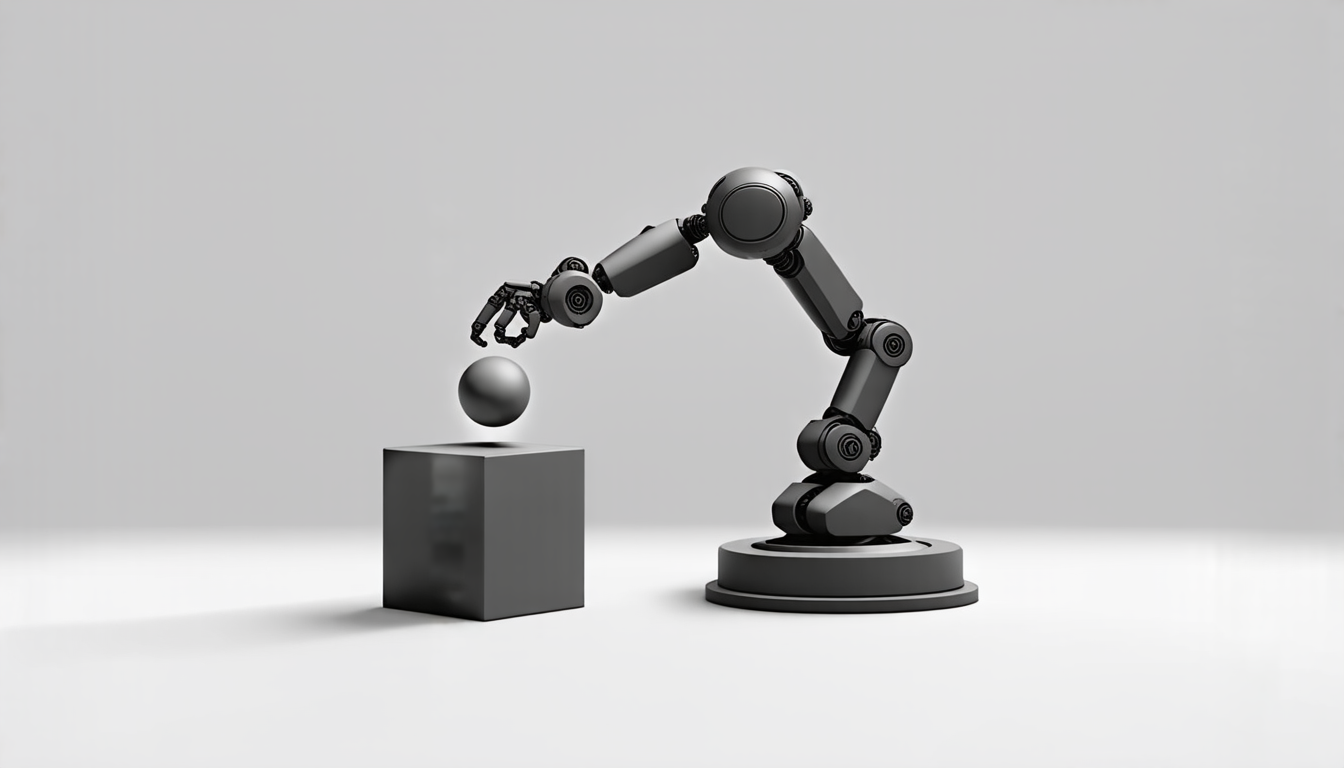
One area where this is particularly evident is in the development of robotic manipulation tasks, such as grasping and moving objects. Researchers have designed a series of environments, known as MetaWorld and Omnigibson, where robots must perform specific tasks, like pressing buttons or opening doors.
These environments are specifically tailored to test the robot’s ability to learn from its mistakes and adapt to new situations. For example, in the MetaWorld environment, a robot might be tasked with pressing a button that is partially hidden by an object. The robot would need to use its sensors and manipulation skills to figure out how to reach the button.
The results are impressive. Robots trained on these environments have been able to learn complex tasks, such as assembling objects or pouring liquids, in just a few attempts. They are also able to generalize their learning to new situations, allowing them to adapt to unexpected changes or obstacles.
But what’s really remarkable about these robots is that they’re not just limited to simple tasks. They can be trained to perform more complex and nuanced actions, such as cooking or typing on a keyboard. This could have significant implications for industries like healthcare, where robots might be used to assist with delicate surgeries or provide care to patients.
Of course, there are still challenges ahead. For one, these robots need to be able to learn from their mistakes quickly and efficiently. They also need to be able to generalize their learning to new situations, without getting stuck on a single task.
Despite these challenges, the potential benefits of these robotic systems are enormous. Imagine being able to have a robot assist you with daily tasks, or provide care and support to those in need. The possibilities are endless, and researchers are eager to explore them further.
In addition to the MetaWorld and Omnigibson environments, scientists have also developed a real-world environment where robots can learn to perform tasks that require more complex manipulation skills, such as grasping and moving objects with precision. This could have significant implications for industries like manufacturing, where robots might be used to assemble or package products.
Overall, the development of these autonomous robotic systems is an exciting area of research, with significant potential benefits for a wide range of industries and applications.
Cite this article: “Autonomous Robots Learn to Adapt and Generalize in Complex Environments”, The Science Archive, 2025.
Artificial Intelligence, Robotics, Autonomous Robots, Learning From Environment, Adaptation, Robotic Manipulation Tasks, Grasping And Moving Objects, Metaworld, Omnigibson, Automation.





